
Research and Development
Research with purpose. Service with impact.
The Research and Development Center leads BCU's culture of inquiry, supporting faculty, staff and students to produce ethical, relevant research that serves the Cordillera and beyond.

Research that is ethical, relevant and responsive
Research is central to the mission of a university. It advances knowledge, strengthens teaching and learning, develops students’ capacity for inquiry, and helps communities respond to real and emerging challenges. At Baguio Central University, the Research and Development Center (RDC) supports research that is ethical, relevant, and responsive to the needs of the Cordillera and the wider society. We encourage faculty and students to investigate important issues, share evidence-based findings, and translate knowledge into practical improvements in education, professional practice, public service, and community life.
This work reflects CHED’s direction for higher education institutions to advance research, innovation, and extension in support of inclusive social and economic development under CMO No. 52, s. 2016. It also supports CHED’s outcomes-based quality assurance framework under CMO No. 46, s. 2012, by helping the University demonstrate meaningful outcomes through knowledge creation, application, and engagement. Through strong partnerships and responsible research practice, BCU seeks to contribute to sustainable development and the United Nations Sustainable Development Goals.
Michael T. Sebullen, PhD, CRS, LPTDirector for Research, Baguio Central University
Programs and services
University Research Colloquium
BCU's annual showcase of faculty, staff and student research, now in its 16th edition.
Research Ethics Committee
Ethical review and training that protect research participants and uphold research integrity.
Kapihan sa BCU
Informal research forums where faculty share findings and spark collaboration.
Pocket Research Learning Program
Hands-on learning sessions that build research skills and link research with extension.
Research-Based Policy Briefs
Institutional studies translated into policy recommendations for the Management Council.
Research Networks
Partnerships such as the Amianan Network of Research Centers and HEIs and the C.U.B.E. partnership.
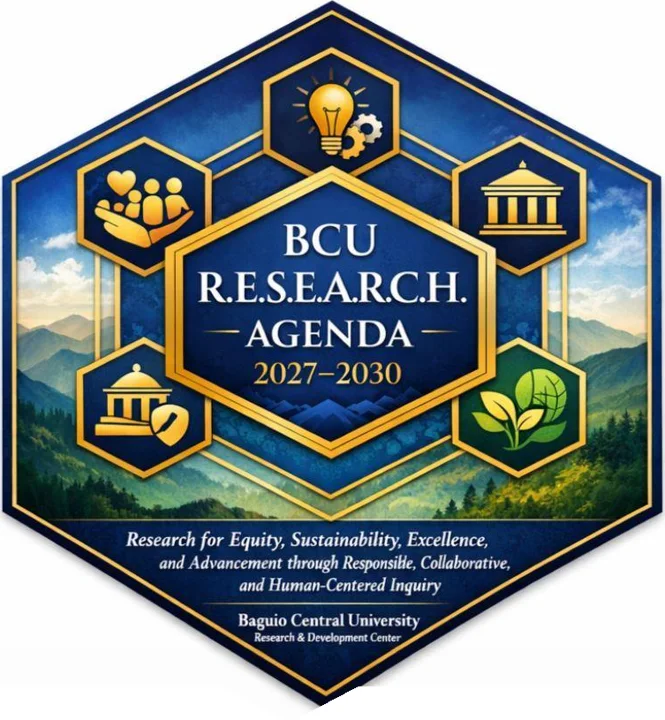
The BCU R.E.S.E.A.R.C.H. Agenda
Research for Equity, Sustainability, Excellence, and Advancement through Responsible, Collaborative, and Human-Centered Inquiry
Anchored on the University's Vision, Mission, Goals and Objectives, the agenda promotes high-impact, evidence-based, and innovation-driven research that helps build sustainable, inclusive, peaceful, and resilient communities. It is the roadmap for faculty, researchers, graduate students, and undergraduate learners: it defines priority themes, guides resource allocation, strengthens collaboration, and informs future scholarly work.
Grounded in
- UN Sustainable Development Goals
- AmBisyon Natin 2040
- Philippine Development Plan
- Harmonized National R&D Agenda 2022-2028
- National Unified Health Research Agenda 2023-2028
- Cordillera Regional Development Plan
- Philippine Plan for Gender-Responsive Development
- National Intellectual Property Strategy
- CHED and DOST policies
Prepared by the Research and Development Center with the research coordinators of every college and unit, and approved by the University President and Chair of the Board of Trustees in May 2026.
Nine research clusters
Each college and unit has its own research cluster. Choose one to see its priority themes, sample research titles, and SDG focus.

TANGLAW
Teaching and learning strategies, curriculum and assessment, inclusive and values education, character formation, language, arts and culture, educational leadership and school culture, including gender and development, ICT, and mental health and well-being.
Research coordinator: Aiza Bheal M. Kitani, LPT, MAEngl
Bachelor of Elementary Education (BEED)
Priority research themes
- Early childhood and elementary pedagogy
- Literacy, numeracy, and foundational learning skills
- Classroom management and learner behavior
- Curriculum development and outcomes-based instruction
- Assessment of learning and intervention strategies
- Inclusive and child-friendly education
- Educational technology and digital learning tools
- Parent engagement and home-school partnership
Sample workable research titles
- Phonics-Based Instruction and Letter Recognition Skills of Kindergarten Learners
- Numeracy Intervention Program and Mathematics Performance of Grade Three Pupils
- Classroom Management Practices and Learner Discipline in Public Elementary Schools
- Use of Digital Storytelling in Enhancing Reading Motivation among Grade Two Learners
- Parental Involvement and Academic Achievement of Intermediate Pupils
Bachelor of Secondary Education (BSED)
Priority research themes
- Adolescent learning and secondary pedagogy
- Subject-specific instruction (English, Math, Science, Filipino, Social Studies, Values Education)
- Classroom assessment and academic achievement
- Learner motivation, behavior, and engagement
- Inclusive secondary education and differentiated instruction
- Educational technology and blended learning
- Guidance, mental health, and student well-being
- Teacher competence and instructional leadership
- Citizenship education, culture, and global awareness
Sample workable research titles
- Inquiry-Based Teaching and Science Achievement of Grade 10 Students
- Students' Motivation in Mathematics and Their Academic Performance in Junior High School
- Classroom Assessment Practices of Secondary Teachers and Learner Outcomes
- Use of Blended Learning Strategies and Student Engagement in Senior High School
- School Climate and Teachers' Job Satisfaction in Secondary Schools
Liberal Arts
Priority research themes
- Language, communication, and discourse studies
- Literature, humanities, and critical thinking
- History, governance, and civic engagement
- Psychology, human behavior, and mental health
- Sociology, culture, and community studies
- Philosophy, ethics, and values formation
- Media, digital society, and communication trends
- Gender and development studies
- Peace studies, justice, and human rights
- Indigenous knowledge, arts, and cultural heritage
Sample workable research titles
- Social Media Usage and Communication Skills of University Students
- Mental Health Awareness and Coping Mechanisms among College Learners
- Indigenous Cultural Practices and Identity Formation among Cordilleran Youth
- Gender Sensitivity Awareness and Inclusive Attitudes of Higher Education Students
- Civic Engagement and Leadership Participation among Liberal Arts Students

ALAB
Nursing and midwifery practice, maternal and child health, community and public health, mental health, preventive care, health education, and evidence-based, compassionate healthcare.
Research coordinator: Hilario A. Sanglay, RN, MAN
Nursing and Midwifery
Priority research themes
- Maternal and child health
- Community and public health
- Mental health and wellbeing
- Preventive and primary healthcare
- Nursing and midwifery education and practice
Sample workable research titles
- Prenatal Care Utilization and Birth Outcomes among Mothers in Selected Barangays of Baguio City
- Health-Seeking Behaviors of Families in Upland Communities of Benguet
- Stress Levels and Coping Strategies of Nursing Students during Clinical Exposure
- Community Awareness of Preventive Health Practices and Its Relationship to Health Behavior
- Clinical Competence of Midwifery Students and Its Relationship to Academic Performance

Engineering
Priority research themes
- Sustainable and resilient infrastructure
- Applied engineering design and innovation
- Energy efficiency and renewable systems
- Water, sanitation, and environmental engineering
- Digital and smart technologies
Sample workable research titles
- Structural Resilience of Selected Buildings in Baguio City to Earthquake Hazards
- Design and Performance Evaluation of a Low-Cost Flood Warning System
- Energy Consumption Patterns and Efficiency Measures in Small Commercial Buildings
- Effectiveness of a Community-Based Water Filtration System in Upland Areas of Benguet
- Development and Testing of a Smart Lighting System for Classroom Energy Efficiency

MABUHAY
Hospitality and tourism management, culinary studies, sustainable and community-based tourism, service quality, destination management, and cultural tourism, promoting inclusive, ethical, and green tourism in the Cordillera and Baguio, a UNESCO Creative City.
Research coordinator: Jocelyn B. Ang, PhD
Hospitality Management
Priority research themes
- Hospitality service quality
- Hotel and restaurant operations management
- Culinary innovation and food safety
- Hospitality workforce readiness
- Sustainable hospitality practices
Sample workable research titles
- Service Quality and Customer Satisfaction in Selected Accommodations in Baguio City
- Operational Efficiency of Restaurants in Baguio City: Basis for Service Improvement
- Culinary Innovation Using Indigenous Ingredients in Cordilleran Cuisine
- Work Readiness of Hospitality Students and Industry Partner Satisfaction during Internship
- Green Practices and Waste Management in Hospitality Establishments
Tourism Management
Priority research themes
- Sustainable and community-based tourism
- Destination management and marketing
- Cultural heritage tourism
- Tourist behavior and satisfaction
- Tourism policy and regional development
Sample workable research titles
- Sustainable Tourism Practices and Tourist Loyalty in Cordillera Destinations
- Destination Image and Travel Intention of First-Time Visitors to Baguio
- Community-Based Tourism Potentials of Selected Municipalities in Benguet
- Cultural Heritage Tourism and Visitor Satisfaction in the Cordillera Region
- Digital Marketing Strategies and Tourist Engagement in Local Destinations

Business Administration
Priority research themes
- Entrepreneurship and economic development
- Sustainable finance and ESG practices
- Marketing and consumer behavior
- Human resource and organizational development
- Digital business transformation
Sample workable research titles
- Entrepreneurial Intention of Business Students and Its Relationship to Risk-Taking Behavior
- Women Entrepreneurship and Its Contribution to Local Economic Development
- Sustainable Finance Practices and Organizational Financial Stability
- Green Business Practices and Their Influence on Customer Purchase Decisions
- Digital Transformation and Organizational Productivity in Service-Oriented Institutions
Public Administration
Priority research themes
- Organizational leadership and change management
- Strategic management in public organizations
- Governance and public service delivery
- Policy development and local governance
- Transparency and institutional effectiveness
Sample workable research titles
- Leadership Styles and Employee Performance in Local Government Units
- Strategic Management Practices in Public Sector Organizations
- Citizen Satisfaction on Selected Government Services in Baguio City
- Change Management Readiness of Public Employees during Digital Transition
- Transparency Practices and Public Trust in Local Institutions
Computer Science
Priority research themes
- Software development and systems innovation
- Data analytics and artificial intelligence
- Cybersecurity and information assurance
- Digital transformation systems
- Smart technologies and automation
Sample workable research titles
- Development of an Automated Attendance Monitoring System for Higher Education Institutions
- Predictive Analytics Model for Student Retention in Private Universities
- Cybersecurity Awareness and Practices among College Students
- AI-Based Chatbot for Student Services in Academic Institutions
- Smart Inventory Management System for Small Enterprises

BAGWIS
Criminology, law enforcement, corrections, forensic science, crime prevention, criminal justice administration, human rights, ethical policing, restorative justice, peace and order, and community safety.
Research coordinator: Beca May Pidlao-Palitayan, RCrim, MSCJSC
Criminal Justice Education
Priority research themes
- Crime prevention and community safety
- Institutional governance
- Law enforcement ethics and accountability
- Corrections and rehabilitation
- Human rights and restorative justice
- Criminal justice administration and policy
Sample workable research titles
- Crime Prevention Strategies and Residents' Perceived Safety in Selected Barangays of Baguio City
- Ethical Decision-Making of Police Officers and Its Relationship to Public Trust in Benguet
- Reintegration Challenges of Former Persons Deprived of Liberty in Selected Communities of Benguet
- Awareness of Human Rights among Criminology Students and Its Influence on Ethical Judgment
- Administrative Challenges in Barangay Justice Systems and Their Impact on Case Resolution

Advanced Studies
Priority research themes
- Educational leadership and governance
- Public administration and policy studies
- Organizational and institutional development
- Advanced professional practice
- Interdisciplinary and applied research
Sample workable research titles
- Instructional Leadership of School Heads and Its Relationship to Teacher Performance
- Policy Implementation Challenges in Local Government Social Programs
- Organizational Culture and Employee Performance in Higher Education Institutions
- Digital Transformation and Administrative Efficiency in Universities
- Community Engagement Initiatives and Institutional Social Responsibility

DALISAY
Human resources and workforce management, ICT and technological competence, physical facilities and environment, service quality, and institutional effectiveness across all support services: library, OSAS, Registrar, Accounting, Extension Services, Quality Assurance, and organizational communication.
Research coordinator: Engr. Lorelie S. Malit
Institutional Support Services
Priority research themes
- Human resources and workforce management
- ICT and technological competence
- Physical facilities and environment
- Service quality and institutional effectiveness
Sample workable research titles
- Service Quality and Student Satisfaction in University Support Offices
- Quality Assurance Practices and Accreditation Readiness of Higher Education Institutions
- Digital Records Management and Administrative Efficiency in Universities
- Employee Engagement and Job Satisfaction among Non-Teaching Personnel
- Training and Professional Development Needs of University Support Staff

Basic Education
Priority research themes
- Classroom-based action research
- Learner performance and assessment
- Teaching strategies and innovation
- Values education and behavior
- School culture and learner wellbeing
Sample workable research titles
- Effects of Differentiated Instruction on Mathematics Performance of Grade Six Pupils
- Study Habits and Academic Achievement of Junior High School Students
- Use of Interactive Learning Materials and Student Engagement in Science
- Values Integration and Classroom Behavior of Elementary Learners
- School Climate and Learner Motivation in Senior High School
BCU research outputs
Search theses, dissertations, institutional studies, policy briefs and conference papers by BCU faculty, staff and students.
Research news
Loading…
Share your research with the BCU community
Faculty, staff and students may submit completed studies to the Research and Development Center for inclusion in the repository.
Email: research_do@bcu.edu.ph