By Jvee B. Ling-o │CCJE Crime Laboratory Custodian
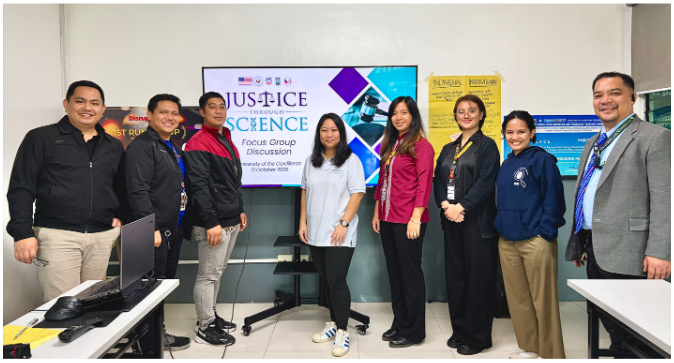
Representatives of Baguio Central University’s College of Criminal Justice Education (BCU-CCJE) participated in the Justice Through Science (JTS) Project: Focus Group Discussion (FGD) held on October 21, 2026, at the Innovation and Technology Transfer Office of the University of the Cordilleras, Legarda Campus. Representing BCU were Ms. Beca May P. Palitayan, CCJE’s Dean, and Ms. Jvee B. Ling-o, CCJE’s Crime Laboratory Custodian. The activity brought together representatives from partner academic institutions to discuss current concerns and opportunities in forensic science education, professional practice, and industry needs.
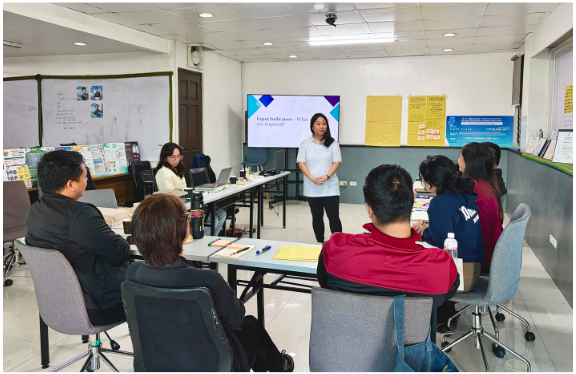
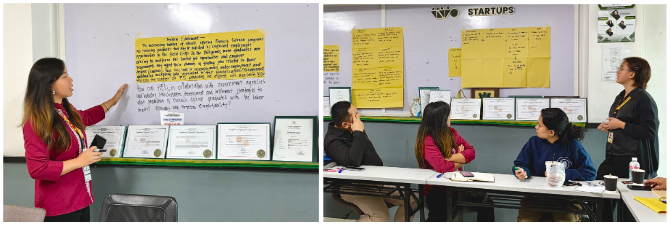
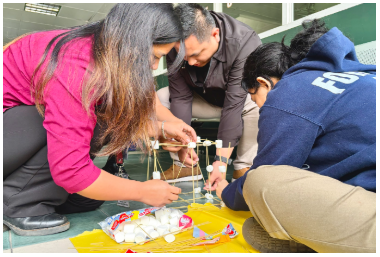
Facilitated and supervised by Hon. Lady Ivy Vanity D. Velasco-Snow, JTS Project Manager, the FGD featured collaborative workshop exercises that focused on identifying gaps and challenges in forensic science, examining their underlying causes, and determining available individual and institutional resources that could help address them. Participants also developed feasible project plans utilizing identified resources to respond to the respective concerns, with the proposed plans presented during the concluding session. Other participating institutions included the University of Baguio (UB), represented by Dr. Warren G. Moyao, Criminology Program Chair, and Mr. Francis Jereign Mejia, Faculty Member; Easter College, represented by Mr. Layman Fas-ayen, Faculty Member; and the University of the Cordilleras (UC), represented by Ms. Fiona Laguio, Faculty Member.
BCU-CCJE’s participation provided an opportunity to exchange insights with partner institutions, assess challenges affecting forensic science education, and explore practical approaches to addressing these concerns. The knowledge and insights gained from the discussion may inform the college’s future initiatives, particularly in enhancing instructional strategies, identifying opportunities to maximize institutional resources, and strengthening collaboration in forensic science education and professional practice. These efforts support the broader goal of advancing forensic science education and its application within the Philippine justice system.
The undertaking also aligns with three United Nations Sustainable Development Goals (SDGs). SDG 4: Quality Education is reflected in the activity’s focus on identifying educational gaps and exploring ways to improve forensic science instruction and learning. SDG 16: Peace, Justice and Strong Institutions as it promotes the advancement of forensic science education and professional practice, which can contribute to strengthening forensic capabilities and supporting the effective administration of justice in the Philippines. Meanwhile, SDG 17: Partnerships for the Goals is demonstrated through collaboration and knowledge-sharing among participating academic institutions to identify common challenges, mobilize existing resources, and develop potential solutions.
Through its engagement in the JTS Project FGD, BCU-CCJE reaffirmed its participation in collaborative efforts to explore practical and sustainable approaches to improving forensic science education and strengthening its contribution to the Philippine justice system.
Photo documentation credits to Ms. Danichelle D. Sabanal and the Justice Through Science (JTS) Office