(1st of two series)
Calasiao, Pangasinan, July 3, 2026.
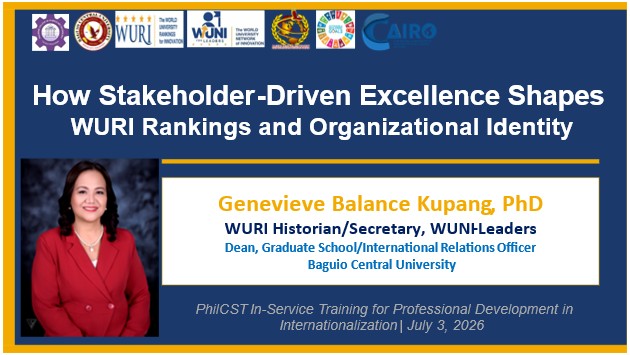
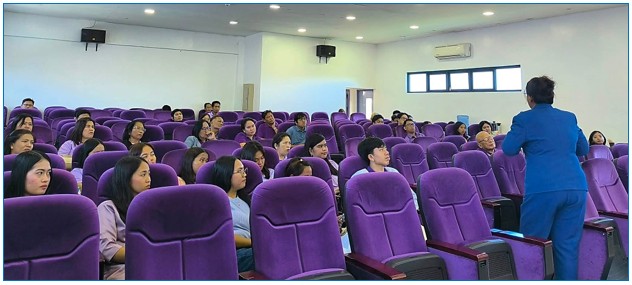
The Philippine College of Science and Technology (PhilCST) concluded its week-long In-Service Professional Development Training on July 3, 2026, with the theme “Innovating for Impact: Future-Forward SDG-Responsive Higher Education.” Dr. Genevieve Balance Kupang, the World University Rankings for Innovation (WURI) Historian, Secretary of the WUNI-Leaders, and Dean of the Graduate School and International Relations Officer of Baguio Central University, served as resource speaker for two interlinked sessions: “How Stakeholder-Driven Excellence Shapes WURI Rankings and Organizational Identity” and “The Power of Institutional Storytelling: Sharing Personal and Collective Works through International Press Agencies.”
Through this engagement, PhilCST and BCU advanced the Commission on Higher Education’s vision of a future-ready Philippine higher education system that empowers globally competitive Filipinos to build an innovative, inclusive, and resilient Bagong Pilipinas. The training likewise carried forward CHED’s ACHIEVE Agenda, particularly its pillar on Inclusive and Impact-Driven Internationalization, by equipping administrators and faculty with practical tools for global positioning through rankings frameworks and international storytelling platforms. The faculty described the whole-day session facilitated by Dr. Kupang as one of the most inspiring and engaging sessions they had encountered.
Excellence, Identity, and the Power of Institutional Storytelling
Dr. Kupang came to PhilCST, Calasiao, carrying a working knowledge of how university rankings evolved. The story did not start with a global ranking at all. In 1970, the United States introduced the Carnegie Classification, a scheme that grouped institutions by research output rather than ranking them outright Badiuzzaman MD (2025). It was not a ranking in the modern sense, but it established the practice of sorting universities by measurable criteria, a practice every ranking system since has built on (Altbach, 2015). Around the same period, European countries took a different route, building national evaluation systems rather than public league tables. France’s Centre National de la Recherche Scientifique (CNRS) and Germany’s Centre for Higher Education Development (CHE) developed assessment tools that measured institutional performance against government policy priorities and accountability standards (Dill & Soo, 2005; Usher & Savino, 2007).
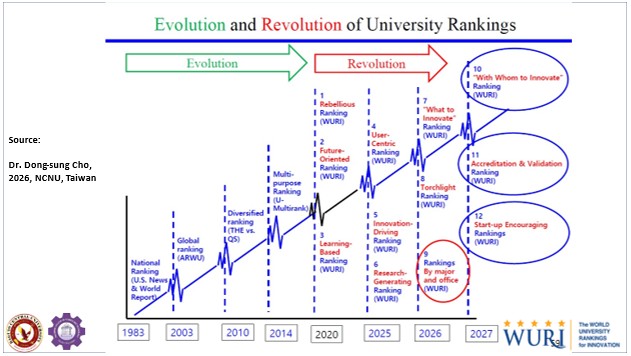
The shift toward rankings as the public now understands them came in 1983, with U.S. News & World Report’s first national rankings, a methodology blending peer surveys with hard numbers such as graduation rates and faculty resources (U.S. News & World Report, 2024). From there, the field moved through several distinct stages of transformation over four decades. In 2003, the Academic Ranking of World Universities (ARWU) introduced the first global rankings built on research output, pulling the conversation beyond national borders for the first time (Moskovkin et al., 2022). By 2009, Times Higher Education (THE) and QS parted ways after operating jointly since 2004, and their first fully independent rankings, built on separate methodologies, appeared in 2010, giving institutions competing lenses through which to be measured (Kochetkov, 2024). U-Multirank followed in 2014, introducing a multi-purpose model that, for the first time, factored in dimensions such as knowledge transfer and regional engagement alongside research output, an approach later noted for offering the most comprehensive methodology among the major systems (Kochetkov, 2024). In short, she told the participants, rankings are mirrors. They show institutions where they are and where they could go.
Then, in 2020, the rhythm of change accelerated. WURI entered the landscape with a learning-based ranking built on innovation case studies rather than statistics alone, and by 2026, it had grown into a user-centric, SDG-based model that incorporated the student perspective, something none of its predecessors had done (WURI Foundation, 2026). Kupang traced this arc for her PhilCST audience as two movements: Evolution, the slow, incremental progress of traditional rankings from 1983 to 2014, and Revolution, the rapid acceleration WURI introduced from 2020 onward, moving through Rebellious Ranking and Future-Oriented Ranking, Learning-Based, User-Centric, Innovation-Driving, and Research-Generating Rankings, to the “What to Innovate” and Torchlight Rankings, and forward still to what lies ahead: rankings built around collaboration, accreditation, and start-up culture (Cho, as presented in Kupang, 2025).
To make sense of that acceleration, she explained what WURI actually is. Founded by Dr. Dong-sung Cho, a distinguished Korean management scholar who earned his doctorate from Harvard Business School and spent 36 years as a professor of strategy at Seoul National University ((D.S. Cho, personal communication with Kupang, 2024), WURI, the World University Rankings for Innovation, is the first ranking system in the world to evaluate universities through submitted innovation cases rather than statistical data alone. Institutions submit real examples of what they have done, projects, programs, and policies that demonstrate innovation and real-world impact, and a cross-evaluation method has universities assess each other’s cases, removing the bias that comes from a single evaluating body.
Operated by the WURI Foundation in partnership with i-STAT and the Hanseatic League of Universities (HLU), WURI is a ranking and a global learning community, where universities teach each other through their own stories, Dr. Kupang told the room. In 2025 alone, WURI evaluated 4,866 cases submitted by over 1,253 universities across 87 countries (Baguio Central University, 2025), and by 2026, submissions had grown to more than 13,211 across 2,000 institutions in 96 countries, its most competitive cycle to date (WURI Foundation, 2026).
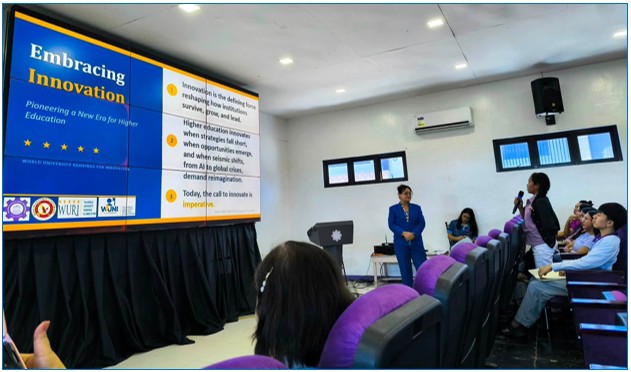
The first session addressed a question with real stakes for any institution weighing whether to participate in international rankings: how does the act of identifying, documenting, and submitting an institution’s own excellence reshape that institution’s self-understanding over time? Dr. Kupang answered through the WURI Iterative Cycle, a six-step rhythm of identifying a story, writing and submitting it, undergoing peer evaluation, learning from the results, identifying a stronger story, and submitting again. She illustrated the concept with a simple example, learning to cook a dish, tasting it, adjusting the seasoning, and trying again, each round sharper than the last. The room, filled with faculty ranging from decades-long veteran professors to newly hired instructors, recognized the metaphor immediately. Excellence, she reminded them, is not achieved once. It is built cycle by cycle.
Dr. Kupang closed with words from WURI founder Dr. Dong-sung Cho, borrowed in turn from Abraham Lincoln: “The best way to predict your future is to create it.” For PhilCST, she offered a roadmap toward that future, beginning with a visit to the WURI website, learning from others who have already submitted cases in the past years, and ending with the discipline of a documentation culture built to last well beyond any single ranking cycle.
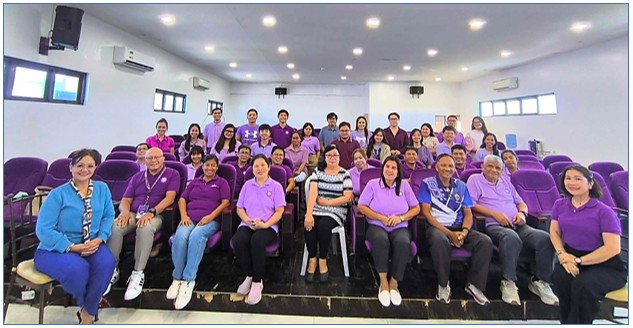
For Baguio Central University, the visit reaffirmed something the Graduate School and International Relations Office have practiced: that a university’s international reach grows from its human resources, from the willingness to tell its own story honestly, and to help other institutions learn to tell theirs. The faculty of PhilCST engaged with genuine openness and curiosity throughout the sessions. Their active participation and willingness to share their questions and reflections reflect the culture of learning and collegiality that PhilCST has built among its faculty, and the resource speaker credits the institution’s leadership for cultivating that environment.
BCU extends its gratitude to the PhilCST leadership: Dr. Lourdes S. Fernandez, School President; Engr. Raul B. Gironella Sr., D.Min., Vice President for Academic Affairs; Engr. Oscar B. Gironella Sr., MSME, PEE, Executive Vice President; Engr. Oscar F. Gironella Jr., Vice President for Administration; Engr. Oscar F. Gironella III, LPT, Vice President for Institutional Advancement and Human Resources. Through: Dr. Ditas Fernandez, Research Director, Philippine College of Science and Technology, Nalsian, Calasiao, Pangasinan.
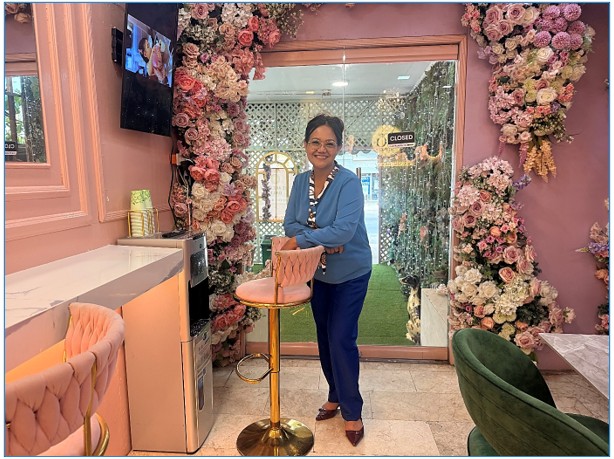
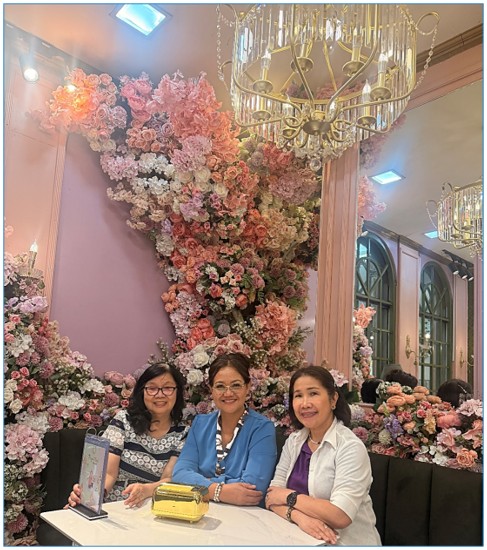
Dr. Kupang is especially grateful to you, Dr. Ditas Fernandez, for extending the invitation and for PhilCST’s gracious hospitality throughout the engagement. Their warmth, together with the thoughtful coordination behind the workshop, made the experience seamless and welcoming.
Peace, force, and joy! Dayaw ya Layad.
Two Upcoming Important Schedules for WURI in 2026
Dr. Kupang shared with the PhilCST participants the upcoming activities and schedules for the WURI network. Two major events stand out on the calendar.
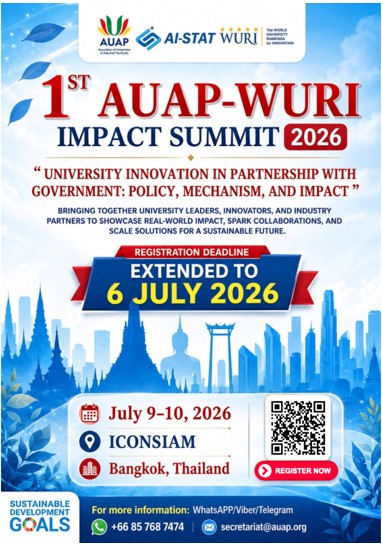
The 1st AUAP-WURI Impact Summit 2026 takes place on July 9-10, 2026, at ICONSIAM in Bangkok, Thailand. The summit carries the theme “University Innovation in Partnership with Government: Policy, Mechanism, and Impact.” It brings together university leaders, innovators, and industry partners to showcase real-world impact and scale solutions for a sustainable future. This joint initiative recognizes and showcases outstanding university innovations that demonstrate strong impact, global relevance, and alignment with the UN Sustainable Development Goals (SDGs). A transparent, peer-review process led by university presidents and senior leaders will evaluate all submissions.
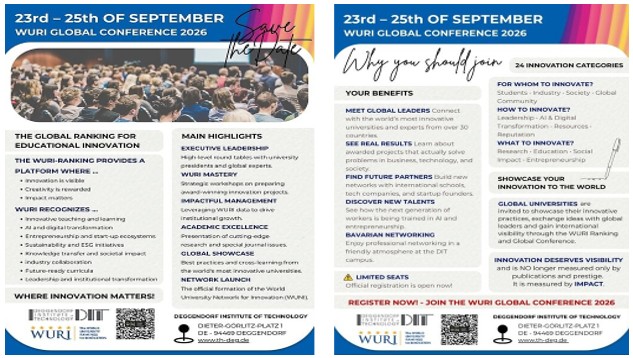
The 3rd WURI Global Conference will be held at the Deggendorf Institute of Technology Deggendorf, Germany, this coming September 23–25, 2026. The conference serves as the global ranking platform for educational innovation. It also marks the official launch of the World University Network for Innovation (WUNI), alongside executive leadership roundtables, strategic workshops, and showcases of award-winning innovation projects from universities across more than 30 countries.
The next series of this article will be followed by the sub-topic: “The Power of Institutional Storytelling: Sharing Personal and Collective Works through International Press Agencies.”
References:
Altbach, P. G. (2015). The Carnegie Classification of American higher education: More—and less—than meets the eye. International Higher Education, (80), 21–23. https://doi.org/ 10.6017/ihe.2015.80.6153.
Badiuzzaman MD (2025). Unpacking the metrics: a critical analysis of the 2025 QS World University Rankings using Australian university data. Front. Educ. 10:1619897. doi: 10.3389/feduc.2025.1619897.
Cho, D.S. (May 6, 2026). The 6th Annual Conference of the Hanseatic League of Universities & The 2026 WURI Global Ranking Ceremony. Founder’s Remarks. National Chi Nan University. Foundation (https://www.wuri.world/)
Dill, D. D., & Soo, M. (2005). Academic quality, league tables, and public policy: A cross-national analysis of university ranking systems. Higher Education, 49(4), 495–533. https:// doi.org/10.1007/s10734-004-1746-8
Kochetkov, D. (2024). University rankings in the context of research evaluation: A state-of-the-art review. Quantitative Science Studies, 5(3), 533–555. https://doi.org/10.1162/ qss_a_00317
Moskovkin, V. M., Zhang, H., Sadovski, M. V., & Serkina, O. V. (2022). Comprehensive quantitative analysis of the TOP-100s of ARWU, QS, and THE World University Rankings for 2014–2018. Education for Information, 38(2), 133–169. https://doi.org/10.3233/EFI-211539
U.S. News & World Report. (2024). Best college rankings. https://www.usnews.com/best-colleges
Usher, A., & Savino, M. (2007). A global survey of university rankings and league tables. Higher Education in Europe, 32(1), 5–15. https://doi.org/10.1080/03797720701618831