By: Argie Q. Aquino, RBP, MHRM, Zhamayn L. Parel, and Shajah Leh O. Taryachen
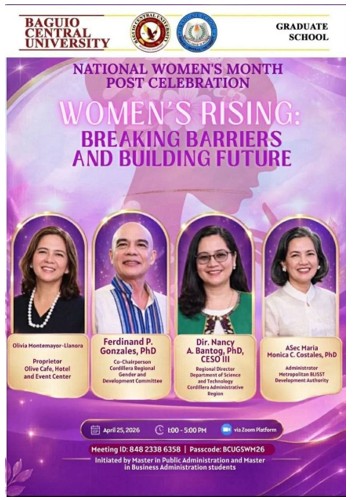
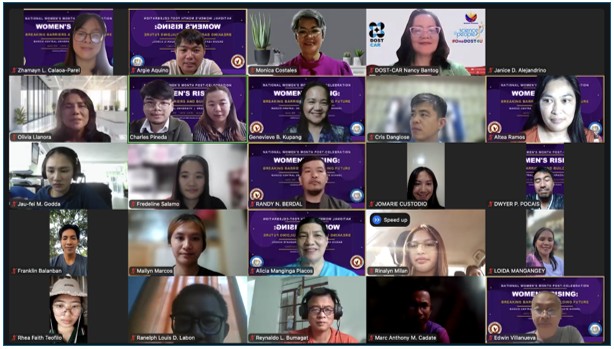
In a meaningful virtual gathering that brought together educators, professionals, students, and advocates, the Graduate School of BCU held its post-celebration activity for National Women’s Month with the theme Women’s Rising: Breaking Barriers and Building Future last April 25, 2026 1PM – 5PM. The event served not only as a tribute to women’s contributions and resilience but also as a vital platform to discuss gender equality, social inclusion, women’s leadership, and the pursuit of Sustainable Development Goal 5 (SDG 5).
Dr. Genevieve B. Kupang, Dean of the Graduate School and University’s International Relations Officer, opened the program with an inspiring message that set the tone for the day. She emphasized that gender equality is far more than a social advocacy, it is a fundamental human right and a governance imperative. Drawing attention to global and local realities, she noted that conflict, economic instability, and systemic gaps continue to weigh heavily on women and children, adding that the Cordillera region has achieved only about 15% of the targets under SDG 5. “Women rise precisely because the ground is not stable,” she stated, highlighting that resilience and progress are born out of difficulty, not perfect conditions. She also affirmed BCU’s commitment to nurturing women’s growth through education, research, and community service, anchored on the values of truth, equity, justice, and freedom.
The program featured distinguished speakers whose messages bridged theory, policy, and real-life experience.
Dr. Ferdinand P. Gonzales, Gender and Development expert and Co-Chair of the Regional GAD Committee of RDC-CAR, discussed intersectionality, privilege, and social inclusion. Using powerful examples including the story of Britain’s first Black ballerina who faced racial discrimination, he explained that barriers are often layered. Disadvantage stems not only from gender but also from ethnicity, ability, status, or location. He stressed that true equality means removing structural obstacles so everyone can participate and thrive, reminding participants that equality is not treating everyone the same, but giving everyone what they need to succeed. He also highlighted the need to promote fairness, equal opportunities, and respect in both public and private institutions.
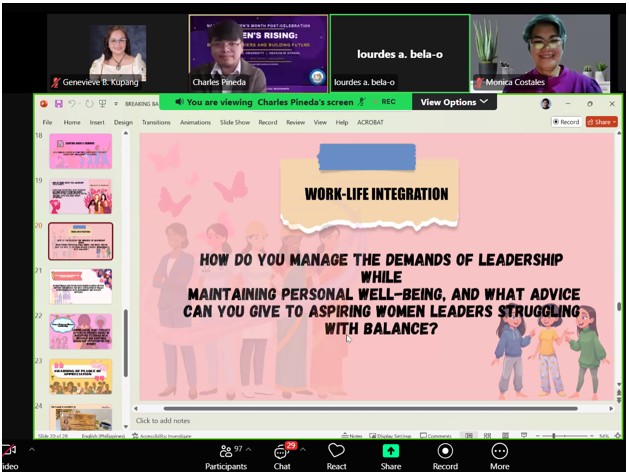
ASec. Maria Monica C. Costales, PhD, Administrator of the Metropolitan BLISTT Development Authority, public servant and advocate, shared how courage and integrity define women’s leadership in governance. She emphasized that public service is a responsibility to protect rights and prioritize the marginalized, proving that women leaders bring compassion and purpose to decision-making.
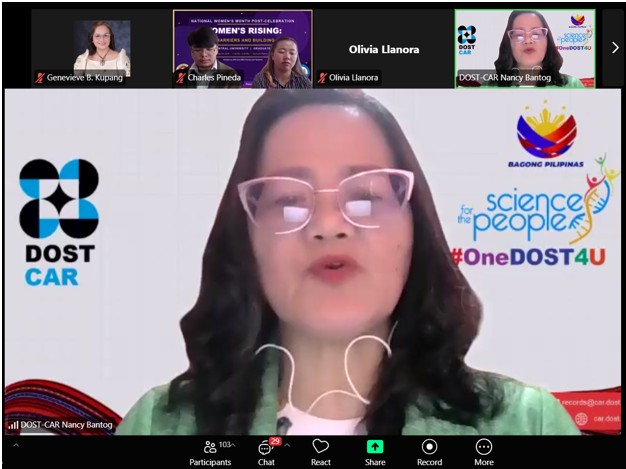
Dir. Nancy A. Bantog, PhD, Regional Director of the Department of Science and Technology-CAR, highlighted that science, technology, and gender equity are inseparable missions. Progress and innovation are only meaningful when they are inclusive, ensuring women are never left behind in development. She encouraged students to continue developing their skills and to remain confident in achieving their goals despite challenges.
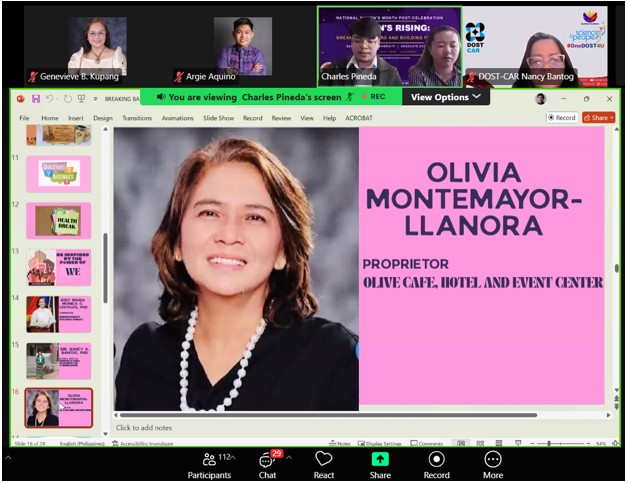
Ms. Olivia Montemayor-Llanora, entrepreneur and business leader, showed that empowerment is forged in daily life. Her journey building a legacy in Subic Zambales demonstrated that women can lead and succeed without waiting for permission or formal titles. Her story served as motivation for students and participants who aspire to become future leaders and entrepreneurs.
Faculty members Dr. Janice D. Alejandrino and Sir Argie Q. Aquino, together with Masters of Ceremony Mr. Charles Pineda and Ms. Lorraine Ud-Ulon, coordinated and facilitated the program, with Dr. Alejandrino delivering closing remarks on behalf of the Vice President for Academic Affairs. She reminded the gathering: “We celebrate not because the struggle is over, but because it continues.” She called for sustained solidarity and partnership, including men as allies, to keep breaking barriers and building an equitable future.
The event reinforced that advancing women’s rights and gender inclusion is everyone’s duty. It clarified that laws and policies are essential, but real change happens when we embed equity and inclusion in every plan, program, and decision. The celebration concluded with a shared commitment to rise together, lift others as we climb, and build a future where every person regardless of gender or identity has equal opportunity to lead, succeed, and thrive.
Participant’s Insights: Ann Marie B. Bartolome, Master of Arts in Education, First Year
The celebration offered many meaningful insights, but the most significant learning I gained was the reminder that gender equality is not just a moral imperative, it is a practical necessity for building inclusive, resilient, and sustainable communities. The discussions highlighted how empowering women and ensuring their leadership in all sectors directly contributes to achieving Sustainable Development Goal 5 (SDG 5), which calls for gender equality and the empowerment of all women and girls.
What struck me most was the emphasis on dismantling systemic barriers, whether cultural, institutional, or economic, that continue to limit opportunities for women despite progress in recent years. Among the speakers, the message that resonated with me most was the one that underscored the importance of representation. Hearing that “women’s voices must not only be heard but also valued in decision-making spaces” was powerful because it re framed leadership as a collective responsibility rather than an individual achievement. This perspective reminded me that leadership is not about titles or positions but about influence, advocacy, and the courage to challenge inequities. It resonated deeply because it connected to my own aspirations of contributing to public service in a way that uplifts marginalized voices.
The discussions on gender equality, women’s leadership, and SDG 5 will influence my practice as a professional and future public servant by shaping how I approach inclusivity in policy-making and organizational leadership. I realized that promoting gender equality requires intentional strategies, such as mentoring women, advocating for equitable workplace policies, and ensuring that programs are designed with diverse perspectives in mind. As a leader, I must commit to creating spaces where women feel empowered to lead and where their contributions are recognized as essential to progress. This means not only supporting women in leadership roles but also challenging biases and stereotypes that perpetuate inequality.
In response to the theme Women’s Rising: Breaking Barriers and Building Future, my personal commitment is to actively champion inclusivity in every sphere I engage in. I will commit to mentoring young women, advocating for policies that promote equal opportunities, and ensuring that gender perspectives are integrated into decision-making processes. More importantly, I will hold myself accountable by continuously educating myself on issues of gender justice and by using my platform, whether in professional settings or community initiatives, to amplify women’s voices. In doing so, I hope to contribute to a future where barriers are not only broken but replaced with bridges that connect people across differences, fostering a society where equality is the foundation of progress. (Ann Marie B. Bartolome, Master of Arts in Education, First Year)
Overall, the National Women’s Month Post-Celebration was a successful and informative activity that promoted awareness on women empowerment, gender equality, and inclusive leadership. The event reminded everyone of the importance of supporting women, breaking barriers, and building a better future for all.
Photo credits: Mr. Argie Aquino and Genevieve B. Kupang