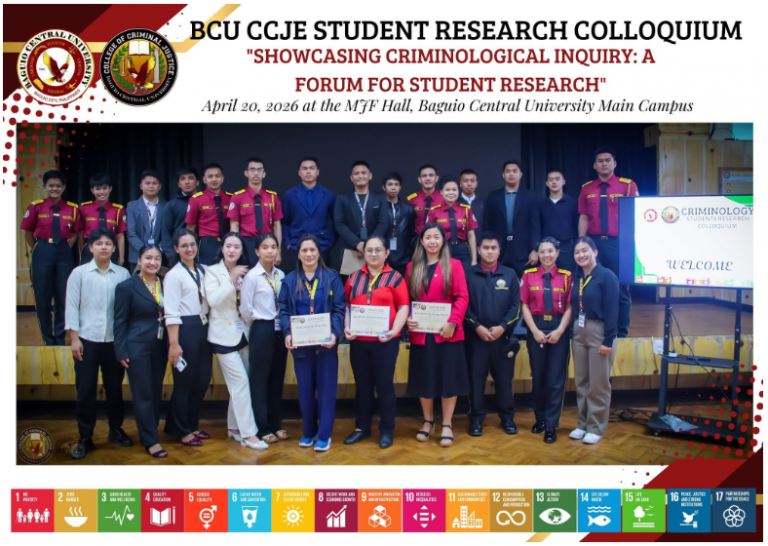
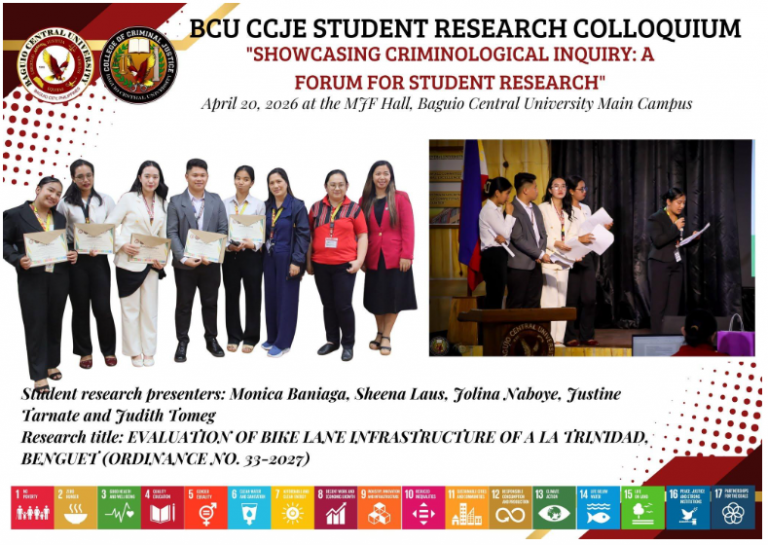
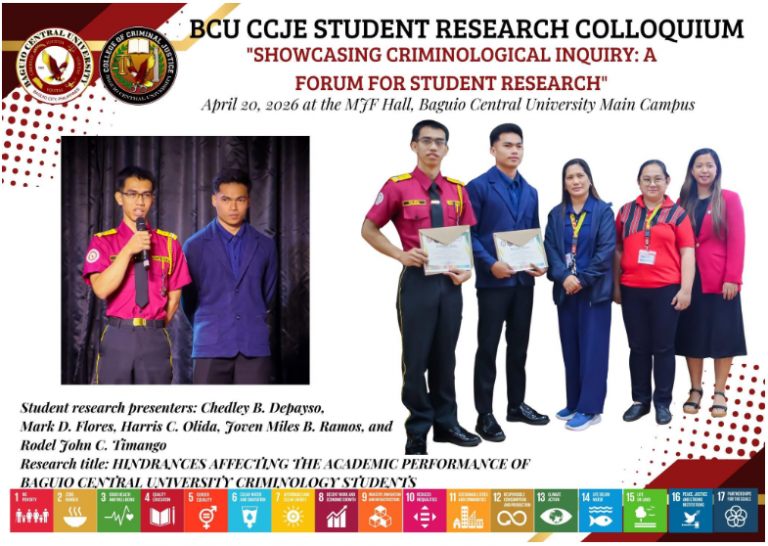
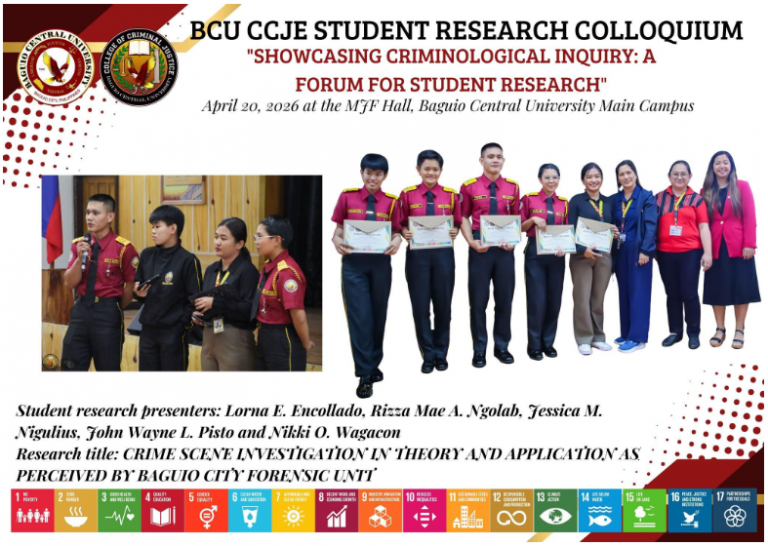
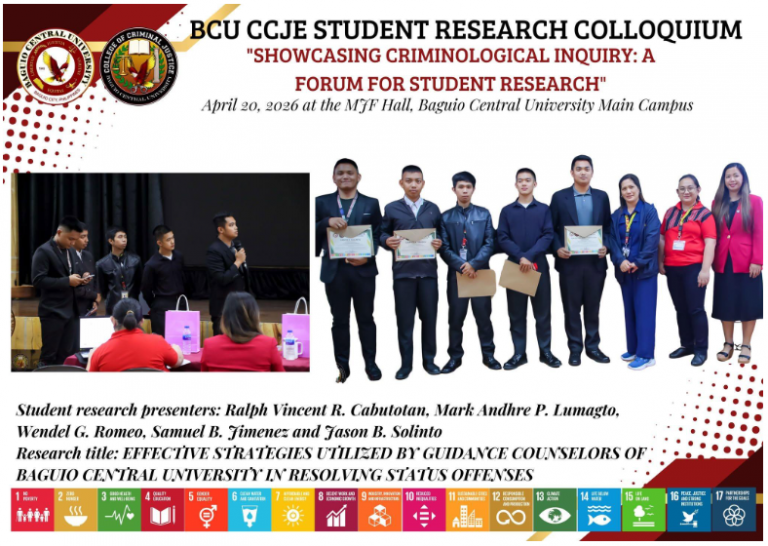
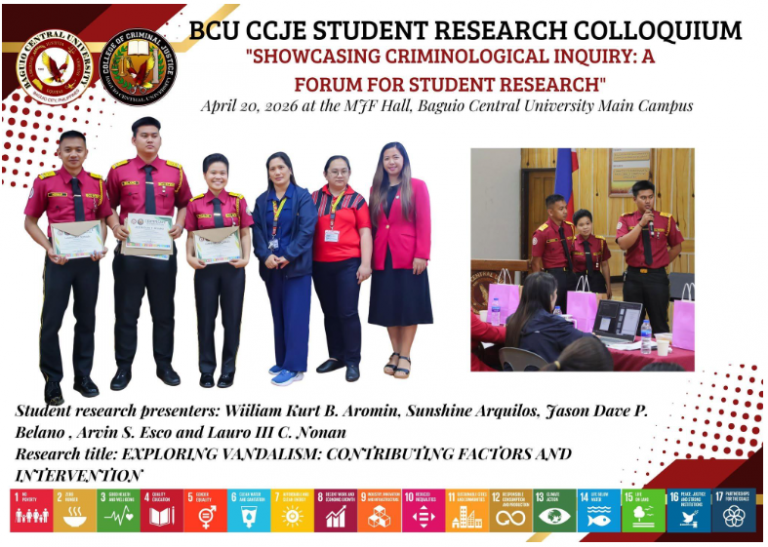
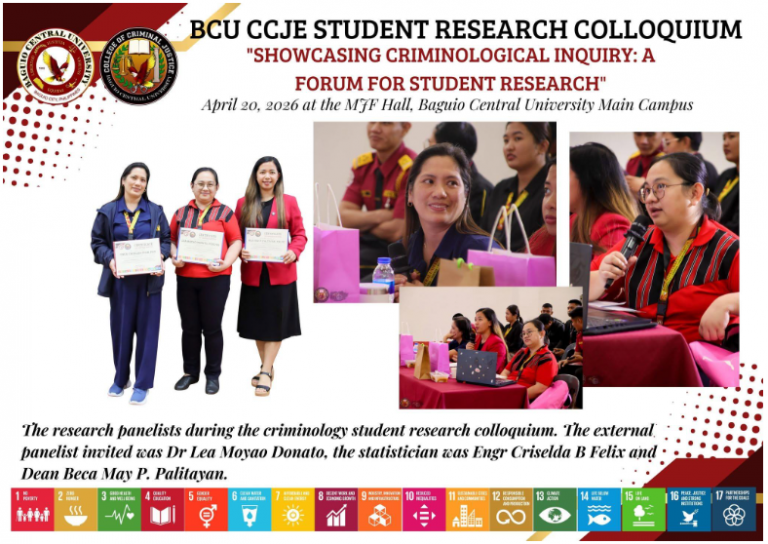
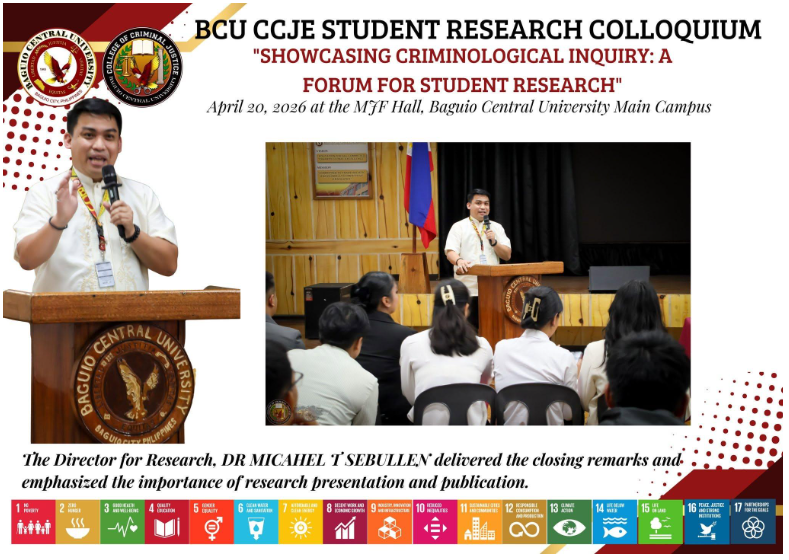
The Baguio Central University College of Criminal Justice Education successfully gathered its criminology students for the Student Research Colloquium 2026, an academic activity that underscored the institution’s dedication to advancing criminological knowledge. It carried the theme “Showcasing Criminological Inquiry: A Forum for Student Research.” It was a dynamic academic forum designed for students to present their research outputs, exchange ideas, and engage in scholarly discourse.
The colloquium took place on April 20, 2026 (Monday), from 1:00 PM to 4:00 PM, at the MJF Hall, BCU Main Campus. It aimed to strengthen the research culture within the institution and recognize outstanding student research. The colloquium provided a platform for students to present their studies, encouraged intellectual interaction, and allowed students to receive constructive feedback from peers and experts to enhance the quality and relevance of their research. Outstanding student researchers were also recognized through awards and citations.
The successful conduct of the Student Research Colloquium 2026 strongly aligns with two primary United Nations Sustainable Development Goals:
SDG 4: Quality Education
The colloquium is a direct manifestation of inclusive and equitable quality education. By providing a platform for students to present their research and receive constructive feedback, BCU CCJE fosters critical thinking, academic discourse, and intellectual growth. It empowers learners to become active participants in the creation of knowledge, ensuring they are equipped with the analytical skills necessary for their future careers.
SDG 16: Peace, Justice, and Strong Institutions
As a criminology-focused event, the research presented directly contributes to the understanding of crime, justice, and institutional effectiveness. By encouraging scholarly inquiry into criminal justice, the colloquium helps build the foundational knowledge needed to create effective, accountable, and inclusive institutions. The students’ research outputs are not just academic exercises; they are potential blueprints for real-world justice reform, contributing to the promotion of peaceful and inclusive societies.