
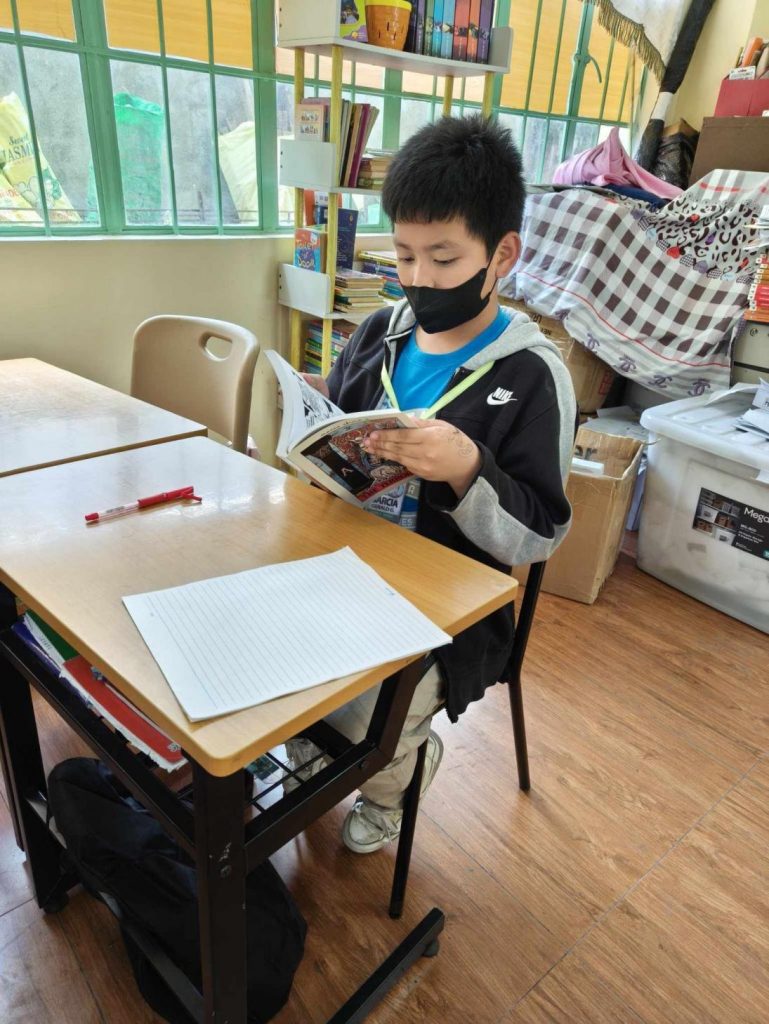
By Ruther Ray C. Ruado, BCU EDMGT student
Astonishing Power of Manga
Manga is a graphic novel with picture-wide-eyed characters, over-the-top emotions, and stories intended for kids. But that’s just the surface. Beneath those panels lies a world bursting with emotion, culture, and insight. Manga is a powerful storytelling platform that touches hearts, sharpens minds, and bridges worlds.
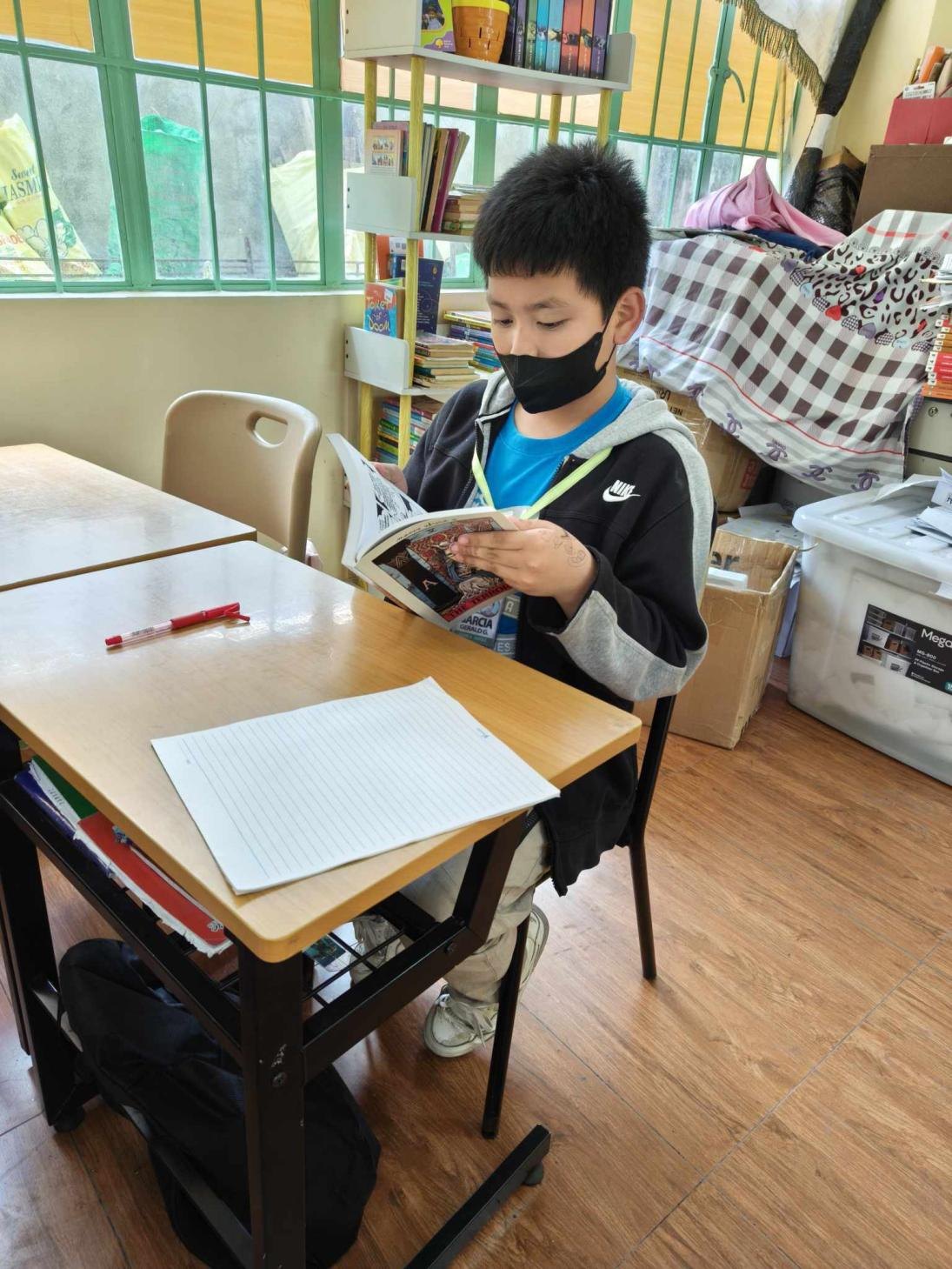
It’s no wonder manga, along with manhwa from Korea and manhua from China, is now a global phenomenon, read by people of all ages. It boosts literacy (Mendoza & Perez, 2021), nurtures empathy (Wright, 2022), sparks critical thinking (Lopez & Zhang, 2023), and supports mental health (Park & Lin, 2021).
As Friedrich Nietzsche, an influential German philosopher, once wrote, “Invisible threads are the strongest ties.” Manga is one of those threads, connecting people across countries and cultures through shared stories that speak to what it means to be human.
The global manga industry now brings in billions (Statista, 2023). Beyond business, it is an art form that shapes the way we learn, feel, and grow. Personally, manga began as a way to escape. But somewhere along the way, I stopped running from the world and started understanding it through the stories I read. I saw pieces of myself in those characters, learned to name feelings I couldn’t explain, and found comfort in its multifaceted universe. Manga entertained and inspired me.
A Gateway to Literacy
For some, manga is the first book they actually want to read. With its visual storytelling and engaging dialogue, it makes reading feel natural, especially for those who struggle with dense or traditional texts.
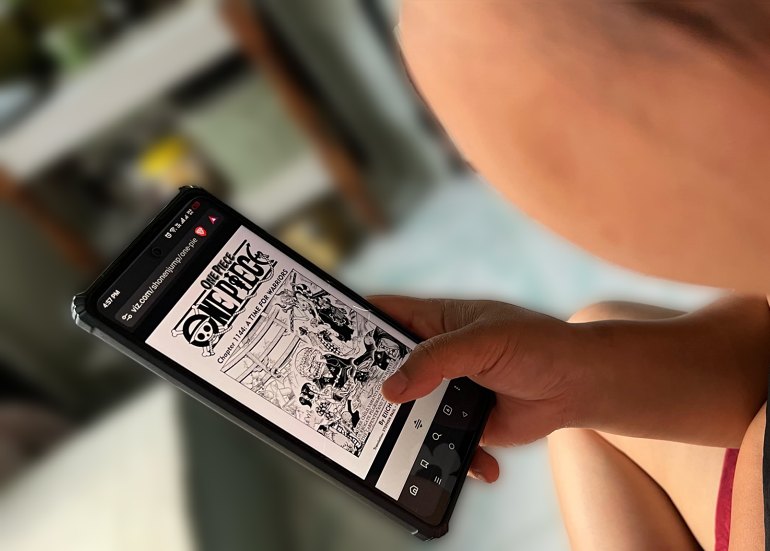
Manga combines images and words in a way that activates multiple parts of the brain, making it especially effective for young readers, second-language learners, and reluctant readers (Gleason, 2022; Tanaka, 2023).
One study found that manga improves vocabulary, comprehension, and grammar in students learning English (Mendoza & Perez, 2021). The serialized format encourages regular reading habits, with cliffhangers that leave readers hungry for more. I know the feeling—I’ve spent many late nights waiting for the next chapter, driven by curiosity and wonder.
Moreover, the fast-paced narratives and diverse genres cater to various reader preferences. Popular series like One Piece and Shingeki no Kyojin involve intricate story arcs and large character casts, sharpening readers’ memory and comprehension.
But it’s more than it’s language in context. Slang, honorifics, idioms, and cultural nuances show how language lives and breathes. Textbooks teach grammar. Manga teaches voice.
Teaching and Touching the Heart
Manga develops reading skills and teaches emotional intelligence.
Whether it’s the quiet ache of Your Lie in April or the fiery determination in My Hero Academia, manga offers characters who feel deeply real. Their journeys, filled with love, loss, failure, and redemption, mirror our own.
Research confirms that reading fiction, especially emotionally rich narratives, helps readers develop empathy and emotional insight (Lee & Yamamoto, 2022; Wright, 2022). Aristotle once said, “Educating the mind without educating the heart is no education at all.” Manga does exactly that.
Through facial expressions, panel pacing, and unspoken moments, manga trains us to recognize emotions not just on the page, but in life. It teaches us to listen to what isn’t said.
Crossing Cultures, Building Bridges
Manga is a cultural guide, introducing readers to Japanese customs, values, and social norms, from tea ceremonies and cherry blossoms to family dynamics and postwar memory.
But its reach extends far beyond Japan. Manga like Satoko and Nada explores intercultural friendships with honesty and warmth (Yupechika, 2021), reminding us that connection goes beyond borders.
Other works like Shokugeki no Soma use food as cultural expression, while Hetalia reimagines global history with comedy and satire.
As Confucius once said, “Real knowledge is to know the extent of one’s ignorance.” Manga helps us confront that ignorance—not with shame, but with curiosity. It renders the foreign familiar—and the familiar, newly profound.
Fueling Critical Thinking
Think manga is all fluff? Think again.
Manga is anything but shallow. Death Note dares to ask: What defines justice? Who gets to decide right from wrong? Meanwhile, Ghost in the Shell ventures deep into the nature of identity, consciousness, and what it means to be human. Even fast-paced shonen series, geared toward younger audiences, often confront profound questions about ethics, power, and personal responsibility.
Studies show that graphic novels help readers engage with complex historical and ethical issues (Wineburg & Nokes, 2022). Manga trains readers to pick up on symbolism, question motives, and infer deeper meanings (Lopez & Zhang, 2023).
Manga challenges assumptions, sparks questions, and invites reflection.
Healing Through Story
At its deepest level, manga can be a form of therapy. For those battling anxiety, loneliness, or grief, certain stories offer a quiet kind of company. March Comes in Like a Lion portrays a young man’s depression with rare sensitivity. Orange confronts guilt, suicide, and the hope of second chances.

Manga makes space for hard conversations and for healing. Studies point to both the risks and rewards of anime and manga engagement in relation to mental health (Springer Nature, 2024; Park & Lin, 2021), but many find that reading these stories creates moments of clarity, catharsis, and connection.
More than once, I’ve found myself unexpectedly crying at a chapter, or feeling lighter after finishing a volume. And I know I’m not alone. Manga communities, both online and offline, are filled with people who’ve been moved, shaped, and supported by these stories.
Sometimes, the panels reflect our pain so clearly that we feel seen. And in that moment, healing begins.
What Comes Next
Despite its growing popularity, manga still faces skepticism. Some see it as unserious or juvenile, an outdated mindset that ignores the evidence of its depth and power.
But educators are beginning to embrace it as a valuable classroom tool (Chen, 2022), and creators continue to push boundaries, spotlighting diverse voices and exploring urgent themes with sincerity.
Manga is here to stay and its influence is only growing.
Let’s stop asking if manga is real literature. Instead, let’s ask ourselves: What have we learned from it? Because sometimes, the most profound stories are told not in paragraphs but in panels.
The article “Beyond Kid Stuff: Manga as Literacy, Culture, and Healing” aligns with several UN Sustainable Development Goals: SDG 4 (Quality Education) by demonstrating how manga boosts vocabulary, reading comprehension, and critical thinking; SDG 3 (Good Health and Well-Being) by highlighting its role in mental health, emotional literacy, and therapeutic healing; and SDG 10 (Reduced Inequalities) and SDG 16 (Peace, Justice, and Strong Institutions) by showing how cross-cultural storytelling fosters empathy and global understanding. Blending personal narrative, research, and popular culture, the article persuasively reframes manga as a powerful tool for literacy and social well-being.
“Stories are the communal currency of humanity.”
—Terry Tempest Williams
*The article was crafted under the guidance and mentorship of Dr. Genevieve B. Kupang.
References:
Chen, L. (2022). The impact of graphic novels on ESL learners’ literacy development. Language Learning Journal, 50(4), 560–576
Gleason, J. (2022). How graphic novels increase students’ engagement and literacy skills in language learning classrooms. Journal of Modern Pedagogy, 18(2), 233–249
Lee, H., & Yamamoto, R. (2022). Emotional literacy through manga: A study of Japanese high school students. Asian Journal of Education, 43(2), 88–104
Lopez, M., & Zhang, W. (2023). Manga in the classroom: Enhancing critical thinking skills. Journal of Literary Education, 19(1), 112– 128
Mendoza, D. F., & Perez, A. (2021). The influence of English-translated manga on students’ English literacy development. International Journal of Language and Literature, 9(1), 45–59. https://media.neliti.com/media/publications/438545-the- influence-of-english-translated-mang-b62cd88c.pdf
Park, S., & Lin, M. (2021). Narrative escapes: The role of graphic novels in promoting adolescent mental health. Journal of Adolescent Health and Development, 59(2), 145–153.
Springer Nature. (2024). Manga, anime, and mental health: A psychological exploration of fandom and emotional coping. Journal of Public Health: From Theory to Practice. https://link.springer.com/article/10.1007/s10389-024-02341- 9
Statista. (2023). Global manga market revenue 2017–2023. https://www.statista.com/statistics/1098676/manga-market- size-japan
Tanaka, M. (2023). Manga and language learning: A tool for enhancing vocabulary acquisition. Japanese Language Education Research, 35(1), 25–40.
Wright, B. (2022, May 15). Reading improves kids’ emotional intelligence and increases empathy. Reading Partners. https://readingpartners.org/blog/reading-improves-kids- emotional-intelligence-increases-empathy/
Wineburg, S., & Nokes, J. (2022). Graphic novels accelerate critical thinking and capture nuance in history classrooms. Stanford News. https://news.stanford.edu/stories/2022/02/graphic- novels-can-accelerate-critical-thinking-capture-nuance- complexity-history/
Yupechika. (2021). Satoko and Nada (Vols. 1–4). Seven Seas Entertainment.
About the Author:
Ruther Ray C. Ruado hails from the cool and vibrant city of Baguio, Philippines. He is presently pursuing a Doctor of Education degree, majoring in Educational Management, at Baguio Central University (BCU). Driven by a passion that balances conventional and unconventional approaches to contemporary issues, he explores the dynamic intersections of popular culture, education, and social change.