
By: Jocelyn S. Pilas (BCU Doctoral Student)
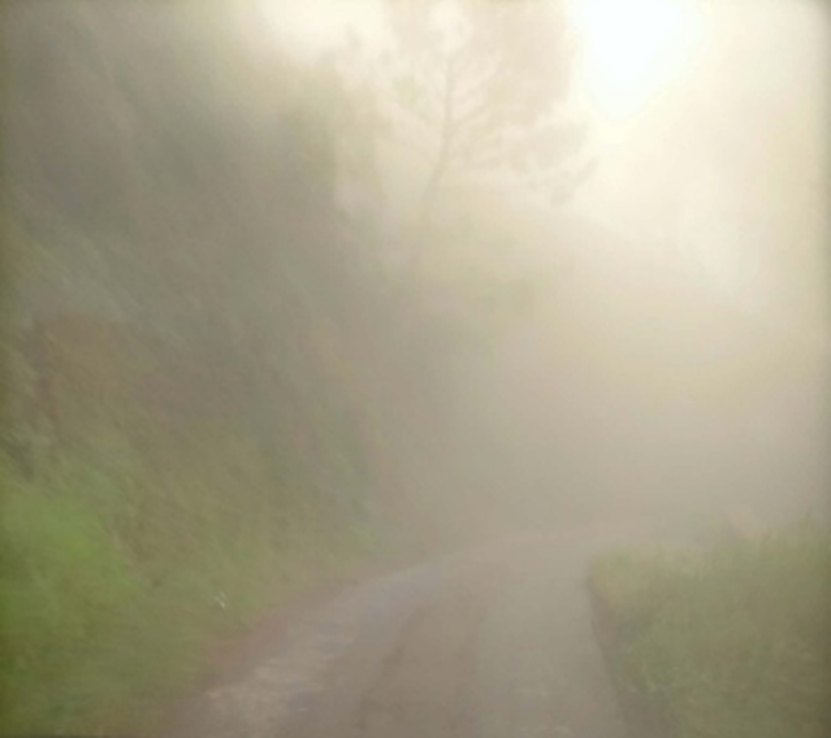
BCU Doctoral Student and School Head Jocelyn S. Pilas shares how educators and communities in Benguet embody the virtue of Equitas and SDG 4 to sustain education during extreme weather disruptions.
Learning Continuity in Pugo, Baculongan Norte, Buguias, Benguet: Sustaining Education Amid Monsoon-Related Disruptions
Education is a fundamental right and an essential driver of personal and community growth. However, in mountainous communities like Pugo, Baculongan Norte, Buguias, Benguet, sustaining education during extreme weather is an ongoing challenge. Prolonged rainfall during the southwest monsoon (Habagat) causes severe landslides, hazardous road closures, thick fog, power outages, and communication blackouts. These environmental barriers frequently suspend face-to-face instruction and isolate learners in distant sitios.
Mountain Environment and Impacts on Schooling
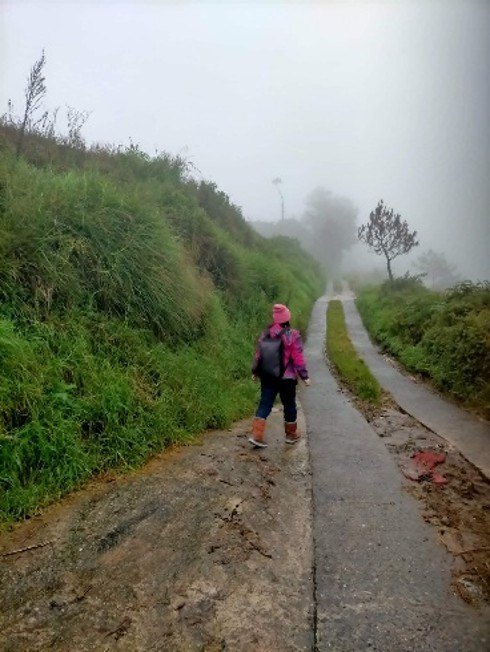
Navigating Pugo’s high-altitude terrain becomes hazardous during heavy rains. Dense fog drastically reduces road visibility, while chilly temperatures and heavy rain make travel unsafe for students and teachers alike. When roads are completely impassable, school personnel—including the author—often walk 2.5 to 3 hours through steep mountain trails just to reach the school or deliver materials.
In addition to safety risks, physical infrastructure suffers. Leaking roofs and water intrusion damage classrooms, furniture, textbooks, and electronic devices, while power and internet disruptions render digital tools unusable. Over time, these recurring interruptions disrupt learning routines and threaten student engagement.
Adaptations, Resilience, and Low-Tech Approaches
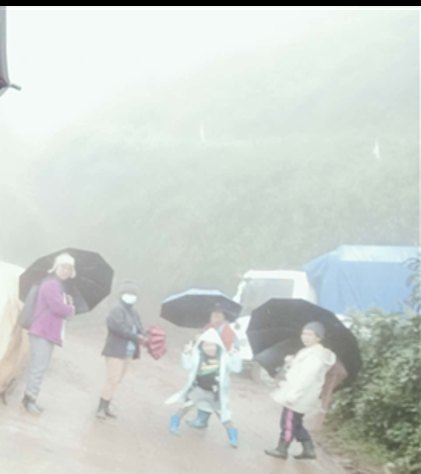
To overcome these barriers, school personnel employ practical, low-technology strategies. Teachers modify lesson plans, prepare self-paced printed modules, and extend submission deadlines for affected students. During power outages or signal blackouts, educators trek directly to students’ homes to distribute learning materials and conduct wellness check-ins, ensuring learners remain supported both academically and emotionally.
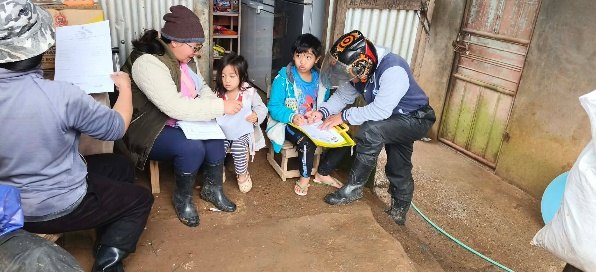
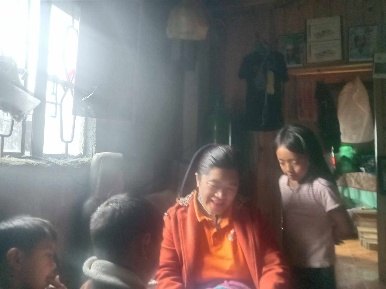
School personnel provided learning assistance through home visits during a weather-related disruption in August 2025.
For their part, learners demonstrate remarkable perseverance. Many study by candlelight, set up temporary study spaces at home, and balance schoolwork alongside family responsibilities. Learning continuity succeeds when students are treated as active partners in their education, supported closely by teachers and families.
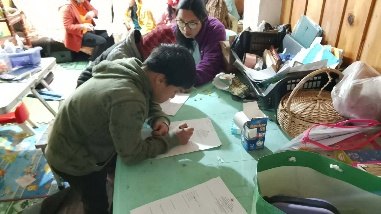
Community Support and the Spirit of Bayanihan
Sustaining education in Pugo is a shared responsibility. Parents support home-based learning, while community members and local officials embody the spirit of bayanihan when weather conditions improve. Together, they clear landslide debris from pathways, repair leaking gutters, and clean classrooms, ensuring a swift and safe return to regular instruction.
Alignment with Sustainable Development Goals (SDGs)
These community-led efforts directly align with SDG 4: Quality Education, specifically Target 4.a, which calls for building and upgrading education facilities that are child, disability, and gender-sensitive while providing safe, non-violent, inclusive, and effective learning environments for all. Furthermore, monitoring resilient infrastructure during disruptions addresses Indicator 4.a.1 by tracking the proportion of schools with access to basic services, safe infrastructure, and essential learning materials even amidst environmental hazards. Grounded in the Baguio Central University virtue of Equitas (Equity), these proactive measures ensure that geographically isolated students are given fair, accessible, and compassionate opportunities to learn regardless of their socio-economic or environmental limitations.
Systemic Solutions for Climate-Responsive Education
While local adaptability is vital, community resilience must be backed by institutional support. Teachers and families cannot independently resolve structural hazards, unreliable power, or poor telecommunications. Long-term systemic solutions require:
-
Upgrading school roofing, drainage systems, and structural safety.
-
Fortifying mountain roads, pathways, and transport access.
-
Protecting ICT equipment and learning resources from moisture and water damage.
-
Integrating disaster preparedness into annual school planning via pre-packaged emergency learning kits.
The experience of Pugo demonstrates that education can persist even when conventional pathways are disrupted. When schools adapt, families engage, and communities unite through bayanihan, geographical and weather-related obstacles can be overcome. Paired with sustained systemic investment, this collective resilience ensures that every child’s right to quality education remains protected—no matter the storm.
About the Author
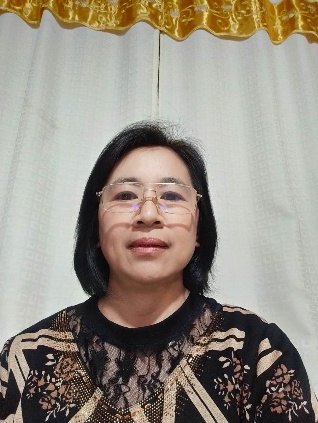
Jocelyn S. Pilas is a native of Buguias, Benguet, and currently serves as a school head. Driven by the conviction that continuous learning is essential to dynamic and responsive leadership, she is currently pursuing her doctoral degree at Baguio Central University. Beyond her professional achievements, she is a proud mother of four.