Baguio Central University celebrates Buwan ng Wika 2026 with a look at Filipino and AI
A language is more than a set of words. It carries a people’s memory, humor, and way of seeing the world. For generations, Filipino has been passed down through stories, songs, and conversations at the dinner table. Today, it is also typed into search bars, spoken to phones, and fed into machines that are learning to understand it.
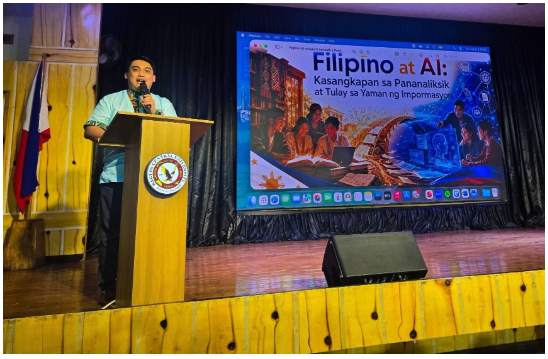
That meeting of old and new was at the heart of Baguio Central University’s Buwan ng Wika Celebration 2026. This year’s theme, “Filipino at AI: Kasangkapan sa Pananaliksik at Tulay sa Yaman ng Impormasyon” (Filipino and AI: A Tool for Research and a Bridge to the Wealth of Information), invited the university community to see the national language not as something left behind by technology, but as something that can travel with it.
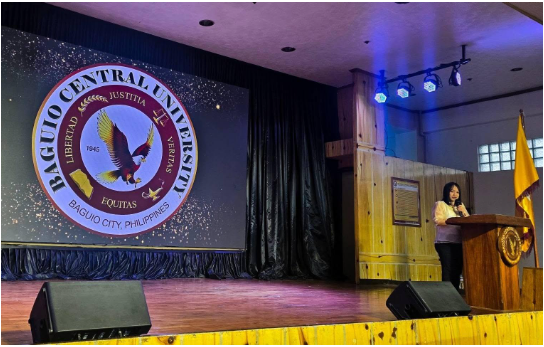
The celebration was led by Ms. Arlene A. Mintas, the university’s Filipino instructor and Community Extension Coordinator. Under her leadership, the program brought the university together around a single idea: that the Filipino language belongs in every space where knowledge is made, including the newest ones.
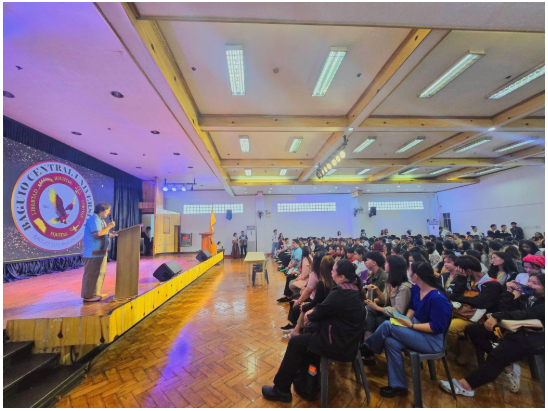
The celebration drew a full house. Dr. Elma D. Donaal, Vice President for Academic Affairs, and Dr. Lourdes M. Trajano, Dean of the College of Teacher Education and Liberal Arts (CTELA), joined faculty members and students from the different colleges of the university. For one afternoon, students of every program shared the same hall and the same language.
The highlight of the day was the students themselves. They took part in different activities, showing a different side of the Filipino language. In spoken word poetry, students stood before the audience and gave voice to their own verses, weaving rhythm, emotion, and conviction into every line. Their pieces showed that Filipino can be bold and modern, as fitting for questions about technology as it is for questions about the heart. In the singing contest, performers reminded everyone that Filipino is also a language of feeling, one that is often best heard in song. Beyond the contests, students also presented songs and dances that filled the stage with color and movement, turning the celebration into a showcase of Filipino culture as much as a celebration of its language.
The theme was given deeper meaning by Dr. Michael T. Sebullen, Vice President for Administration and Research Director, who delivered words of wisdom focused on this year’s celebration. The theme itself has two halves: artificial intelligence as a tool for research, and the Filipino language as a bridge to the wealth of information that research can unlock.
The question behind the theme is an important one for students. Artificial intelligence is changing how people search, write, and learn. If Filipino is present in those tools, then Filipino speakers can use them to explore, create, and share knowledge in their own language. If it is absent, the language risks being left out of the conversations that will shape the future. Celebrating Filipino alongside AI is a way of making sure the language keeps its place.
For CTELA, the celebration carries special weight. Many of its students are training to become teachers, and some will one day teach Filipino itself. They will stand in classrooms where their students use technology every day. Knowing how to use those tools while keeping the national language alive will be part of their work.
The celebration also connects to a larger goal. Sustainable Development Goal 4, Quality Education, calls for education that promotes appreciation of cultural diversity and culture’s contribution to sustainable development. Language is one of the deepest expressions of culture. By celebrating Filipino and exploring how it can grow alongside new technology, the university helps ensure that quality education remains rooted in identity.
When the contests ended and the hall emptied, the message of the day remained. Technology will keep changing, and the tools of research will keep evolving. But the language a people uses to ask questions, tell stories, and share what they know is worth carrying forward. At Baguio Central University, Filipino and AI did not stand on opposite sides. They met in the middle, as the theme promised, like two ends of the same bridge.