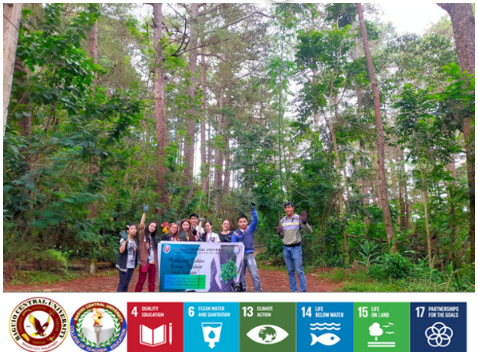
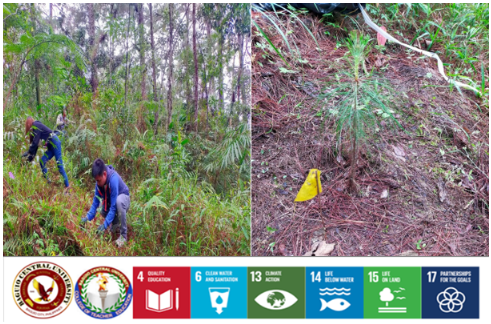
On May 23, 2025, the students of Baguio Central University, Baguio City, initiated by the officers of Logichemia Club, the Bachelor of Elementary Education (BEED) Club, the Values Education students, and the CTELA- SGO Officers, led by their governor, Mr. Jordan Chalapas, conducted a regular Ring Weeding activity at Busol Watershed, Ambiong, Baguio City. The University Community Extension Coordinator, Ms. Arlene A. Mintas, headed this community extension activity, together with the CTELA Community Extension Coordinator and LogiChemia adviser, Ms. Hazel A. Castillo.
This outreach activity reflects the University’s ongoing environmental responsibility, organized in partnership with the Community Environment and Natural Resources Office (CENRO) Baguio. It specifically aims to protect individual trees or seedlings from being choked out by weeds and to maximize their growth and yield. By clearing a clean, circular zone directly around the base of a plant, you ensure that it does not have to fight neighboring vegetation for survival. It is a highly efficient agricultural technique that focuses labor and resources only where the plant needs them most. This is done once every semester of the school year and is participated in by the Baguio Central University students, initiated by the College of Teacher Education and Liberal Arts (CTELA) students.