BAGUIO CENTRAL UNIVERSITY

(074) 444-9247 / (074) 424-8216 #18 Bonifacio Street, ABCR Barangay, Baguio City
Baguio Central UniversitySoaring High Towards Excellence

The Alchemy of the Highlands: How Baguio Central University is Redefining Science Education from the Lab Bench to the Backyard

By: Hazel A. Castillo

Community Extension Coordinator, CTELA

Can you measure the invisible heat of a chemical reaction without a commercial laboratory calorimeter? For Bachelor of Secondary Education (BSEd) major in Science students at Baguio Central University, the answer is a resounding yes.

In their advanced Thermodynamics class, these future educators take the abstract, mathematically rigorous concept of Enthalpy and strip it of its intimidating textbook armor. Instead of relying on expensive, factory-calibrated thermal jackets, they turn everyday household items into highly sensitive thermodynamic chambers. By engineering homemade calorimeters from simple ice cream containers and kitchen reagents, they prove that high-level physical chemistry can thrive far outside elite laboratory walls, cultivating resourcefulness for their future classrooms.

Science education serves as the cornerstone of critical thinking, innovation, and technological progress. Yet, for decades, classrooms have risked turning this dynamic frontier into a passive exercise of memorizing bolded textbook terms and historical formulas. The antidote to this stagnation lies right at the laboratory bench. When learning is rooted in hands-on, basic laboratory experimentation from early childhood through high school, it transforms passive instruction into active discovery, sparking a lifelong passion for inquiry. However, scaling up this vital pillar of education cannot be a chaotic free-for-all. Enhancing the laboratory experience while maintaining rigorous, uncompromising quality requires a deliberate, developmental approach to school laboratory work—one that meets students precisely where they are.

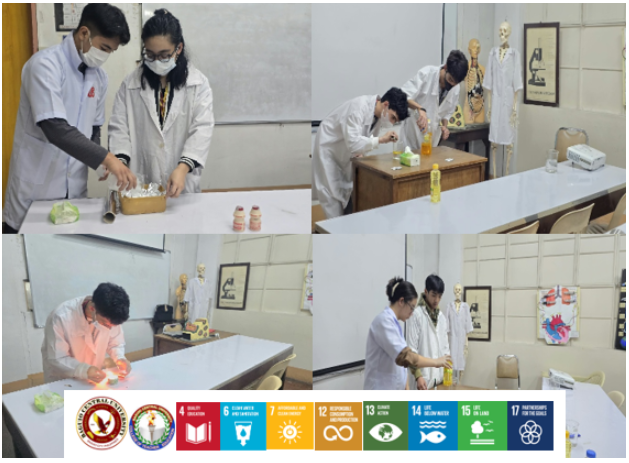
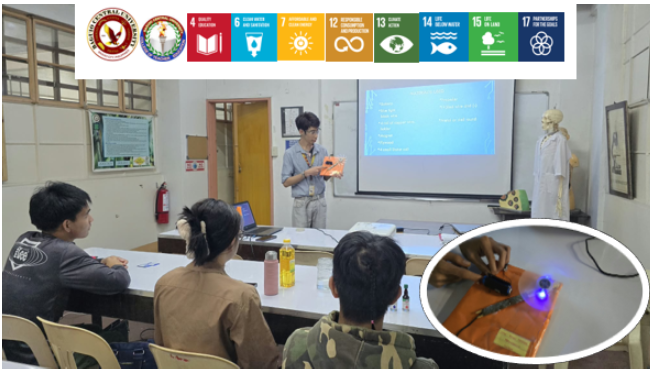
In the heart of the Cordilleras, Baguio Central University’s College of Teacher Education and Liberal Arts (BCU-CTELA) is quietly staging a classroom revolution. Through its Bachelor of Secondary Education (BSEd) major in Science program, this institution is proving that world-class scientific inquiry doesn’t require a million-peso corporate budget. Instead, future educators are being trained to bridge the gap between rigorous academic theory and real-world resourcefulness. By masterfully balancing standard laboratory apparatuses with common household items and indigenous materials sourced right from the local community, BCU-CTELA is rewriting the script on how science is taught, experienced, and democratized. At Baguio Central University, science education is treated not as a static collection of facts, but as an evolving landscape of discovery. The university leadership and its faculty share an unshakeable conviction: laboratory activities must never be confined to rigid, unchanging routines. Instead, hands-on experimentation must dynamically adapt in complexity, matching the cognitive growth of the student.

Forging the Conscientious, Resourceful Educator. To predict whether a physical system can perform useful, unbound work, physicists must balance total heat exchange (Enthalpy) against natural molecular disorder (Entropy).

At BCU, a student’s laboratory journey is designed as a deliberate transition. It begins with the raw, sensory wonder of basic chemical reactions and physical phenomena, graduates into the rigorous domain of quantitative precision and statistical analysis, and ultimately culminates in the real-life integration of every concept learned, including safety and ethical implications of scientific breakthroughs. 

Integrating the United Nations Sustainable Development Goals (SDGs) into hands-on science activities creates a learning model where the local community directly interfaces with global challenges. By substituting expensive laboratory equipment with household items and indigenous materials, educators achieve a rare educational trifecta: lowering costs, respecting local ecosystems, and embedding real-world sustainability into the curriculum. When students look around their homes and environment to build experiments, they naturally engage with the core themes of the UN Sustainable Development Goals. It integrates the following specific Sustainable Development Goals: SDG 4 (Quality Education) by making students’ homes an extension of the school laboratory; SDG 6 (Clean Water & Sanitation) by understanding clean water runs directly through the household kitchens and indigenous ecosystems of the Cordillera region; SDG 7 (Affordable & Clean Energy) by repurposing everyday materials and leveraging indigenous resources, students uncover the fundamental mechanics of energy conversion; SDG 12 (Responsible Consumption)  by sustaining a “Zero-waste Lab”; SDG 13 (Climate Action) by developing an eco-conscious mindset; SDG 14 & 15 (Life Below Water / on Land) by pivoting to household items and community-sourced materials, science educators can build highly accurate ecological models right on the laboratory bench. This approach teaches students to track terrestrial stressors and downstream aquatic impacts using local resources as a living diagnostic tool, and SDG 17 (Partnership for the Goals), as when a classroom substitutes imported equipment with household items and indigenous community materials, it actively models knowledge equity, open-source resource sharing, and community-academic alliances.