BAGUIO CENTRAL UNIVERSITY

(074) 444-9247 / (074) 424-8216 #18 Bonifacio Street, ABCR Barangay, Baguio City
Baguio Central UniversitySoaring High Towards Excellence

BCU Graduate Student Explores Dinah-da and Balhan: Benguet’s Indigenous System of Shared Labor and Support

by Ryan D. Aladog

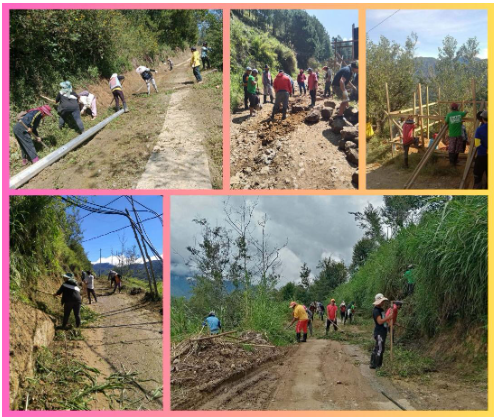
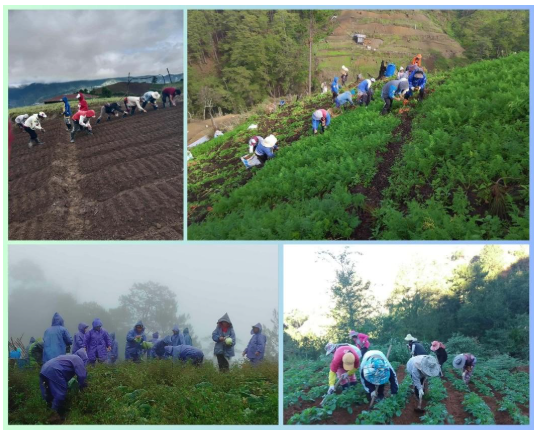
Dinah-da, the indigenous practice of communal labor, brings the community together in the fields for planting, harvesting, and cultivating the land as one.

In the cool highlands of Benguet, where mountains rise like guardians and communities are held together by kinship, labor, memory, and faith, there is a tradition that continues to shape the lives of the Kalanguya people of Kabayan and Buguias. It is called Dinah-da.

It is similar to the Tagalog practice of Bayanihan, the spirit of helping one another. Dinah-da is an indigenous act of assistance like carrying heavy things, working together in the fields, or lending a hand when needed. It is a way of life. It is a shared commitment that a person, a family, or a household will never stand alone in times of need.

Dinah-da is built on the belief that life is lighter when carried by many hands. It is demonstrated in moments of labor, celebration, hardship, and grief. All these are Dinah-da: neighbors gather to build a home; farmers help one another prepare fields; crops are harvested with the strength of many, and most especially when a family faces the death of a loved one.

Long before paved roads reached these mountain communities and money became the common measure of service, the people already possessed a deeply rooted system of care. When a field needed clearing, neighbors gathered. When harvest time arrived, crops were gathered through collective strength. Most especially, when a family faced the grief of loss, relatives and community members stood together. No one counted hours; no one demanded wages. Help was given simply because people belonged to one another. 

That spirit remains alive today.

Community members gather to maintain farm-to-market roads, keeping essential lifelines open for local farmers and families.

In Kabayan and Buguias, Dinah-da is felt during wakes and burials. When someone dies, the loss is carried by the whole community. Relatives, neighbors, clan members, friends, and even those who may not be closely related come forward to help. The grieving family is not left to think of every task, expense, and need. The community steps in with quiet strength.

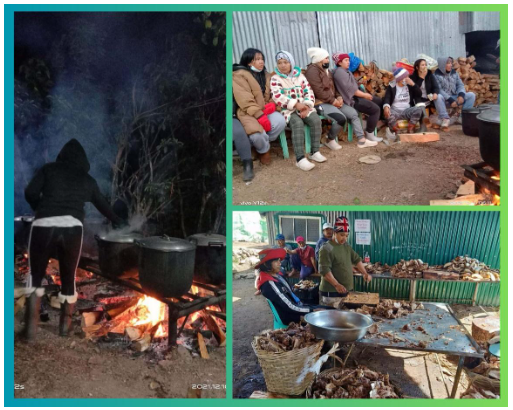
The men often go up the mountains to gather wood. Some of the wood is used for cooking food. Some may be used in preparing the coffin or the bier, the resting place of the departed. Those who own vehicles volunteer to transport the wood down from the mountains. Others prepare the area, set up tents or temporary shelters, and make sure that visitors have a place to stay, rain or shine.

Some men help slaughter pigs and prepare meat for the meals. Others assist in cooking, arranging spaces, carrying heavy materials, building what needs to be built, and making sure that the wake can continue with order and dignity. These tasks require strength, skill, patience, and time. Yet they are done freely, without expectation of payment.

The women also do essential responsibilities. They prepare meals for those who gathered wood and those helping with physical work. They cook, serve coffee, prepare snacks, attend to visitors, help organize the kitchen, care for children, and quietly support the bereaved family in many ways. Their work is often constant and demanding. It may not always be loud or visible, but it is deeply important. In every cup of coffee served, every pot of rice prepared, every visitor welcomed, and every small need attended to, care is made visible.

Embodying collective effort, cultural duty, rich tradition of shared labor and strong family and community ties.

Through Dinah-da, everyone contributes whatever they can: strength, time, food, skills, transportation, or administrative support, demonstrating that value lies in presence, effort, and sincerity rather than money alone. This tradition reflects the understanding that grief is a shared community matter, turning wakes into spaces where sorrow is collective, and support is demonstrated through action.   

A central element of this practice in Kabayan and Buguias is Balhan, a clan-based contribution distinct from general community donations (Opu). While Opu comes from visitors, friends, and neighbors, Balhan is a collective financial contribution required specifically from the deceased’s family clans. It underscores that clan membership is not merely about lineage or reunions, but a binding responsibility to share one another’s burdens in times of need.

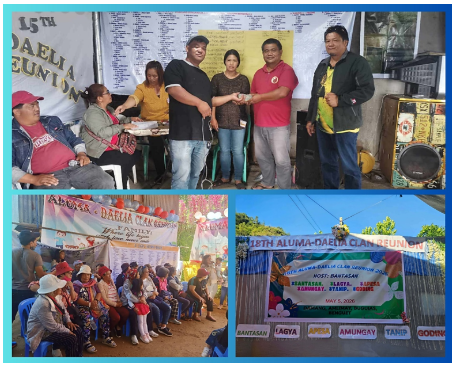
Honoring lineage and legacy: Members of the Aluma-Daelia clan gather annually to celebrate kinship, reaffirming family bonds and communal support across generations.

Upon the passing of a member, connected clans gather agreed-upon monetary contributions regardless of employment status or location. Designated collectors gather these funds, which are then managed by a clan treasurer as a token of love and solidarity.   

Given that clans often comprise hundreds of individuals, collective contributions provide substantial financial relief. Representation across one or multiple clans generates significant financial support, which is presented to the grieving family following the burial, once all additional community donations (Opu) have been accounted for.

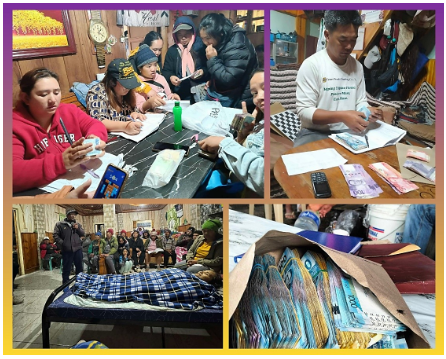
Family collectors gather to count and settle the “balhan”, monetary contributions collected from each clan member before presenting them to the bereaved family as a gesture of communal support and solidarity during their time of loss.

Wakes and burials bring significant expenses, from food and livestock to transport and burial arrangements, making financial stress an added burden during grief. Balhan eases this pressure, serving as a reminder that family ties endure through hardship. This shared responsibility is why clan reunions are vital in Kabayan and Buguias: they connect younger generations to their roots, ensure kin are not strangers, and reinforce the principle that joy and sorrow are meant to be shared.   

Beyond financial support, Dinah-da serves as a living cultural memory that transmits ancestral values of humility, generosity, and active responsibility. Expressed through quiet acts of service, from preparing food before sunrise to carrying firewood down the mountain, it turns grief into collective care. For the Kalanguya people, Dinah-da and Balhan are not mere customs of the past, but an enduring identity and a living promise that in times of loss, no one stands alone.   

Photo Credit: Ryan D. Aladog

About the Author:

Ryan D. Aladog serves as School Principal I at Mt. Pulag Elementary School in Bashoy, Kabayan, Benguet. He holds a master’s degree in Mathematics from Baguio Central University and is presently pursuing doctoral studies in Administration and Supervision. He takes great pride in his cultural heritage and the community that shaped his educational journey.

With the guidance of Dr. Genevieve B. Kupang, Professor, PHAS 403 (Qualitative Methods of Research)

.