
Narrative report written by: Ms. Beca May Pidlao-Palitayan (OIC Dean, CCJE)
BAGUIO CITY, 12 November 2026: Baguio Central University (BCU) took part in the Metropolitan BLISTT Development Authority (MBLISTTDA) Coordination Meeting with Higher Education Institutions (HEIs) on the Development of the MBLISTTDA Research Agenda, held at The Plaza Garden & Hotel Residences, Legarda Road, Baguio City.
BCU was represented by Engr. Lorelie S. Malit, Research Coordinator and Pollution Control Officer; Ms. Beca May Pidlao-Palitayan, OIC-Dean of the College of Criminal Justice Education (CCJE); Ms. Jenema H. Wacangan, Research Coordinator of the CTELA; and Ms. Shamany L. Lokines, faculty member of the CBA.
Also present were delegates from the University of the Philippines Baguio, University of Baguio, University of the Cordilleras, Saint Louis University, Benguet State University, the Philippine Information Agency-Cordillera Administrative Region (PIA-CAR), and the Department of Science and Technology (DOST) offices in Baguio and Benguet.
MBLISTTDA serves the areas of Benguet, Baguio, La Trinidad, Itogon, Sablan, Tuba, and Tublay. The meeting brought together representatives from academic and partner institutions in the region to help build a research agenda that supports the metropolitan area’s development through 2040.
Program Proper
Participants registered from 8:00 to 8:30 in the morning, with the Secretariat in charge. The program opened at 8:30 with an invocation, followed by the acknowledgement of participants by Marygail Antonette N. Killa, Director I (SM for Planning). MBLISTTDA Administrator Asec. Maria Monica C. Costales, PhD, delivered the welcome remarks, and an introduction to MBLISTTDA gave attendees an overview of the authority and its work.
MBLISTTDA provides a unified development platform for Baguio City and the municipalities of La Trinidad, Itogon, Sablan, Tuba, and Tublay. It coordinates nine essential services that cut across municipal borders: development planning and the preparation of medium- and long-term development plans; urban renewal, land use planning, housing, and shelter; transport and traffic management; solid waste disposal and management; flood control and sewerage management; water resource management; health, sanitation, and pollution control; public safety and order; and tourism.
Through these services, the authority evaluates and packages shared development projects, sets land use policies and standards, and rationalizes public transport and road use, including a unified single ticketing system. It also operates sanitary landfills, eco-composting facilities, and waste-to-energy projects, builds an integrated drainage and flood control network, secures sustainable water sources, enforces public health and sanitation standards, leads disaster readiness and response with national agencies, and promotes sustainable tourism across the MBLISTT area.
Engr. Katelyn G. Gabon, Planning Officer III, then presented the Research Agenda Matrix, which outlines the priority research areas for the metropolitan region. Director Killa discussed opportunities for stakeholder alliances with HEIs, while Administrator Costales presented MBLISTTDA’s recently conducted and ongoing research studies.
Challenges and the Role of Research
The presentation noted the challenges facing the BLISTT area: fragmented spatial planning, increasing climate and disaster risks, mobility and infrastructure constraints, economic imbalances, social inequalities and service gaps, and weak metropolitan governance. In response, MBLISTTDA is pursuing integrated metropolitan planning, environmental sustainability and resilience, coordinated infrastructure and mobility systems, stronger economic competitiveness, inclusive and equitable development, and data-driven governance, with academe and research institutions as key partners.
The MBLISTTDA Research Agenda aims to enable science-based, data-driven, and innovation-led development in BLISTT through sustained collaboration between academe and the metropolitan authority. Under this framework, HEIs are expected to generate evidence-based studies and innovative solutions, support planning through spatial analytics, disaster risk reduction and management (DRRM) modeling, and economic analysis, provide policy inputs through technical working groups and policy labs, and strengthen capacity-building and professional development. These efforts will be supported by partnership agreements among HEIs, local government units (LGUs), and MBLISTTDA, as well as data-sharing systems such as GIS and KMIS.
Thematic Research Agenda
The thematic research agenda seeks to generate strategic knowledge and evidence-based policy recommendations toward a livable, inclusive, resilient, and globally competitive metropolitan region by 2040. The themes presented included food production and security, which covers climate-resilient agriculture, agri-logistics and food supply chains, urban agriculture, and agricultural land protection; terrestrial and water resources, which covers biodiversity mapping, sustainable tourism, watershed and river system management, and natural capital accounting; smart analytics and engineering innovations, which covers GIS-based planning systems, smart mobility and traffic optimization, infrastructure resilience, and digital twins of metropolitan systems; and health systems, which covers spatial accessibility of health services, public health risk mapping, and health infrastructure planning.
Alignment With the 2030 Sustainable Development Goals
The MBLISTTDA Research Agenda supports the United Nations 2030 Agenda for Sustainable Development, and its themes map closely to several Sustainable Development Goals (SDGs). Food production and security research contributes to SDG 2 (Zero Hunger), while the health systems theme supports SDG 3 (Good Health and Well-Being). Work on water resources, watershed management, and sewerage advances SDG 6 (Clean Water and Sanitation), and smart analytics, infrastructure resilience, and digital innovations respond to SDG 9 (Industry, Innovation, and Infrastructure).
Integrated planning, mobility, housing, and solid waste management address SDG 11 (Sustainable Cities and Communities), while climate-resilient agriculture and disaster risk reduction and management (DRRM) modeling support SDG 13 (Climate Action). Biodiversity mapping and terrestrial resource management contribute to SDG 15 (Life on Land), and data-driven governance and public safety strengthen SDG 16 (Peace, Justice, and Strong Institutions). Finally, the partnership among academe, local government units, and MBLISTTDA reflects SDG 17 (Partnerships for the Goals), with HEIs advancing SDG 4 (Quality Education) through research and capacity-building.
Open Forum and Closing
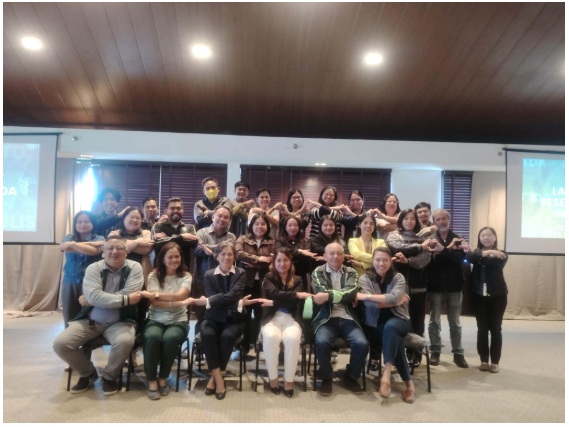
An open forum moderated by Engr. Gabon allowed participants to raise questions and share insights on the research agenda. Participants clarified the process for requesting assistance from MBLISTTDA, including technical assistance from its engineers, foresters, and environment specialists, whose knowledge, expertise, and insights can support research work. They also discussed the coordination and endorsement of requests to other offices and local government units (LGUs), the handling of data requests, and the option of asking MBLISTTDA to conduct reliability tests, sit on research panels, and serve as advisers. Engr. Gabon then presented the summary of agreements. Next year, MBLISTTDA will hold a MOA signing and a Research Summit.
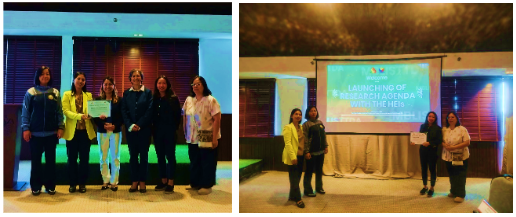
MBLISTTDA awarded certificates to participants, and Director Killa delivered the closing remarks before the group adjourned for lunch.
Relevance to BCU’s Research Goals
BCU’s participation fits squarely within the BCU Research Thrusts and Priorities (2024-2026), which are anchored in AmBisyon Natin 2040 and the United Nations 2030 Agenda for Sustainable Development, the same long-term frameworks that shape the MBLISTTDA agenda. The university’s four thrusts (Heritage, Culture and the Arts of Baguio; Organizational and Public Governance; Medical and Responsive Health Systems; and Economic Advancement and Business Development) connect with several MBLISTTDA themes. Research on public governance supports MBLISTTDA’s call for data-driven metropolitan governance and policy inputs, while the health thrust matches its health systems theme on the accessibility of services and public health risk mapping. Economic advancement and business development relate to its focus on tourism, economic competitiveness, and agri-logistics, and research on the heritage, culture, and arts of Baguio can inform sustainable tourism in the BLISTT area.
BCU’s priority sub-themes also align with the MBLISTTDA agenda. Environmental Management and Disaster Risk Reduction corresponds to MBLISTTDA’s work on water and terrestrial resources, solid waste, pollution control, and DRRM modeling. Emerging Technologies and Science relates to its smart analytics and engineering innovations, including GIS-based planning and digital twins, while Safety, Security, and Justice, together with the Criminal Justice Education program, supports its public safety and order services. Education and Industry Training and Accelerating Human Potentials for Impact relate to the role of HEIs in capacity-building and professional development.
Through the technical assistance, data access, panel participation, and advisership discussed during the open forum, as well as the Research Summit planned for next year, BCU can pursue joint studies that advance these thrusts and give its faculty and students opportunities to contribute evidence to policy in the BLISTT area.