BAGUIO CENTRAL UNIVERSITY

(074) 444-9247 / (074) 424-8216 #18 Bonifacio Street, ABCR Barangay, Baguio City
Baguio Central UniversitySoaring High Towards Excellence

Beyond the Stigma: Indigenous Peoples’ Rights, Animal Welfare, and the Cultural Complexity of Dog Meat

(Qualitative Narrative Feature)

BAGUIO CITY, Philippines

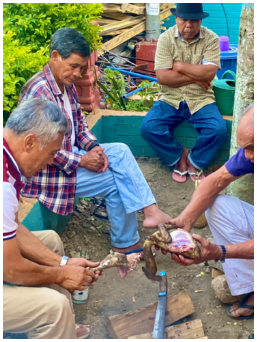
[Photo 1: Elder Gilbert Waclin performing daw-es ritual in Ucab, Itogon, Benguet. Photo by Lauren Alimondo]

Across the pine-covered slopes of the Cordillera Administrative Region in northern Luzon, the misty mountain air carries the echoes of ancient traditions. The Igorot, a collective name for the diverse Indigenous Peoples (IPs) inhabiting these highlands, have cultivated a distinct way of life rooted in an intimate relationship with land, spirit, and ancestral lore. Through qualitative exploration of community voices, lived experiences, and indigenous narratives, local perspectives reveal how these traditional paradigms navigate modern legal and societal shifts. Yet, in an increasingly interconnected world, one aspect of Cordilleran heritage remains trapped at the intersection of legal enforcement, animal rights advocacy, and cultural identity: the ceremonial practice and consumption of dog meat.

The Ancestral Context: Ritual over Appetite

To evaluate the practice of dog meat consumption through a purely contemporary lens misinterprets its historical reality. Historically, across tribes in Benguet, Ifugao, Mountain Province, Kalinga, Apayao, and Abra, dogs were not slaughtered as everyday livestock. Rather, the animal occupied a sacred realm within indigenous animist spirituality.

In ancestral rites such as daw-es (a cleansing ritual following hardship, loss, or conflict) or pedit (a feast celebrating communal abundance)—dogs were offered by a mambunong (spiritual leader) to appease spirits and protect the living. Qualitative interviews with community elders emphasize that the dog was viewed as a spiritual guardian whose energy bridged the living and ancestral realms. The subsequent sharing of meat was a solemn act of spiritual reverence, distinctly separate from commercial trade.

[Photo 2: Barangay Bontoc Ili elders performing traditional changtey ritual using a native chicken. Photo by Jose Fang-asan]

The Commercialization Dilemma and Legal Bans

The narrative surrounding dog meat shifted dramatically with the passage of Republic Act No. 8485 (the Animal Welfare Act of 1998, amended by RA 10631) and Republic Act No. 9482 (the Anti-Rabies Act of 2007). These laws explicitly prohibit the slaughter and trade of dogs for human consumption, driven by humane treatment standards and the urgent imperative to eliminate rabies. Qualitative observations highlight a crucial distinction emerging from field narratives: the core driver of state enforcement, however, is not the eradication of rural ritual, but the rise of an illicit commercial black market. In urban hubs like Baguio and La Trinidad, informal supply chains historically emerged to cater to commercial demand, resulting in unsanitary handling, inhumane transit, and public health risks. Human rights and animal advocates agree: commercial exploitation strips the practice of its sacred heritage, replacing ancestral reverence with industrial cruelty.

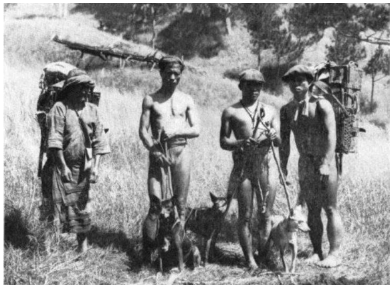
[Photo 3: Company of Igorot cargadores with hunting dogs, 1914. Photo from Recollections of Full Years by Helen H. Taft]

Stereotypes and Cultural Stigma

Despite the vast distinction between sacred ritual and illegal commercial slaughter, public perception often merges the two into a singular, prejudiced narrative. Cordillerans have long endured discriminatory stereotypes from lowland populations and international observers, who reduce complex indigenous traditions to derogatory labels.

This prejudice overlooks guaranteed indigenous rights. Under international frameworks like the United Nations Declaration on the Rights of Indigenous Peoples (UNDRIP), communities possess the right to maintain their customary traditions. When national laws are enforced through culturally disruptive operations without community consultation, indigenous elders (lallakay) report a deepening sense of cultural marginalization and systemic misunderstanding.

Board Member Benjamin Palbusa, Indigenous Peoples Mandatory Representative of Benguet and respected elder, has acknowledged that rituals performed without proper knowledge “should stop altogether,” noting that improperly conducted rites “would be useless or would backfire.” In his original Ilocano statement: “Dagiti ritwal a maaramid nga awan ti umiso a pammursigan wenno pannakaammo ket ‘masapul a maileppas wenno maisardengen a maminpisan,’ gapu ta dagiti kamali a pannakaitungpal dagitoy ket ‘awan serserbina wenno baka bumales kadakuada.’”

Veterinarians in IP Barangays: Grounded Synergy

Where legal imposition often yields defensive resistance, field veterinarians working directly within indigenous barangays offer a model grounded in empathy and public health. Rather than entering mountain communities as punitive enforcers, government and volunteer veterinarians build trust through community-based One Health initiatives.

Veterinary teams trekking into remote IP barangays provide free anti-rabies vaccinations, spay-and-neuter services, and animal care education. By validating the role of dogs as working companions, hunting partners, and family protectors, veterinarians frame animal welfare not as a foreign ideology, but as a shared commitment to community well-being.

Through respectful dialogue with village leaders, government veterinarians (many of whom are IPs themselves) gently address the severe rabies risks linked to butchering unvaccinated animals, helping communities protect their health without attacking their cultural identity.

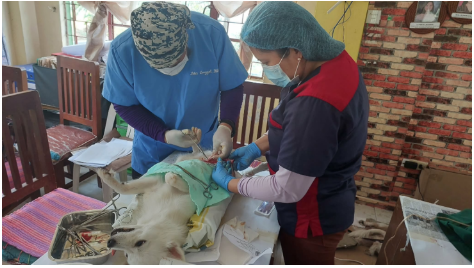
Dr. Jacquiline P. Cadley emphasized that providing volunteer veterinary services in the barrios, particularly rabies vaccination and spaying and neutering programs, plays an important role in gradually transforming how Indigenous Peoples (IPs) view and care for their pets. Through these community-based initiatives, veterinarians and key informants encourage a deeper understanding that dogs and other companion animals are not merely food animals but true, valued members of the family. The goal is not to erase or diminish cultural traditions, but to promote responsible pet ownership and embrace good animal welfare practices while respecting Indigenous culture and heritage.

[Photo 4: Dr. Cadley performing a castration procedure during outreach in Benguet. Photo by Peter A. Canggat Jr.]

Moving Forward: Respect, Not Erasure

The path forward cannot be one of imposed bans or shaming, nor of rigid defense of practices that cause harm. It requires centering those who live these traditions—the indigenous leaders, youth, women, and families—as the true custodians of their culture. Cultural identity is not static; it grows and adapts, as it has for generations. What remains constant is the core indigenous promise: to live in harmony with the land, one another, and all creatures.

Reforming the dog meat trade in the Cordillera is not about erasing heritage; it is about reaffirming the best of what that heritage stands for. It is about building a region where respect for ancestors and compassion for animals are not opposing forces, but partners—where the world sees the Cordillera not through the narrow lens of a single practice, but in its full beauty, resilience, and humanity.

About the Author:

Peter A. Canggat Jr. is a veterinarian, an Indigenous Person of the Kankanaey-Applai group, and an animal welfare advocate. He is currently pursuing a doctorate in Administration and Supervision at Baguio Central University.

*Edited with Advisory Annotations by Genevieve Balance Kupang

Dr. Genevieve Balance Kupang is Dean of the Graduate School, International Relations Officer, and Professor of Qualitative Methods of Research at Baguio Central University. She served as the academic mentor for this article.