“Peace is most powerful when it is rooted in joy—in the simple, profound gift of a smile.”
A Forum Rooted in Tradition and Vision
Benguet State University (BSU) formally concluded its ‘Ba’diw ya Binnadang‘ Forum for Sustainable Development on January 16, 2026, with a meaningful dialogue on SDG 16: Integrity in Action. This final session—centered on strengthening anti-corruption, accountability, and inclusive decision-making—marked the culmination of a week-long series of dialogues held in honor of BSU’s 40th Charter Anniversary.
Throughout the anniversary week, the series facilitated vital discussions across various Sustainable Development Goals, including sessions on SDG 3 (Good Health and Well-being), SDG 4 (Quality Education), and SDG 8 (Decent Work and Economic Growth).
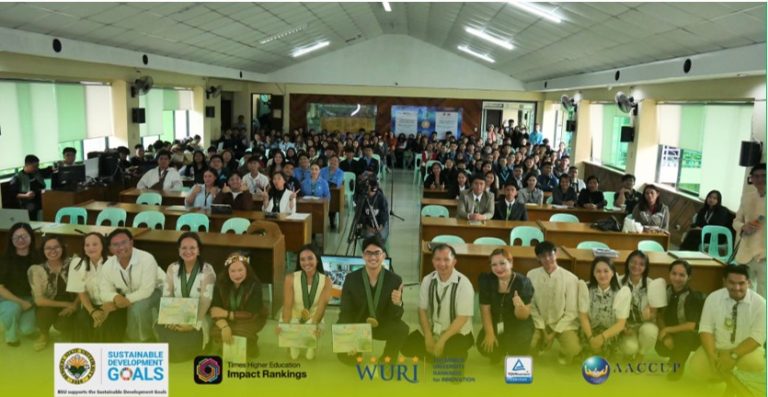
The January 16 finale convened educators, administrators, government officials, civil society leaders, and student advocates to address the critical challenge of building governance structures rooted in justice and peace. By connecting global principles to local Cordilleran values of Ba’diw (oral tradition) and Binnadang (communal unity), the event solidified BSU’s commitment to shaping an ethical and sustainable future for its students and the community.
A Dynamic Circle of Discussants
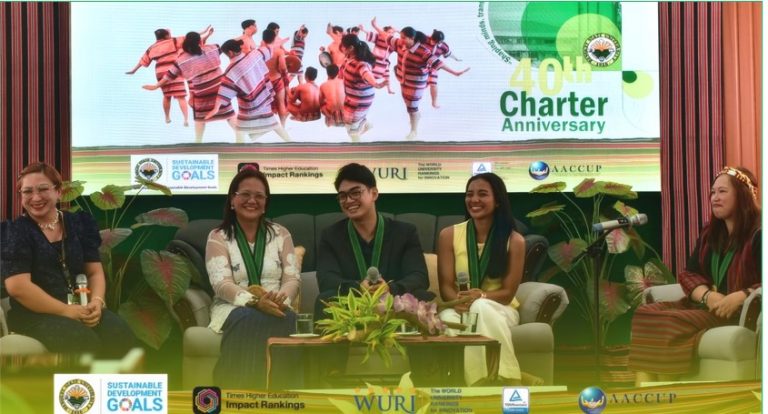
The SDG 16 Dialogue featured a distinctive panel that spanned the intersection of international policy, local leadership, and youth advocacy. Dr. Genevieve Balance Kupang of Baguio Central University joined with Atty. Cheryl L. Daytec-Yangot (Officer in Charge for DMW-CAR and former Department of Justice Assistant Secretary), and the reigning Mr. and Ms. Benguet 2025, Mr. Kyle Kimayong and Ms. Angelika Servinas, to create a powerful synthesis of perspectives.
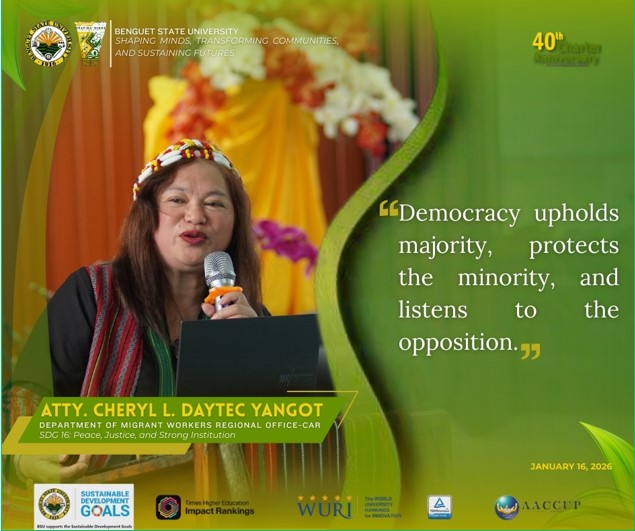
Atty. Cheryl L. Daytec-Yangot
A veteran of justice, peace, and institutional advocacy, Atty. Daytec-Yangot brought a wealth of international perspective from her work as a distinguished human rights lawyer and Labor Attaché to Geneva. Her experience with the International Labour Organization (ILO) and the United Nations informed her powerful reminder that true democracy upholds the majority, protects the minority, and—most importantly—listens to the opposition.
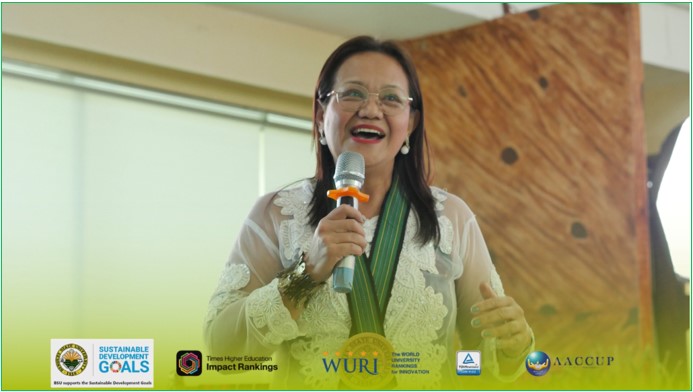
Dr. Genevieve Balance Kupang
Kupang’s leadership spans global peace and innovation networks. As Peace Education Coordinator for the World Council for Curriculum and Instruction (WCCI), member of the World Humanist Forum secretariat, leader of the Pathways to Peace Exceptional Women of Peace Awards, WURI Historian, and Secretary of WUNI-L, she has bridged the gap between academic excellence and global harmony.
Kupang commended BSU’s commitment to SDG 16, thanking President Kenneth Laruan and the academic community for fostering a space where integrity, leadership, and peace flourish.
Youth Voices: Mr. Kimayong and Ms. Servinas
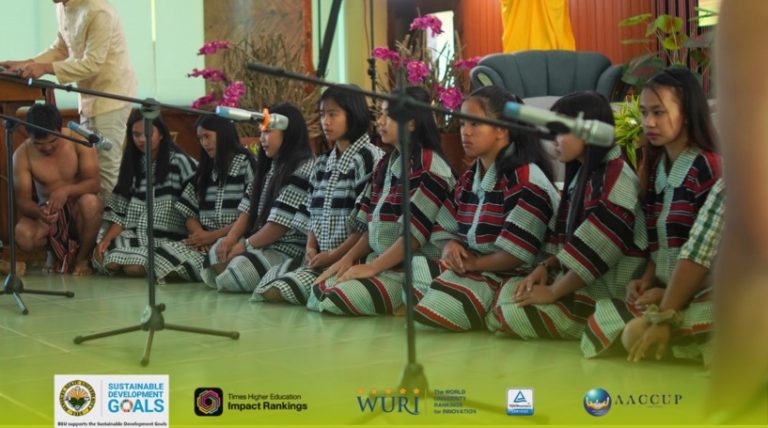
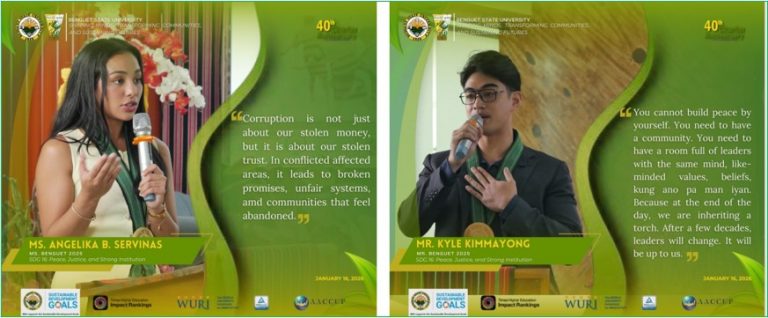
While the senior experts anchored the discussion in international policy and anti-corruption advocacy, the youth perspective was vividly represented by Mr. Kimayong and Ms. Servinas. As cultural ambassadors of the province, they shared vital local insights into binnadang (communal unity) and grassroots peacebuilding, illustrating how global goals are lived out in the daily realities of the Cordilleran people.
Ms. Servinas highlighted the corrosive nature of corruption on community trust, while Mr. Kimayong emphasized the necessity of collective action. His message was clear: peace is a collaborative effort that requires everyone to be involved. (Photo credit: BSU)
From Global Movements to Local Action
Kupang brought to the dialogue a recent global experience. In October 2025, she led an international anti-corruption forum initiated by Baguio Central University in collaboration with partner universities and organizations that brought together 281 participants from Nepal, Indonesia, and the Philippines, with additional participants from Europe, Latin America, and Africa. The forum examined a critical question: “Can Generational Movements End Systemic Corruption? Lessons from Nepal, Indonesia, and the Philippines.”
That forum revealed a critical insight: young people across Asia are emerging as change-makers against deeply entrenched corruption. As Kupang reflected during the BSU dialogue, this generation understands something essential that many institutional leaders are still learning—that hope, grounded in moral clarity and community solidarity, is the antidote to systemic corruption. “What we witnessed,” she noted in her opening remarks, “were young people who were organizing, speaking truth to power, and demanding accountability—whether in the streets of Kathmandu, the universities of Jakarta, or the communities of our own country.”
A Framework for Peace and Institutional Integrity
During her BSU presentation, Kupang introduced a holistic framework for understanding institutional integrity through the lens of peace education. Drawing on the work of peace educators Toh Swee-Hin and Virginia Floresca Cawagas, and their collaborative book Our Nation, Our World, she outlined six interconnected dimensions essential for building cultures of peace:
- Dismantling pervasive cultures of war in all their manifestations
- Living with justice and compassion by confronting structural violence in economic and social systems
- Promoting human rights and responsibilities through accountability and participatory governance
- Building intercultural respect, reconciliation, and solidarity across divisions of ethnocentrism and historical trauma
- Living in harmony with the Earth by recognizing environmental justice as inseparable from peace
- Cultivating inner peace through the psychological, emotional, and spiritual grounding necessary for authentic peacebuilding
“These six dimensions,” she explained, “are not separate initiatives—they form an integrated flower of peace that guides education and social transformation. Corruption is structural violence. Accountability is not bureaucratic compliance but sacred trust. This is what our institutions must embody.”
Integrity Consciousness as a Moral Imperative
A key concept that emerged from the dialogue is “integrity consciousness”—the capacity to see corruption as structural violence and to understand how inequality, exclusion, and weak institutions perpetuate cycles of injustice. The discussants argued that developing this consciousness requires genuine academia-community-state partnerships that are reciprocal and rooted in real accountability. It requires cultivating leaders—both within and outside universities—who understand that anti-corruption is not merely a policy initiative but a moral imperative.
Bridging Academia, Civil Society, and Policy
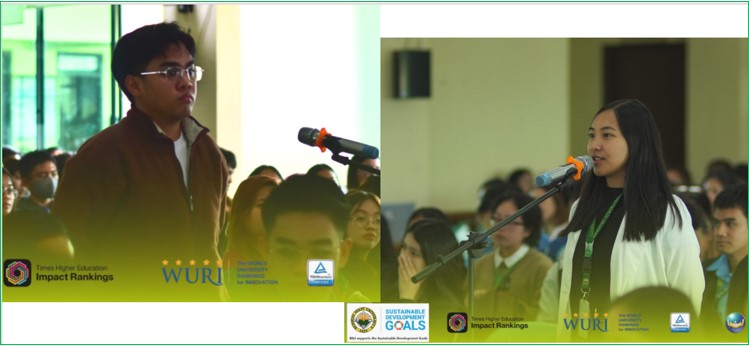
The dialogue demonstrated a unique capacity to bridge academia, civil society, and policy-making. Rather than offering abstract analysis, the speakers challenged participants to move beyond discussion to action—to ask themselves what each person, in their respective roles, can do differently starting today. This practical grounding in real-world application elevated the discussion from theory to transformation.
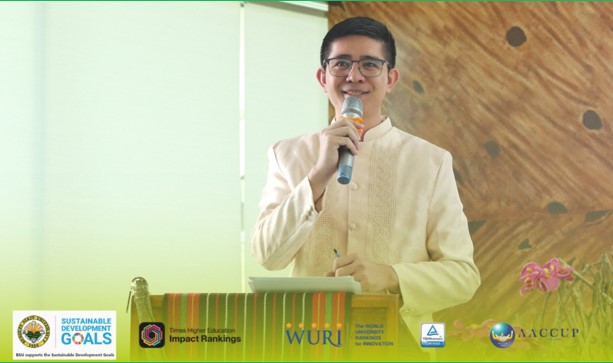
In his closing remarks, BSU President Dr. Kenneth A. Laruan challenged the assembly to move from insight to implementation. “The road ahead requires us to build institutions that are as resilient as they are just,” he emphasized. “Four decades of BSU history have taught us that peace is not passive; it is built through action.”
By grounding peace education in indigenous roots, BSU is turning the academic vision of ‘Peaceful, Just, and Accountable Institutions’ into a concrete reality for the Cordillera and the world. Extending his gratitude to the four keynote discussants, the organizers, and the participants, President Laruan concluded with a call to unity: “We continue to work together for a just, peaceful, and strong institution. Thank you all for being part of this journey.”
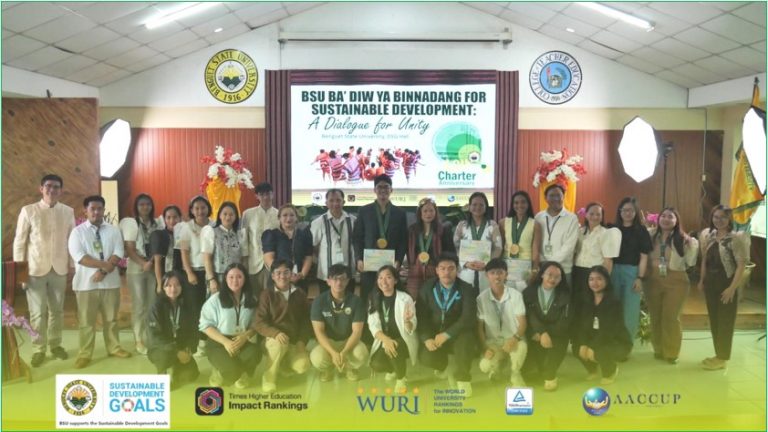
Honoring the Keynote Discussants
#SDGsInAction #HailBSUCharterAnniversary@40 #BSU&BCUforPeaceandIntegrity