BAGUIO CENTRAL UNIVERSITY

Knowledge in Action — Day 1 of BCU’s 16th University Research Colloquium Sets the Stage for Evidence-Driven Innovation

by Dr. Edna P. Culbongan and Dr. Cherrie Mae M. Manuel

Graduate School Research Coordinator and CBA Research Coordinator

.

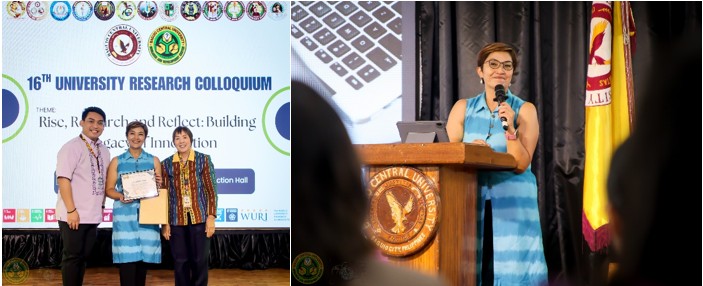
The esteemed panel of examiners were awarded with token and certificate of recognition for their valuable time and effort for critiquing the final manuscripts

The pursuit of knowledge and innovation took center stage on March 5, 2026, as Baguio Central University formally launched Day 1 of its 16th University Research Colloquium at the Dr. Margarita Joven Fernandez Hall. Carrying the theme “Rise, Reflect and Research: Building a Legacy of Innovation,” the gathering marked another milestone in the university’s continuing commitment to strengthen a culture of inquiry, collaboration, and evidence-based decision-making.

The opening program gathered faculty members, students, administrators, and research partners in a shared academic space where scholarship becomes a catalyst for societal progress. Academic collaborators from Philippine College of Science and Technology, University of Baguio, and Cordillera Career Development College joined the event, reflecting the growing importance of inter-institutional partnerships in advancing research initiatives across Northern Luzon.

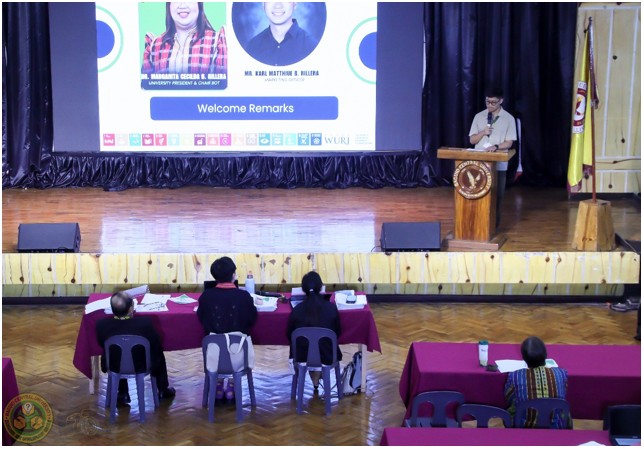
University President Dr. Margarita Cecilda B. Rillera as represented by Mr. Karl Matthiue B. Rillera, the Marketing officer highlighted the importance of research as a cornerstone of higher education, emphasizing that universities must continuously generate knowledge that contributes to national development and global competitiveness. The colloquium itself supports policy directions set by the Commission on Higher Education and the mandate of Republic Act No. 7722, reaffirming the role of higher education institutions as engines of innovation, scholarship, and community transformation.

Mr. Karl Matthiue B. Rillera, the Marketing Officer delivered the welcome remarks on behalf of President

Day 1 of the colloquium centered on final institutional research presentations, demonstrating how faculty-driven research contributes to the continuous improvement of university programs and services. The studies presented reflected a wide spectrum of academic inquiry—from sustainability and ethics in organizational environments to mental health resilience among nursing students, emerging technological trends in education, and the evolving relationship between university services and research productivity.

Several presentations focused on how higher education institutions adapt to rapidly changing technological and social landscapes. Research examining artificial intelligence integration and its implications in education, as well as the ethical considerations of generative AI, underscored the urgency for universities to develop responsive policies and governance frameworks for emerging technologies. Other studies explored tracer outcomes of engineering graduates, technology-supported learning strategies, and the broader influence of institutional practices on academic transformation.

Very passionate panel of examiners were giving their suggestions

Community engagement also emerged as a central theme. Studies assessing community needs for strategic outreach programs and the dynamics of university–community relations in Baguio City highlighted the role of universities as partners in local development. These initiatives demonstrate how research findings can inform extension programs that directly benefit communities and local stakeholders.

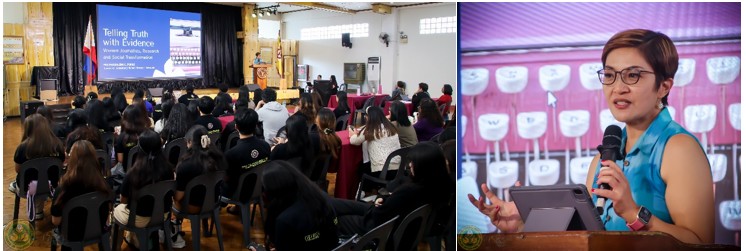
A particularly significant moment of the day was the plenary lecture entitled “Telling Truth with Evidence: Women Journalists, Research, and Social Transformation” delivered by indigenous journalist Mia Magdalena Fokno. In her talk, Fokno emphasized the growing intersection between academic research and journalism, explaining how rigorous evidence can empower journalists to produce narratives that shape public opinion, promote accountability, and inspire social change. She also highlighted the crucial role of women journalists in amplifying community voices and ensuring that research findings reach wider audiences beyond academic circles.

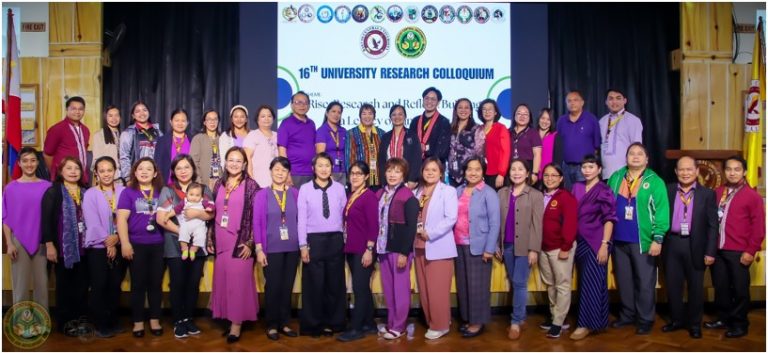
In observance of the National Women’s Month Celebration, faculty and staff posed in their purple attires.

The session carried special significance as it coincided with the national observance of National Women’s Month and the global celebration of International Women’s Day. Participants expressed solidarity with the advocacy by wearing violet attire, a symbolic color representing dignity, equality, and empowerment. The initiative was supported by the university’s Research and Development Center, which continues to integrate gender-responsive perspectives within its research programs and institutional activities. The speaker likewise acknowledged the university’s efforts to embed Women’s Month advocacy into research initiatives, emphasizing that gender equality must not only be celebrated symbolically but also reflected in research agendas, institutional policies, and community engagement strategies.

In the latter part of the afternoon, participants engaged in discussions that synthesized key insights from the presentations and plenary session. The dialogue reinforced the importance of ensuring that research outputs are not only academically rigorous but also socially responsive and ethically grounded. The day concluded with a University Research Ethics Training for interim members of the Research Ethics Committee, strengthening the institutional framework for ethical oversight and responsible research conduct.

Ms. Mia Magdalena C. Fokno served as 1st plenary speaker for this colloquium.

As the first day came to a close, the colloquium had already demonstrated the power of research to connect disciplines, institutions, and communities. Through rigorous inquiry and collaborative dialogue, the event reaffirmed the university’s role in cultivating knowledge that addresses real-world challenges. With its theme “Rise, Reflect and Research: Building a Legacy of Innovation,” the opening day of the 16th University Research Colloquium set the tone for a scholarly gathering that places research at the heart of educational transformation, social responsibility, and sustainable development aligned with the aspirations of the SDG 2030 global agenda.