BAGUIO CENTRAL UNIVERSITY

Research for Humanity: Baguio Central University Hosts 16th University Research Colloquium Advancing Innovation and Sustainable Development

by Beca May P. Palitayan & Hilario A. Sanglay

CCJE Research Coordinator & CONSM Research Coordinator


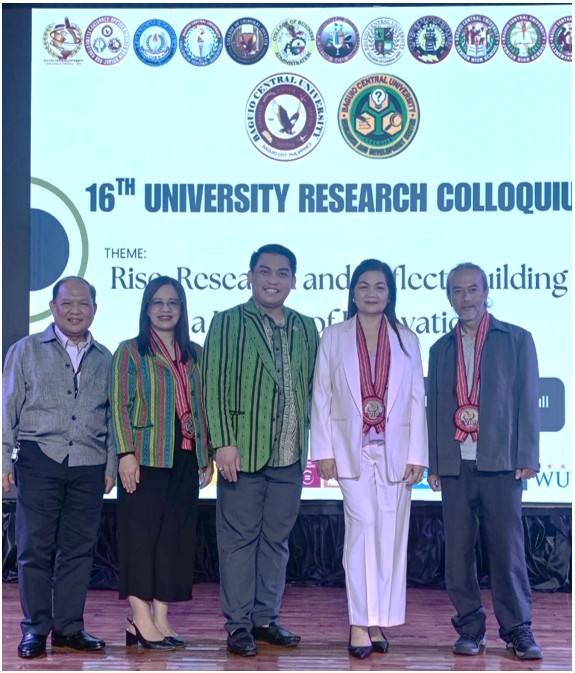
The participants posed happily in their purple wear in observance of the National Women’s Month Celebration

Scholars, educators, students, and institutional partners convened in the mountain city of Baguio for the 16th University Research Colloquium hosted by Baguio Central University on March 5–6, 2026 at the Dr. Margarita Joven Fernandez Hall. Anchored on the theme “Rise, Reflect and Research: Building a Legacy of Innovation,” the two-day academic gathering underscored the transformative role of research in strengthening institutions, empowering communities, and advancing global knowledge systems.

The colloquium brought together faculty, staff, and students alongside academic partners from Philippine College of Science and Technology, University of Baguio, and Cordillera Career Development College. The presence of these partner institutions reflected a growing culture of regional academic collaboration aimed at addressing complex societal challenges through interdisciplinary research and knowledge exchange.

Conceptualized in alignment with policy frameworks of the Commission on Higher Education, including CHED Memorandum Order No. 52, Series of 2016, and the mandate of Republic Act No. 7722, the colloquium served as a platform for disseminating scholarly outputs while strengthening the research capabilities of higher education institutions. The initiative also echoed the global development agenda of the United Nations Sustainable Development Goals, particularly SDG 4 (Quality Education) and SDG 9 (Industry, Innovation and Infrastructure), reaffirming the university’s commitment to evidence-based solutions for sustainable development.

The esteemed panel of examiners (L-R) Ms. Shamah S. Ponasen from DSWD, Dr. Joseph B. Quinto from BSU and Dr. Perfecto M. Lopez objectively critiquing the presenters and the manuscripts

The first day featured presentations of completed institutional research that explored a wide spectrum of contemporary issues including institutional sustainability practices, workplace ethics in higher education, the resilience of nursing students facing mental health challenges, the role of library services in research productivity, and the emerging implications of artificial intelligence in academic environments. Additional studies examined graduate tracer outcomes in engineering, community needs assessments for strategic outreach programs, ethical integration of generative AI in higher education, university–community relations, and technology-enhanced engagement in forensic science education. These presentations demonstrated how universities can harness research to inform policy, improve teaching and learning, and strengthen institutional governance.

The different presenters across departments presenting the results of their studies

A highlight of the event was the plenary lecture “Telling Truth with Evidence: Women Journalists, Research, and Social Transformation” delivered by indigenous journalist Mia Magdalena Fokno. Her lecture emphasized the role of journalism as a bridge between academic research and public understanding, illustrating how women journalists serve as vital knowledge brokers who translate complex evidence into narratives that shape public discourse and influence policy. The session resonated with the broader celebration of International Women’s Day and National Women’s Month, reinforcing the importance of women’s voices in shaping knowledge, public dialogue, and social transformation.

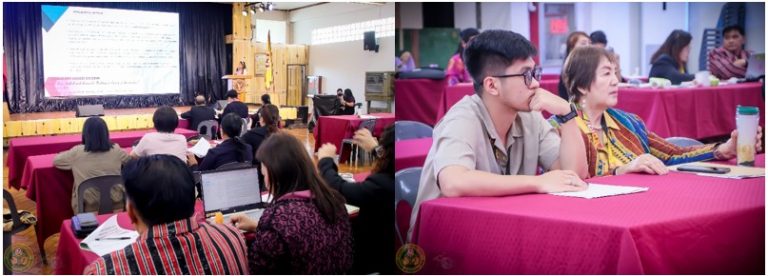
Participants were became captured listeners during the presentation of the final papers.

In solidarity with the celebration of National Women’s Month, participants of the colloquium also observed a violet dress code, symbolizing dignity, justice, and empowerment—values closely associated with the global women’s movement. The Research and Development Center of Baguio Central University integrated this celebration within the academic gathering, highlighting the role of women in research leadership and knowledge creation. During her plenary engagement, Ms. Fokno also recognized the ongoing initiatives of the BCU Research and Development Center in promoting women-centered discourse in research and community engagement, affirming the university’s commitment to gender-responsive scholarship and inclusive academic spaces.

The afternoon plenary session was filled with informative way to tell the truth with evidence by Ms. Mia Magdalena C. Fokno, an indigenous journalist, women’s advocate, educator and nurse.

The colloquium also provided a venue for strengthening institutional research governance through dialogue on ethics, scholarly integrity, and responsible knowledge production. A special research ethics training session was conducted for members of the interim Research Ethics Committee, reinforcing the importance of ethical oversight in protecting research participants and ensuring that studies meet international scholarly standards.

On the second day, the focus shifted toward proposal presentations that explored emerging research directions across disciplines. Studies presented included transdisciplinary community needs assessments in Atok, Benguet, policy frameworks for varsity recruitment practices, analyses of board examination abstention among criminology graduates, and feasibility studies for new academic programs. Other proposals addressed the use of digital tools in mathematics instruction, enhancement of community immersion programs, sustainability of environmental initiatives such as the “Adopt-A-Park Program,” and institutional readiness for inclusive education. These proposals highlighted the university’s continuing commitment to developing research that responds directly to community needs and institutional priorities.


The esteemed panel of examiners (L-R) together with Dr. Perfecto M. Lopez and Dr. Michael T. Sebullen- Dr. Corazon L. Ocden from Cordillera Career Development College,, Dr. Maria Lourdes G. Eguia and Mr. Oliver Richard C. Celi of University of Baguio

Complementing the proposal presentations were plenary sessions that deepened participants’ understanding of the research ecosystem. Discussions explored the research lifecycle in higher education institutions, practical guidelines for ethical scholarly writing and data governance, and mentoring frameworks designed to guide faculty and students in transforming research outputs into publishable scholarly contributions. These sessions underscored the importance of capacity building and mentorship in sustaining a vibrant academic research culture.

          University leaders emphasized that the colloquium represents a significant milestone in strengthening research engagement within the institution. In her message, Dr. Margarita Cecilda B. Rillera, President of Baguio Central University, highlighted the importance of research in shaping responsive education systems and informed leadership in her welcome remarks. Meanwhile, Dr. Elma D. Donaal, Vice President for Academic Affairs, encouraged faculty and students to pursue scholarship that contributes to national progress and global dialogue.

The program was spearheaded by the Research and Development Center under the leadership of Dr. Michael T. Sebullen, Director for Research, whose office continues to promote interdisciplinary collaboration, research dissemination, and partnerships among academic institutions in the region.

As the event concluded, participants reflected on the broader significance of the gathering. The 16th University Research Colloquium demonstrated how universities can serve as engines of innovation, cultivating research that informs policy, empowers communities, and contributes to sustainable development. By fostering dialogue among scholars, institutions, and community stakeholders, the event reaffirmed the vital role of higher education in advancing knowledge and addressing the pressing challenges of the twenty-first century.

Guided by its theme “Rise, Reflect and Research: Building a Legacy of Innovation,” the colloquium ultimately reinforced a powerful message for the global academic community: research is not merely an academic exercise but a transformative force capable of shaping societies, strengthening institutions, and building a more sustainable future aligned with the aspirations of the SDG 2030 agenda.

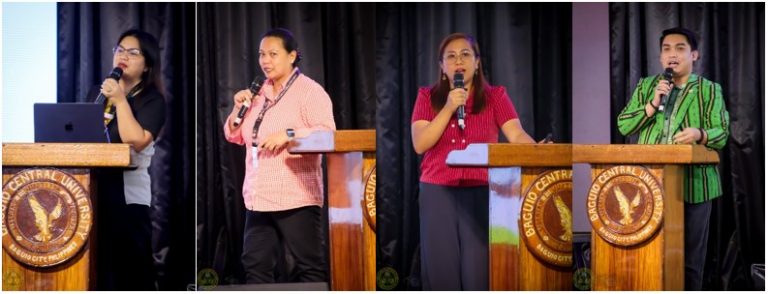
The plenary speakers for the last day of colloquium (L-R) Ms. Aiza Bheal M. Kitani, Dr. Jocelyn B. Ang, Dr. Cherrie Mae M. Manuel and Dr. Michael T. Sebullen