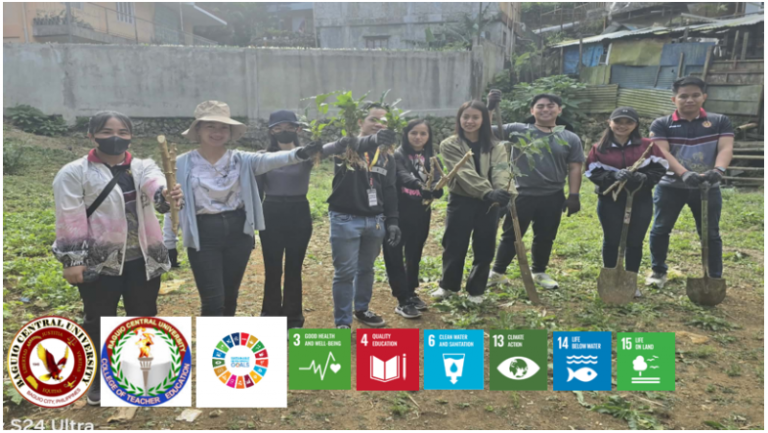
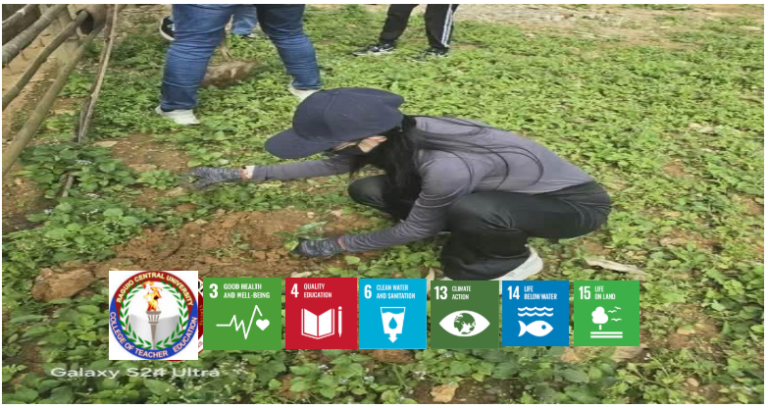
On November 29, 2025, The students from CTELA- LOGICHEMIA Club and the LANGUAGE Club, headed by the University Extension Community Coordinator, Ms. Arlene A. Mintas, together with the College Extension Community Coordinator, Ms. Hazel A. Castillo, the adviser of Logichemia Club, Ms. Ruth Anne C. Bagayao, and the adviser of the Language Club, Ms. Shean Jerica Salem, planted 20 Coffee seedlings and 100 stem of Cassava during the Organic Gardening Activity in the service of the Environment, conducted at of Purok 27, San Carlos Extension, Barangay Irisan, Baguio City.
The ultimate goals of this activity are the following: to implement organic gardening and composting to minimize environmental impact and reduce waste; to encourage participants to adopt sustainable practices, water conservation, and the importance of biodiversity and healthy ecosystems; and to enhance students’ learning about food nutrition and environmental stewardship through hands-on experience in line with the University’s Vision, Mission, and Goals.
Community gardens serve as gathering spaces that foster social connections, collaboration, and a sense of belonging among diverse community members. Shared responsibility for the garden project fosters a sense of pride, self-sufficiency, and collective efficacy among residents, motivating them to pursue further neighborhood improvements. It often employs organic methods, composting, and water conservation techniques, which promote environmental stewardship and reduce the use of harmful chemicals.
Moreover, growing food locally reduces the carbon emissions associated with long-distance food transportation. Gardens also help improve air quality and mitigate the urban heat island effect by adding green space. It was founded on diverse benefits across health, social interaction, education, food security, and the environment. These benefits extend to participants and the community of Brgy. Irisan, Baguio City.