By Genevieve B. Kupang
Makati, Philippines, November 22, 2026
Reimagining Future-Ready Higher Education Beyond the AI Finish Line
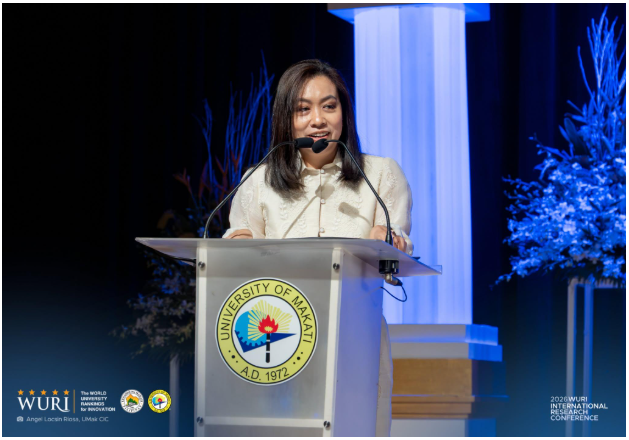
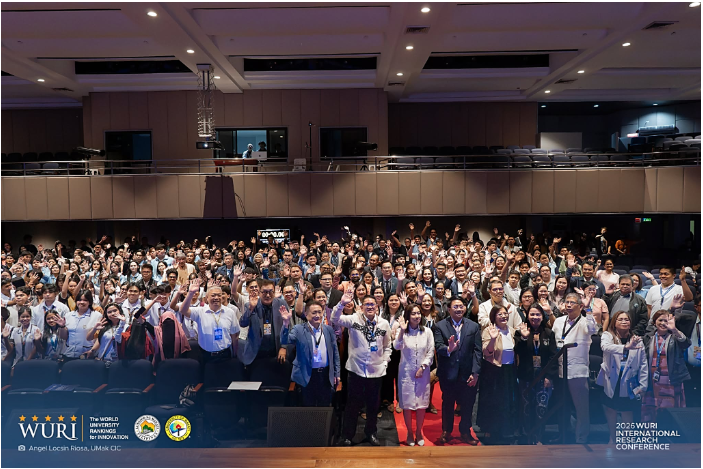
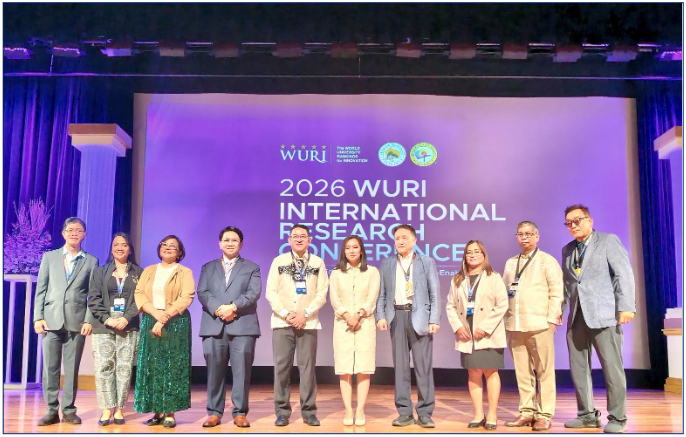
When higher education leaders declare a graduating cohort future-ready, they rarely confront a practical follow-up question: ready for how long? At the 2026 World University Rankings for Innovation (WURI) Global Conference (WIRC 2026), hosted by the University of Makati and the WURI Foundation, Commission on Higher Education (CHED) Commissioner Hon. Michelle A. Ong, DPA, challenged educators, researchers, policymakers, and scholars to move beyond static models of workforce preparation. Addressing the assembly under the theme “Enabling AI and lifelong learning to prepare learners and educators for an AI-driven, technology-intensive workforce,” Ong argued that genuine readiness is a sustained habit of continuous learning, ethical judgment, and institutional adaptability, long after our learners have graduated from college.
Grounded in multidisciplinary systems and ethical autonomy, Ong’s keynote serves as a structured policy synthesis. Rather than treating artificial intelligence (AI) as a technical disruption, she examined the labor landscape through three intersecting forces: technological change, persistent exclusion, and sustainability.
Empirical data underscores the urgency of this convergence for the Philippines. While roughly one-third of Philippine enterprises have adopted AI, up from a fifth the previous year, fewer than one in five feel prepared, constrained by deficits in AI and digital skills. Meanwhile, an International Monetary Fund (IMF) assessment indicates that more than one in three Filipino workers hold jobs exposed to AI, affecting young, college-educated urban professionals in the services sector. Although six in ten of these roles stand to be augmented rather than replaced, spanning educators, managers, engineers, and lawyers, roughly 14 percent face displacement risks, particularly in customer service, accounting, clerical administration, and business process outsourcing. International Labor Organization (ILO) data similarly places 28 percent of the Philippine workforce in generative AI-exposed occupations, second to Singapore across ASEAN countries. Reflecting these shifts, the domestic IT and business process management sector has adjusted its 2028 employment target downward from 2.5 million to between 1.85 and 2.14 million, requiring professionals who combine AI fluency with human judgment, empathy, and leadership.
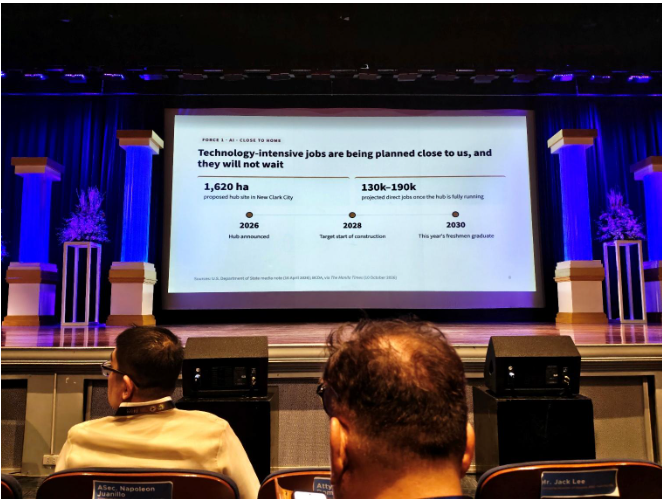
For Ong, this industrial transition is already taking shape locally. Plans for a 1,620-hectare Philippine and United States economic security zone in New Clark City project 130,000 to 190,000 direct jobs once operational. Students entering college in 2026 will graduate directly into that semiconductor and high-technology labor market by 2030. Drawing on her leadership experience as former President of Mabalacat City College and referencing international cases, from Taiwan’s 45-year development of the Hsinchu Science Park to TSMC’s 2023 workforce bottlenecks in Arizona, Ong noted that physical infrastructure cannot outpace human capital development.
Hon. Ong emphasized that technological adoption must be guided by pedagogical design rather than market momentum alone. Citing research from Turkey, where high school math students given unrestricted chatbots saw practice scores rise by 48 percent but exam scores drop 17 percent below peers without AI, and contrasting it with a World Bank teacher-guided AI program in Nigeria that produced up to two years of learning gains in six weeks, she demonstrated that instructional design and human mentorship determine educational outcomes. Referencing UNESCO’s observation that classroom dynamics have shifted into a teacher, AI, and student relationship, she called for investment in faculty immersion, noting that as of 2022, only seven countries had formal AI training frameworks for educators.
Confronting the second force, structural exclusion, remains equally central to institutional reform. With UNESCO estimating 251 million children and youth out of school globally, digital innovation risks widening inequality if limited to institutions with reliable internet, time, and financial security. To broaden access, Ong highlighted the Philippines’ Lifelong Learning Development Framework Act, which enables recognized higher education institutions to offer for-credit micro-credentials in fields such as AI and cybersecurity. Co-designed with industry, local governments, and TESDA, these modular pathways turn lifelong learning into an accessible bridge for working adults and underserved communities.
Concluding with three institutional commitments, teaching AI literacy alongside ethics and critical thinking, designing learning with excluded communities rather than simply for them, and integrating sustainability into curricula and campus decisions, Commissioner Ong outlined a practical roadmap for academic leadership. Supported by CHED’s flexible higher education AI policy, institutions can now adapt general education courses, minors, and specialized degrees to regional workforce needs, a shift also reflected in WURI’s expanded AI evaluation categories that recognize state universities, local colleges, and private institutions alike.
Ultimately, Commissioner Ong reminded the conference that the future is a set of choices institutions can prepare for and shape. In an era where technical tools expire quickly, true readiness lies in cultivating graduates who retain their agency, evaluate algorithmic outputs critically, and continue learning long after leaving the classroom. By anchoring innovation in wisdom, inclusion, and the public good, higher education ensures that progress is measured by the human lives it improves.
Advancing the UN Sustainable Development Goals
This initiative directly supports SDG 4 (Quality Education) and SDG 8 (Decent Work and Economic Growth) by championing lifelong learning, faculty AI readiness, and accessible micro-credentials that prepare graduates for an evolving, technology-intensive workforce. It further advances SDG 9 (Industry, Innovation, and Infrastructure), SDG 10 (Reduced Inequalities), and SDG 17 (Partnerships for the Goals) through ethical AI adoption, inclusive educational design for underserved communities, and multi-sector collaboration across government, academia, and industry.
#CHEDAchieve #Future-readyEducation #AIDrivenTechnologyIntensiveWorkforce
#WIRC2026 #WURI2026 #TunogKawayan #UMakCCA #FilipinoHospitality #CulturalShowcase #BCUIROSoarsHigher #BCUGraduateSchoolSoarsHigher
#SDG4 #SDG8 #SDG9 #SDG10 #SDG17 #QualityEducation #DecentWorkAndEconomicGrowth #LifelongLearning #SustainableDevelopmentGoals
About the Author:
Dr. Genevieve B. Kupang has served as the WURI Historian since 2024. She is also the Dean of the Graduate School and International Relations Officer at Baguio Central University.