October 30, 2026
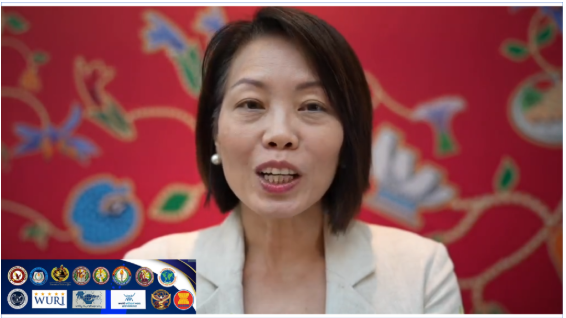
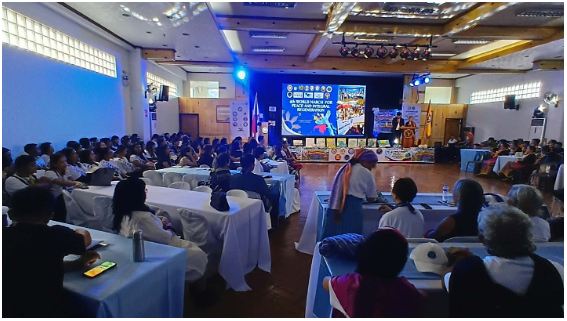
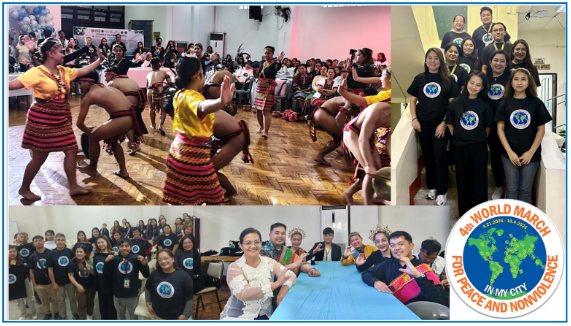
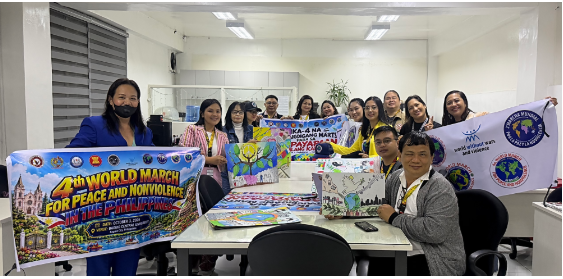
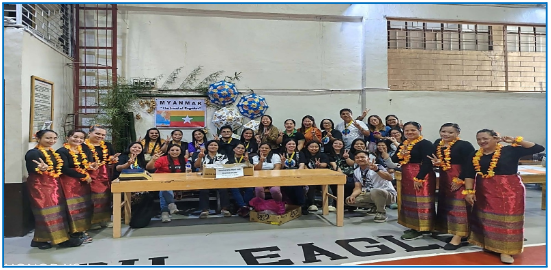
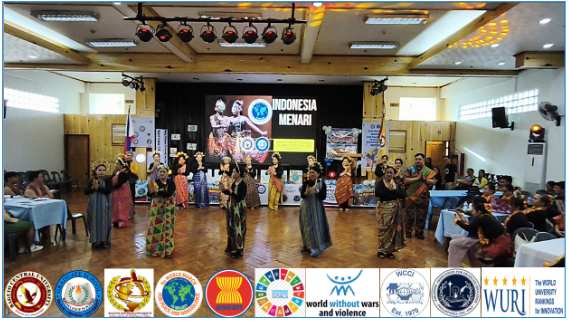
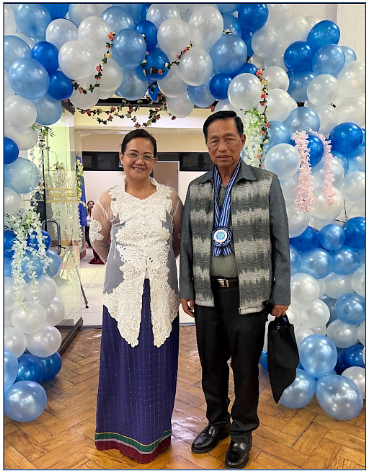
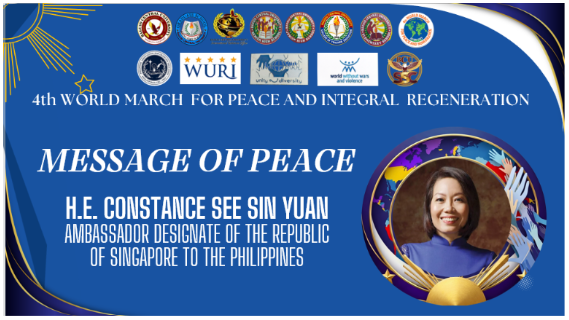
Regional diplomacy often feels distant to university students. Yet during the Baguio Central University (BCU) ASEAN Festival and the 4th World March for Peace and Integral Regeneration (4WMPIR) last October 3, 2026, held at the DMJF Function Hall, Her Excellency Ambassador Constance See Sin Yuan, Ambassador of the Republic of Singapore to the Philippines, offered a clear reminder. She stated that the future of Southeast Asia will not be decided solely in summit halls, but in classrooms, local communities, and enterprises across the region.
Addressing participants at BCU’s ASEAN Festival, Ambassador See commended the BCU Graduate School for examining regional integration through public administration and governance. As Lead Organizer of the 4WMPIR and Dean of the Graduate School, it was affirming to see our academic thrust resonate with a leading diplomatic voice. The BCU Graduate School is grateful to MPA Professor Argie Aquino for connecting with the Singapore Embassy in the Philippines and requesting this message from the Honorable Ambassador, which made the ASEAN Festival and 4WMPIR even more meaningful.
Governance Beyond the Stereotypes
While Singapore is recognized for its airport, food scene, and regulatory environment, Ambassador See invited students to look deeper into her nation’s development story. That story, she noted, is anchored in governance, planning, and integrity in public service. However, she offered a reflection on what sustains a nation over time: “No country has all the answers. Good governance requires governments to keep learning, adapting, and responding to the changing needs of their people.”
n a region as diverse as Southeast Asia, which is home to nations of varying sizes, histories, cultures, and stages of development, this adaptability is necessary. Rather than letting differences divide us, ASEAN has chosen the path of cooperation, directly advancing SDG 16 (Peace, Justice, and Strong Institutions) and SDG 17 (Partnerships for the Goals).
Opportunities for the Next Generation
For BCU students preparing to enter the workforce, regional integration opens doors to career and entrepreneurial opportunities. Ambassador See outlined what this interconnected future looks like for Filipino graduates, aligning closely with SDG 4 (Quality Education) and SDG 8 (Decent Work and Economic Growth): 1) Cross-border entrepreneurship: an innovator based in Baguio can scale digital services or sell products directly to consumers in Singapore, Malaysia, or Indonesia. 2) Regional talent mobility: a Filipino technology graduate may collaborate alongside peers from Vietnam or Thailand. 3) Academic and scientific synergy: university researchers across member states are pooling expertise to address challenges, ranging from food security (SDG 2: Zero Hunger) to climate change (SDG 13: Climate Action).
These opportunities do not happen by accident. They rely on efforts to improve regional connectivity, streamline trade, recognize academic qualifications, and foster institutional trust.
Passing the ASEAN Torch – 2026 to 2027
Highlighting the bilateral ties between Singapore and the Philippines, spanning education, trade, investment, and human resource development, Ambassador See emphasized that international partnerships are sustained by people. From Singaporean enterprises operating in the Philippines to thousands of Filipinos contributing their talents in Singapore, both nations learn from one another.
This spirit of shared stewardship is timely. With the Philippines serving as ASEAN Chair in 2026 and Singapore preparing to assume the chairmanship in 2027, both countries are positioned to build momentum toward economic integration and digital transformation.
In particular, Ambassador See urged students to watch the ASEAN Digital Economy Framework Agreement (DEFA). In support of SDG 9 (Industry, Innovation, and Infrastructure), this initiative is designed to make cross-border digital commerce safer and more accessible for businesses and consumers.
A Call to Action for Public Administrators
As the world of work digitizes, regional agreements alone are not enough. “A well-designed policy means very little if it cannot be implemented effectively or if its benefits do not reach the communities that need them,” she reminded our public administration students.
Whether BCU graduates serve in national agencies, local government units, the private sector, or civil society, they carry the responsibility of translating frameworks into public value and building SDG 11 (Sustainable Cities and Communities). Ambassador See challenged our scholars to look beyond their surroundings, study the successes of their ASEAN neighbors, and assess how those lessons can be adapted to serve their local communities.
A Community in Which We All Have a Stake
Closing her message with “Maraming salamat and mabuhay!”, Her Excellency left our academic community with a charge: “view ASEAN not merely as an organization studied in textbooks, but as a community in which young Filipinos hold a stake and a role.”
At Baguio Central University, through initiatives like the ASEAN Festival and the 4th World March for Peace and Integral Regeneration, we remain committed to answering that call. We continue to equip leaders ready to build a peaceful, integrated, and regenerative Southeast Asia.
About the Author:
Genevieve B. Kupang is the International Relations Officer, Dean of the Graduate School, and Lead Organizer of the 4th World March for Peace and Integral Regeneration (WMPIR) with the ASEAN Festival.
#BaguioCentralUniversitySoarsHigher #BCUGraduateSchool #BCUInternationalRelationsOffice
#BCUASEANFestival
#4thWMPIR #WorldMarchForPeace #IntegralRegeneration
#ASEAN2026
#PhilippinesSingapore
#PublicAdministration #GoodGovernance
#YouthInASEAN
#SDG4 #SDG8 #SDG9 #SDG11 #SDG13 #SDG16 #SDG17 #GlobalGoals