BAGUIO CENTRAL UNIVERSITY

(074) 444-9247 / (074) 424-8216 #18 Bonifacio Street, ABCR Barangay, Baguio City
Baguio Central UniversitySoaring High Towards Excellence

Strengthening Partnerships for Justice: BCU-CCJE Joins JTS Baguio Regional Hub Seminar

By Jvee B. Ling-o │CCJE Crime Laboratory Custodian

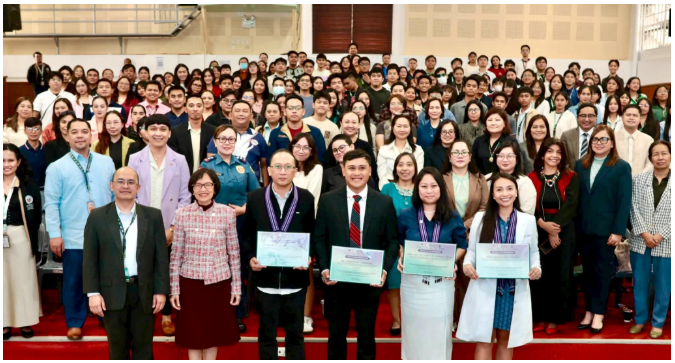
A group photo of the resource speakers of the Justice Through Science (JTS) Project’s Baguio Regional Hub Seminar with the seminar attendees.

On October 20, 2026, BCU-CCJE, represented by Ms. Jvee B. Ling-o, the CCJE Crime Laboratory Custodian, and Ms. Rucelia T. Haya, CCJE Part-Time Faculty, attended the Justice Through Science (JTS) Project’s Baguio Regional Hub Seminar, held at the University of the Cordilleras Main Campus Auditorium. The seminar featured four resource speakers: Dr. Sarah Mae C. Bazar, a Medico-Legal Officer of the Baguio City PNP Forensic Group; Hon. Lady Ivy Vanity D. Velasco-Snow, the Acting Presiding Judge of the Manila Metropolitan Trial Court; Dr. Christian T. Pascual, the Director of the University of the Cordilleras’ Global Engagements Office; and Dr. Richard Jonathan O. Taduran, a biological and forensic Anthropologist and member of the Technical Panel for Forensic Science of the Commission on Higher Education (CHED).

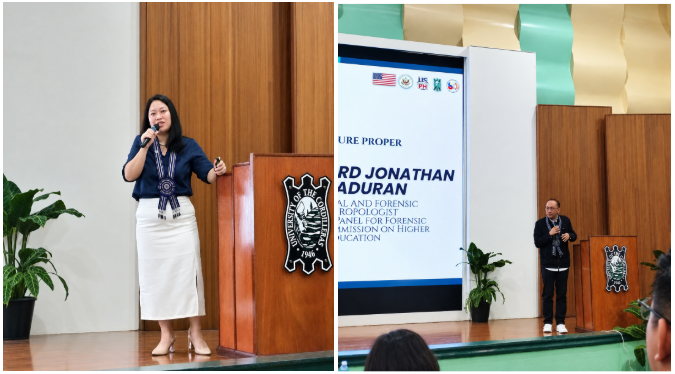
Photos taken of Hon. Lady Ivy Vanity D. Velasco-Snow (on the left) and Dr. Richard Jonathan O. Taduran (on the right) during their respective lectures.
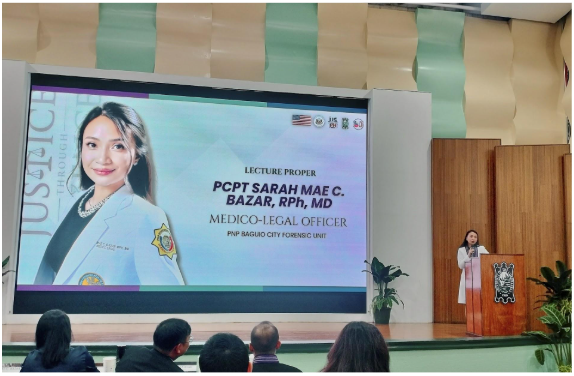
PCpt. Sarah Mae C. Bazar delivering her lecture on the importance and role of forensic medicine in the criminal investigation process.

The keynote speakers discussed the practical application of forensic medicine and science, the integration of forensic evidence in judicial systems, the contribution of academic research to forensic practice, and the development of scientific standards in the Philippines. Dr. Sarah Mae C. Bazar discussed the role of medico-legal examinations and autopsies in criminal investigations, emphasizing objective documentation, scientific interpretation, and the limitations of forensic conclusions. Hon. Lady Ivy Vanity D. Velasco-Snow highlighted the importance of forensic evidence in judicial decision-making and legislation. Dr. Christian T. Pascual underscored the role of academic institutions in developing competent forensic practitioners and producing research that informs field practices. Dr. Richard Jonathan O. Taduran discussed the probabilistic nature of forensic science, the need for validated standards, and local challenges involving funding, workforce retention, inter-agency collaboration, and research capacity.

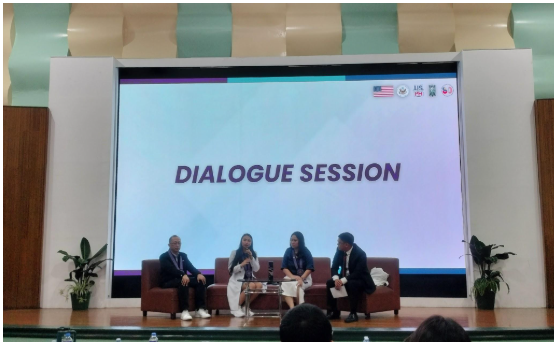
Following the lectures, the speakers were invited onstage for a dialogue session, during which they addressed questions from the audience. Overall, the discussions reinforced the importance of scientific integrity, ethical responsibility, interdisciplinary collaboration, and evidence-based approaches in criminal investigation, forensic education, and the administration of justice.

The speakers during the dialogue session of the seminar. From left to right: Dr. Richard Jonathan O. Taduran; Dr. Sarah Mae C. Bazar; Hon. Lady Ivy Vanity Velasco-Snow; Dr. Christian T. Pascual.

The seminar aligns with several of the United Nations Sustainable Development Goals (SDGs), namely SDG 4: Quality Education, by supporting continuous professional development, research-based instruction, and the development of competent future criminal justice and forensic science professionals; SDG 9: Industry, Innovation and Infrastructure, by promoting scientific research, technological advancement, and the development of reliable forensic methods and standards; SDG 16: Peace, Justice and Strong Institutions, by advocating for evidence-based judicial processes, ethical forensic practices, reliable criminal investigations, and the fair administration of justice; and SDG 17: Partnerships for the Goals, by encouraging collaboration among academic institutions, law enforcement agencies, forensic practitioners, and government institutions to strengthen forensic science in the Philippines.