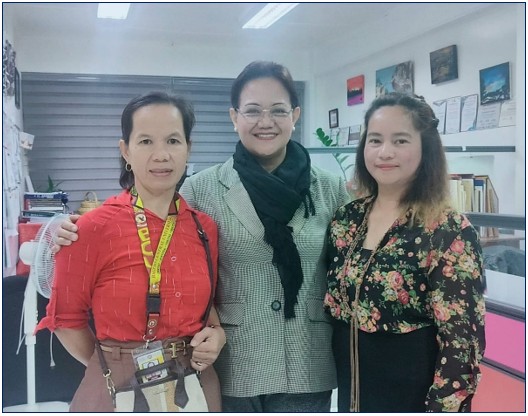
By: Anderson G. Dawigi, Patricia D. Valdez, Agustina B. Cayat, Jocelyn G. Abuan, and Genevieve B. Kupang
Every dissertation begins as a question. For the doctoral scholars of Baguio Central University’s Graduate School during the second semester of 2025-2026, that question grew into something larger: a proposal defended before a panel, a title approved after months of revision, and a new understanding of what it means to call oneself a researcher.
From Day 1 of Dissertation Writing 400A to the day each proposal earned its panel’s approval, this cohort walked a path marked by drafts, consultations, hard questions, and harder answers. Some arrived certain of their topics and left with a sharper research problem. Others discovered that the real work was not gathering literature but learning to defend an idea, revise it, and defend it again.
What follows are their own reflections, in their own words, on the highlights, the struggles, and the growth that proposal writing demanded of them. Together, these seeds of scholarship trace the shared journey of scholars learning to think, write, and stand as researchers in their own right.
ANDERSON G. DAWIGI
Master Teachers’ Administrative and Supervisory Mentoring: Impact on Beginning Teachers’ Professional Sustainability
“From Day 1 of Dissertation Writing 400A to the approval of my proposal, the most important insight I gained was that research is not about perfection but persistence. I learned to refine my ideas through continuous feedback, especially in aligning my study on master teachers’ administrative and supervisory mentoring with clear, researchable gaps.
What I valued most was the revision process. It was challenging, but it pushed me to think deeper, justify my choices, and truly own my work. Each correction became a step toward clarity and confidence.
This journey reshaped me into a more reflective and resilient scholar who understands that growth comes from critique. To future doctoral students: expect discomfort, embrace revisions, and trust that every struggle is shaping you into the researcher you are meant to become.”
PATRICIA D. VALDEZ
Enhancing Procurement Forecasting in the Department of Budget and Management Through AI-Driven Predictive Analytics:
An Administrative Analysis
“The most important insight I gained, from Day 1 of Dissertation Writing 400A until my proposal was approved, was that a dissertation only works when the research problem is clear and well justified. At first, I kept focusing on my general topic. Then, during my defense, a panelist suddenly asked what my primary objective was. I hesitated, took a moment to think, and the answer came out naturally. I realized I understood my study more than I thought.
The part I valued most was revision. The exercises and drafts helped me start, and the defense challenged me, but revision was where everything made sense. Fixing unclear ideas and improving my work based on feedback helped me see what I was really trying to say.
Being a scholar does not mean having everything figured out right away. It means staying willing to refine your ideas until they make sense. Expect proposal writing to feel messy at the start. Embrace the revisions. They turn your ideas into something clear and solid.”
JOCELYN G. ABUAN
Administrative Leadership and Supervisory Practices Dynamics Towards Failure Reduction Program: An Explanatory Analysis
“At the beginning of the course, I believed that collecting related literature and designing the methodology were the most difficult parts of dissertation writing. As I progressed through consultations, revisions, and panel recommendations, I realized the real challenge was identifying and refining a research problem that was both meaningful and researchable. Every chapter, from the statement of the problem to the conceptual framework, methodology, and interpretation of findings, depends on how well the core issue is articulated.
Although the defense itself was challenging, the revision process became the most meaningful part for me. It let me see my study from a deeper, more critical perspective. The panel’s comments helped me recognize areas that needed improvement, especially in aligning my objectives, variables, and proposed outcomes. I came to see revisions not as correcting errors, but as opportunities to refine the quality and relevance of my research.
This process taught me that research is about critically examining problems to create meaningful solutions, not simply gathering information. It strengthened my confidence and showed me that patience, openness to feedback, and careful analysis are essential qualities of a credible scholar. Proposal writing will test your patience, discipline, and confidence. Embrace it as a process of refining both your ideas and your identity as a scholar, and it becomes one of the most transformative parts of your doctoral journey.”
AGUSTINA B. CAYAT
Strengthening Institutional Linkages: An Administrative Framework for an Improved Teaching-Learning Environment
“I consider myself fortunate to have enrolled in this course despite the many challenges and uncertainties I faced along the way. This journey helped me develop valuable skills in dissertation writing, especially in aligning every part of the study, from the title to Chapters 1 and 2. The proposal defense was both challenging and rewarding, as it pushed me to improve and refine my work.
I am deeply grateful that my proposed study on community extension services was approved. As someone who genuinely believes in and advocates for community extension work, I felt fulfilled being able to express its importance and its impact on improving education and strengthening community connections.
To future doctoral students, I encourage you to keep going despite the difficulties. Pursue your studies for advancement, personal growth, and lifelong learning.”
Thank you for reading the first part of this series. This article will be continued in the next series. Eight PhD scholars, eight titles, eight paths through the same course. Yet across every reflection runs a common thread: revision as the true teacher. Again and again, these doctoral scholars point to the same turning point, not the first draft, but the return to it. Feedback stopped feeling like correction and started feeling like clarity.
Baguio Central University’s Graduate School is proud to walk alongside these emerging scholars as they carry their approved proposals into the next chapters of their dissertations. Their stories, and the many others still unfolding across the program, are proof that scholarship grows the way any seed does: slowly, through patient tending, and always toward the light.
Eight doctoral scholars, eight distinct research titles, and eight paths through the same academic journey. Yet, across every reflection runs a common thread: embracing revision as the true teacher. For these scholars, the breakthrough wasn’t in the initial draft, but in the return to it, the exact moment where feedback shifted from correction to absolute clarity.
The Baguio Central University Graduate School is honored to walk alongside these emerging researchers as they advance their approved proposals into the next chapters of their dissertations. Their unfolding journeys stand as proof that true scholarship grows like a seed: slowly, through patient cultivation, and always reaching toward the light.
Thank you for reading Part 1 of this series. Stay tuned for our next installment featuring the remaining scholars in this cohort!
#BCUsoarshigher
#BCUGraduateSchoolsoarshigher