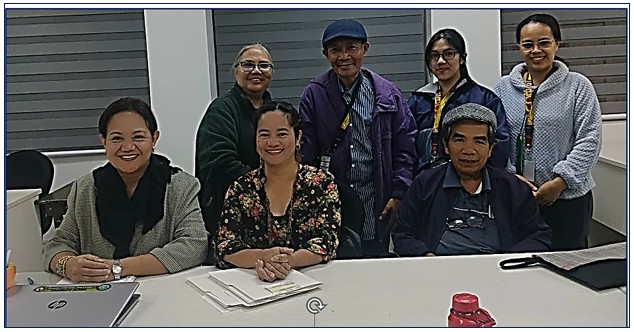
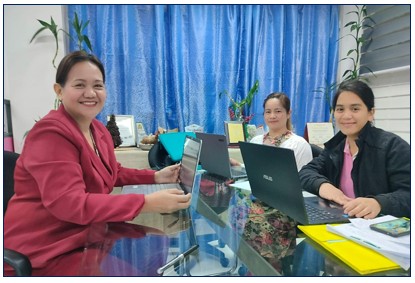
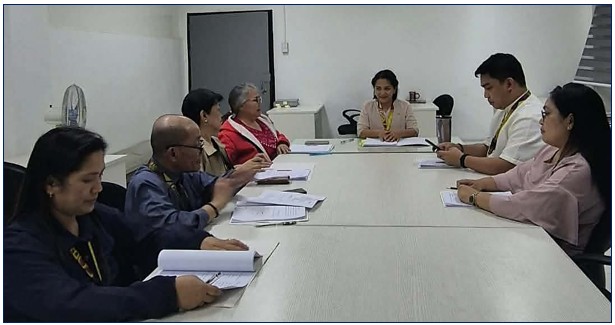
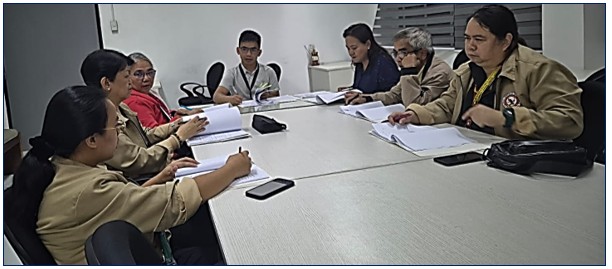
By: Daisy D. Taganas, Prima P. Tolingan, Satur C. Bacdayan Jr., and Shyla T. Tugay-an
DAISY D. TAGANAS
An Explanatory Sequential Mixed-Methods Analysis of Teacher-Parent Partnerships Towards Managing Learner Misbehavior
“From Dissertation Writing 400A to my proposal approval, my significant insight was learning to craft a clear, feasible research problem grounded in critical literature gaps. I earned my committee’s approval through the rigorous alignment of my research questions, methodology, and structural constraints, proving the viability of my mixed-methods approach and transforming the proposal into a compelling, defensible roadmap that clearly answered the question, “So what?”
I valued every stage of this process equally: the initial exercises, the iterative drafts, the intense defense, and the subsequent revisions. Together, these milestones unearthed my passion for culturally responsive supervision in indigenous Philippine schools, honed my research skills, built my resilience, and reaffirmed my commitment to community learner outcomes.
This process transformed how I see myself as a scholar. I shifted from a dedicated classroom teacher to a confident, self-reflective researcher who now embraces ambiguity and iterative refinement as core to impactful educational inquiry. It empowered me to see my work not just as a PhD milestone, but as a lifelong commitment to advancing pedagogy in underserved communities.
The journey toward a PhD is built on rigorous preparation and invaluable mentorship like this
My message to future doctoral students: Embrace proposal writing as an iterative journey. Hone your research problem into a laser-focused, feasible blueprint that anticipates committee critiques, transforming initial ambiguity into unshakeable scholarly confidence.”
PRIMA P. TOLINGAN
Improving Academic Outcomes Through Integrative Assessment and Instructional Supervision Among At-Risk Secondary Learners
“The critical insight I gained in Dissertation Writing 400A was the systematic process for crafting Chapters 1 and 2 of my research proposal. Immersing myself in drafting these initial chapters was a difficult but rewarding experience. Under the expert guidance of my professor, Dr. Genevieve Kupang, I acquired the essential knowledge and technical skills foundational to scholarly writing. It is an asset I deeply value. This process has shifted my perspective. I now approach research writing with a heightened willingness to learn and a determination to excel. This milestone has fortified confidence in my academics, reinforcing the principle that learning is a continuous, evolving journey that requires openness and adaptability to achieve one’s scholarly objectives.”
SATUR C. BACDAYAN JR.
Impact of School Leaders’ Practices on the Delivery of Guidance Services: Perspective of Students
“The process of building my early drafts became a valuable experience, as it steadily built my confidence, taught me to remain open to constructive feedback, and continuously revealed new pathways toward completing the work. From Day 1 of Dissertation Writing 400A to the successful defense of my proposal, the most profound insight I gained was that revision is the essential engine of research that refines rough concepts and transforms an initial study into a polished, high-quality output.
This journey has reshaped my identity as a scholar by instilling a deep sense of persistence. To succeed as a researcher, I realized I had to learn how to navigate the challenges of time, mastering the delicate, demanding balance between my professional responsibilities and my doctoral studies in order to bring this proposal to fruition.
To future doctoral students who will walk this path next: remember that research is a marathon of endurance. Expect the journey to challenge your boundaries, welcome the revisions as opportunities for growth, and remain steadfast in balancing your commitments, knowing that every hurdle crossed brings you closer to clarity and scholarly triumph.”
SHYLA T. TUGAY-AN
Assessing Teacher Leadership Core Competencies and Their Influence On Secondary Public School Excellence
“The value of aligning my research problem, objectives, and methodology to ensure coherence in studying teacher leadership toward secondary public school excellence was my key takeaway. What I liked most was the revision process. It allowed me to refine my arguments, strengthen my framework, and watch my study evolve into a more rigorous scholarly work.
This journey shaped me into a researcher who is both an educator and a contributor to knowledge, capable of analyzing and synthesizing ideas with confidence. To future doctoral students: expect proposal writing to be demanding, yet enjoyable and transformative. Embrace the challenges as opportunities for growth.”
Baguio Central University’s Graduate School is proud to walk alongside these emerging scholars as they carry their approved proposals into the next chapters of their dissertations. Their stories, and the many others still unfolding across the program, are proof that scholarship grows the way any seed does: slowly, through patient tending, and always toward the light.
Eight doctoral scholars, eight distinct research titles, and eight paths through the same academic journey. Yet, across every reflection runs a common thread: embracing revision as the true teacher. For these scholars, the breakthrough wasn’t in the initial draft, but in the return to it, the exact moment where feedback shifted from correction to absolute clarity.
Thank you for reading Parts 1 and 2 of this series. Stay tuned for our next installment featuring other scholars in this cohort!
Editor: Genevieve B. Kupang
#BCUsoarshigher
#BCUGraduateSchoolsoarshigher