
By: Gina L. Casi, RN, PhD & Jessie Dela Cruz, LPT
May 26, 2025
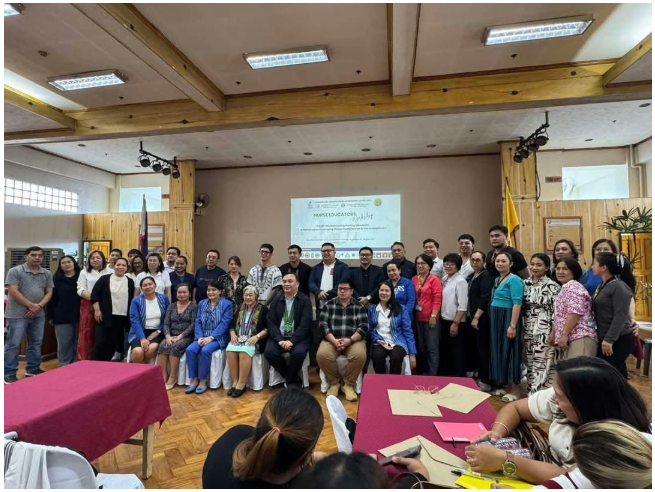
As artificial intelligence (AI) continues to transform healthcare and higher education, preparing nurse educators to use emerging technologies responsibly has become increasingly important. Addressing this evolving need, Baguio Central University’s (BCU) College of Nursing and School of Midwifery hosted the Faculty Development Program for Nurse Educators, titled “Nurse Educators Workshops,” on May 26, 2025, under the theme “Revolutionizing Nursing Education: A Workshop on Developing Ethical Guidelines for AI Use in Healthcare.” Initiated by the Cordillera Association of Nursing Deans, Inc. (CANDI), in partnership with the University of Baguio, the workshop brought attention to the opportunities and ethical challenges associated with integrating AI into nursing education and healthcare practice. The initiative highlighted the importance of equipping nurse educators with the knowledge and critical perspectives needed to guide future healthcare professionals in an increasingly technology-driven environment.
Dr. Perfecto M. Lopez, Vice president for Administration welcomed the participants in behalf of the University president, Dr. Margarita B. Rillera. The workshop featured distinguished speakers who shared their expertise in nursing education, academic leadership, and institutional development. Dr. Florence C. Cawaon, DNS, PhD, RN, former Dean of BCU’s College of Nursing and School of Midwifery, served as the keynote speaker. She was joined by Jude L. Tayaben, PhD, RN, Director of the Gender and Development Office of Benguet State University, and John Michael O. Lorena, Dean of the College of Nursing at Trinity University of Asia. Their participation brought together perspectives from nursing education, gender and development, and academic leadership, providing a relevant foundation for discussions on the responsible use of AI in healthcare and education. The involvement of experienced educators and academic leaders also emphasized the importance of professional collaboration in addressing emerging concerns that affect the nursing profession.

Centered on developing ethical guidelines for AI use, the workshop underscored the need to balance technological innovation with professional accountability, patient safety, confidentiality, fairness, and human judgment. Although AI can support learning, information analysis, and selected healthcare processes, its use must remain guided by ethical standards and the professional responsibilities of nurses. Nurse educators have an important role in helping students evaluate AI-generated information critically, protect sensitive patient data, recognize potential biases, and understand that technology should complement rather than replace professional judgment and compassionate care. By hosting the workshop, BCU’s College of Nursing and School of Midwifery provided a venue for faculty development and professional dialogue on preparing educators to respond thoughtfully to technological changes in healthcare. Any specific guidelines formally adopted or workshop outputs completed should be confirmed by the organizers before being reported as established results.
The initiative aligns most directly with Sustainable Development Goal 4: Quality Education, through its emphasis on faculty development, ethical technology integration, and the continuous improvement of nursing education. It also supports SDG 3: Good Health and Well-Being, as responsible AI use in healthcare must prioritize patient safety, quality care, and professional accountability. SDG 5: Gender Equality is relevant to the extent that the workshop addresses gender bias in AI systems and promotes equitable representation in technology development and use, particularly given the participation of a speaker from a Gender and Development Office. SDG 9: Industry, Innovation and Infrastructure connects to the responsible advancement and application of emerging technologies, while SDG 16: Peace, Justice and Strong Institutions is relevant to the development of ethical guidelines, transparent practices, and accountability in AI-supported decision-making. Finally, SDG 17: Partnerships for the Goals reflects the collaboration among CANDI, the University of Baguio, BCU, and participating academic leaders in advancing nursing education. These connections illustrate how responsible technological innovation, ethical governance, and interinstitutional cooperation can contribute to sustainable progress in health sciences education.
Through this faculty development program, BCU reaffirmed the importance of preparing nurse educators to navigate the opportunities and responsibilities associated with emerging technologies. By bringing together academic leaders and professionals to discuss ethical AI use, the university contributed to ongoing conversations about the future of nursing education and the preservation of human-centered care. The workshop emphasized that meaningful innovation in healthcare requires more than technological adoption; it also demands ethical awareness, professional competence, collaboration, and an enduring commitment to the welfare and dignity of every patient.
#BaguioCentralUniversity #BCUCollegeOfNursing #BCUSchoolOfMidwifery #CordilleraAssociationOfNursingDeans #CANDI #UniversityOfBaguio #FacultyDevelopment #NurseEducators #NursingEducation #ArtificialIntelligenceInHealthcare #EthicalAI #AIInNursingEducation #ResponsibleAI #DigitalHealth #HealthcareInnovation #EthicsInHealthcare #PatientSafety #DataPrivacy #AcademicLeadership #ProfessionalDevelopment #InterInstitutionalCollaboration #FutureOfNursing #HumanCenteredCare #HealthSciencesEducation #SustainableDevelopmentGoals #SDG3 #GoodHealthAndWellBeing #SDG4 #QualityEducation #SDG5 #GenderEquality #SDG9 #IndustryInnovationAndInfrastructure #SDG16 #PeaceJusticeAndStrongInstitutions #SDG17 #PartnershipsForTheGoals