BAGUIO CENTRAL UNIVERSITY

(074) 444-9247 / (074) 424-8216 #18 Bonifacio Street, ABCR Barangay, Baguio City
Baguio Central UniversitySoaring High Towards Excellence

Guest Editor Professor Huang Presents the Journal of Innovation and Education Volume One during the 2026 WIRC

By Genevieve B. Kupang

Makati, Philippines, November 22, 2026

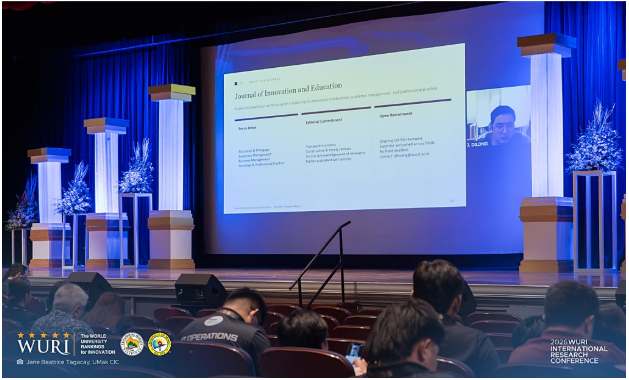
Guest Editor Professor Dilong Huang delivers the Volume 1 progress report for the Journal of Innovation and Education (JIE) virtually at the 2026 WURI International Research Conference hosted by the University of Makati. (Photo: Jane Beatrice Tagacay, UMak CIC)

Artificial intelligence is reshaping classrooms, and global rankings are redefining institutional priorities. Consequently, higher education stands at a crossroads. At the 2026 World University Rankings for Innovation (WURI) International Research Conference (2026 WIRC), held at the University of Makati in Manila from November 18 to 20, 2026, Guest Editor Professor Dilong Huang presented a progress report for Volume 1 of the Journal of Innovation and Education (JIE). 

Guided by the conference theme, “Innovating Education for Tomorrow: AI-Enabled, Inclusive, and Sustainable Future,” the issue captures how universities across Asia navigate technological change, ethical governance, and community reform. 

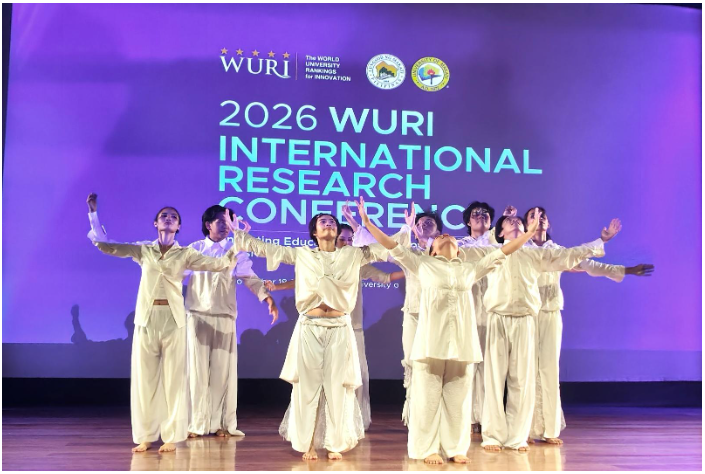
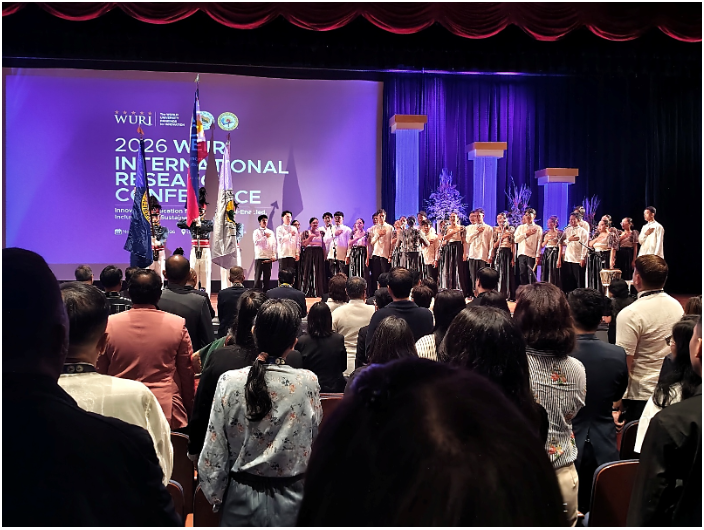
Highlights from the stage at the 2026 WURI International Research Conference in Makati, featuring the UMak’s Center for Culture and the Arts (CCA). (Photo: Genevieve B. Kupang)

Transparent Scholarship

Positioned as a peer-reviewed outlet covering education, pedagogy, academic management, business, and professional practice, JIE operates on an editorial model centered on openness. Moving through a six-stage workflow, from abstract screening and dual peer review to author revisions and final confirmation, the journal upholds a transparency principle by publishing reviewers’ names alongside accepted articles. By recognizing scholarly labor, JIE mirrors the institutional accountability advocated within its pages. 

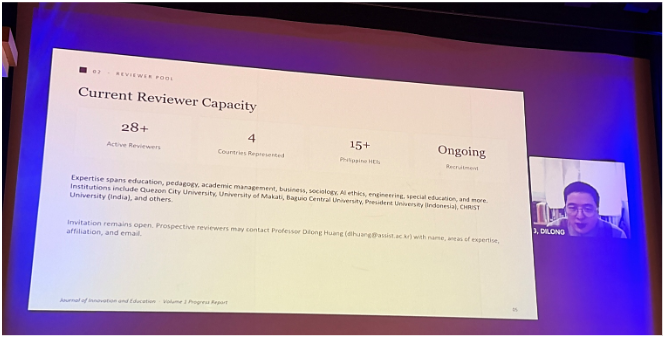
Guest Editor Prof. Dilong Huang shares the current reviewer capacity and open recruitment call for the Journal of Innovation and Education. (Photo: Karl Matthieu Rillera)

To sustain this standard, the journal has assembled a pool of more than 28 reviewers across four countries and over 15 Philippine higher education institutions (HEIs), drawing expertise from fields ranging from special education and sociology to engineering and AI ethics. Recruitment remains open on a rolling basis for scholars who wish to contribute to peer review. 

Twelve Papers, Four Themes

Volume 1 brings together twelve accepted studies that examine innovation as a process shaped by institutional values and societal needs rather than a race for metrics. The collection clusters around four themes: 

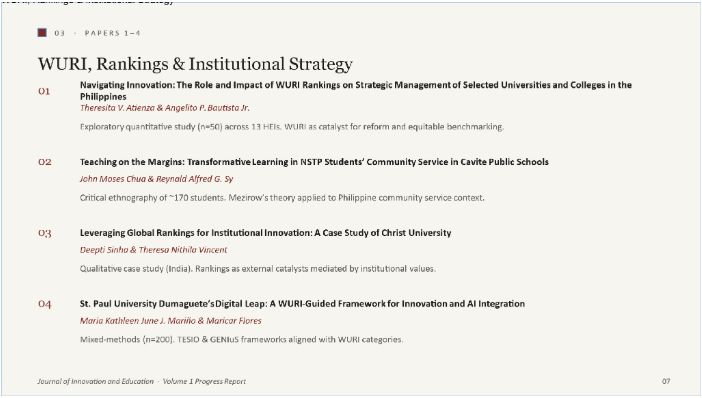
  • WURI, Rankings, and Institutional Strategy (5 papers): Rather than treating global rankings as scorecards, contributors examine how WURI functions as both an external governance catalyst and an internal strategy. Studies spanning Philippine universities (Atienza & Bautista Jr.), India’s Christ University (Sinha & Vincent), and MAEER’s MIT Arts, Commerce & Science College in Pune (Waphare & Netke) illustrate how institutions align innovation frameworks with campus programs and industry partnerships. Research on Northwestern University in the Philippines (Navasca, Alonzo, & Humilde) demonstrates how WURI helps provincial private institutions build legitimacy despite resource constraints, while an analysis of Bangladeshi universities (Genilo & Uddin) highlights growing WURI participation alongside a need for stronger media framing and digital strategy. 
Papers 1 to 4 from Volume 1 of the Journal of Innovation and Education, focusing on WURI rankings, institutional strategy, and transformative learning. (Credit: Dr. Dilong Huang)
  • AI Integration and Faculty Transformation (4 papers): As generative AI enters academic life, several studies explore how institutions adopt tools while maintaining human-centered pedagogy. Research from St. Paul University Dumaguete (Mariño & Flores) details the alignment of innovation models, TESIO and GENIUS, with WURI categories, while a faculty survey within a Christian higher education context (Ocampo Jr.) reveals how professors balance professional identity with ethical caution, viewing AI as a supportive instrument. 
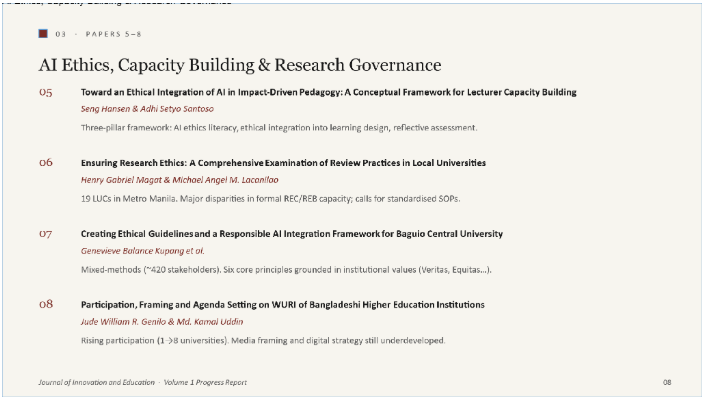
Papers 5 to 8 from Volume 1 of the Journal of Innovation and Education, focusing on AI ethics, research governance, and WURI framing. (Credit: Dr. Dilong Huang)
  • Ethics and Governance (3 papers): Innovation requires governance guardrails. Contributors from Indonesia’s President University (Hansen & Santoso) propose a three-pillar conceptual framework for lecturer capacity building centered on AI ethics literacy, ethical learning design, and reflective assessment. At the institutional level, researchers from Baguio Central University (Kupang et al.) draw on roughly 420 stakeholders to establish six principles for responsible AI grounded in institutional values such as Veritas and Equitas. Complementing these AI frameworks, an examination of 19 Local Universities and Colleges (LUCs) in Metro Manila (Magat & Lacanilao) uncovers disparities in Research Ethics Committee capacity and calls for standardized operating procedures. 
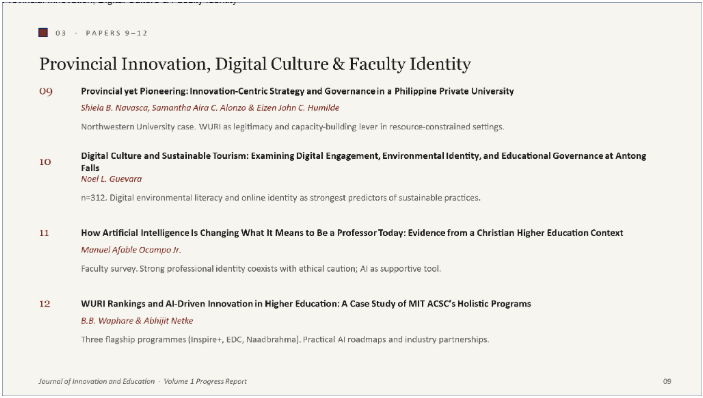
An overview of Papers 9 to 12 in Volume 1 of the Journal of Innovation and Education, examining provincial university innovation, digital culture in sustainable tourism, faculty identity in the AI era, and holistic academic programs across the Philippines and India. (Credit: Dr. Dilong Huang)
  • Community and Pedagogy (2 papers): Rounding out the volume are studies anchoring innovation in communities and environmental stewardship. A critical ethnography of roughly 170 National Service Training Program (NSTP) students in Cavite public schools (Chua & Sy) applies Mezirow’s transformative learning theory to Philippine community service, while research at Antong Falls (Guevara) shows that digital environmental literacy and online identity predict sustainable tourism practices. 
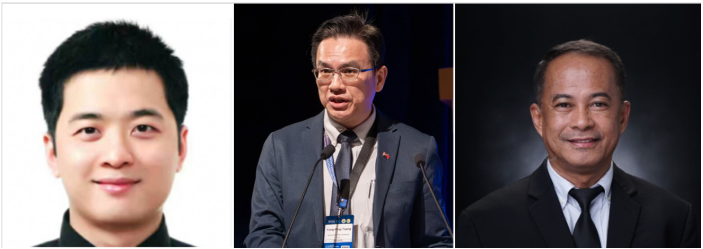
Guest Editors for the inaugural volumes of the Journal of Innovation and Education (JIE): Professor Dilong Huang (left), Dr. Yung Ping Tseng, VP of NCNU (center), and Dr. Henry Magat, Director of the Center for Quality Management and Development at UMak (right).

Regional Reach

Volume 1 features eight papers from the Philippines, two from India, and one each from Indonesia and Bangladesh. These contributions demonstrate that educational innovation advances when local culture, ethical integrity, and faculty empowerment take precedence over technological efficiency. 

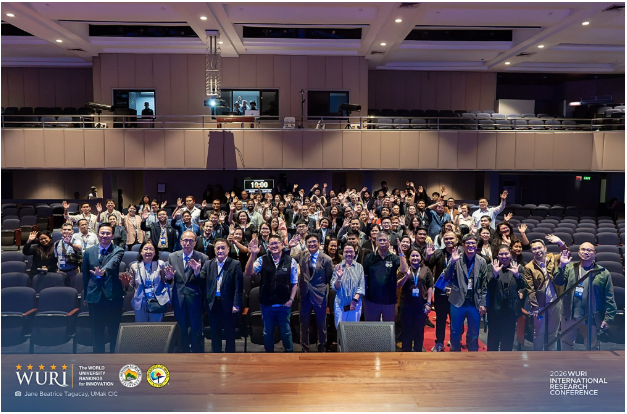
Day 3 delegates and speakers come together at the University of Makati Performing Arts Theater to conclude the 2026 WURI International Research Conference. (Photo: Jane Beatrice Tagacay, UMak CIC)

Looking Ahead to Volume 2

With Volume 1 entering final revisions, typesetting, and open-access release, JIE is preparing its next steps. Plans include expanding the reviewer network, strengthening scholarly ties across Southeast and South Asia, and issuing the call for papers for Volume 2 to continue research on responsible AI, governance, and higher education. 

Conference delegates gather for the opening ceremony of the 2026 WURI International Research Conference in Makati. (Photo: UMak 2026 WIRC Documentation Team)

This initiative directly advances SDG 4 (Quality Education) and SDG 9 (Industry, Innovation, and Infrastructure) by championing ethical AI integration, faculty development, and inclusive pedagogical reform across higher education. Through its commitment to transparent peer review and standardized research ethics governance, the journal reinforces SDG 16 (Peace, Justice, and Strong Institutions), while empowering provincial institutions and promoting digital environmental literacy in support of SDG 10 (Reduced Inequalities) and SDG 12 (Responsible Consumption and Production). By uniting scholars and institutions across the Philippines, India, Indonesia, and Bangladesh, the publication exemplifies SDG 17 (Partnerships for the Goals) in driving sustainable educational innovation.   

#SDG4 #QualityEducation #SDG9 #InnovationInEducation #SDG16 #StrongInstitutions #SDG17 #GlobalPartnerships #WURI2026 #2026WIRC #JournalOfInnovationAndEducation #ResponsibleAI #HigherEducation #UMak #AcademicInnovation #WURIHistorianSoarsHigher

About the Author:

Dr. Genevieve B. Kupang has served as the WURI Historian since 2024. She is also the Dean of the Graduate School and International Relations Officer at Baguio Central University.