BAGUIO CENTRAL UNIVERSITY

Baguio Central University Engages in Regional Economic Survival and Growth Briefing

-Marga L. Taganas, CPA, MBA

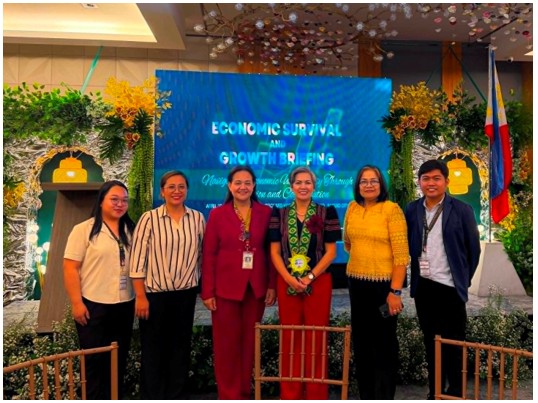
BCU delegates with Assistant Secretary Ma. Monica C. Costales, the administrator of Metropolitan BLISTTT Development Authority (MBLISTTDA) and Engr. Mark Joseph Lacambra, President of Baguio Business Club (BBC).

Baguio Central University actively participated in the Economic Survival and Growth Briefing held on April 30, 2026 at Orchard Hotel, Baguio City. The event, carrying the theme “Navigating Economic Uncertainty Through Innovation and Collaboration,” organized by the Metropolitan BLISTTT Development Authority (MBLISTTDA), the Baguio Business Club (BBC), and the Department of Trade and Industry–Cordillera Administrative Region (DTI-CAR), brought together leaders from government, business, and academe.

The briefing aimed to provide participants with insights into current economic conditions, industry outlooks, global uncertainties, and emerging opportunities, particularly in digital banking and financial services. BCU delegates included Dr. Cherrie Mae M. Manuel, Dean of the College of Business Administration and member of the Graduate School faculty; Dr. Genevieve B. Kupang, Dean of the Graduate School and International Relations Officer; Ms. Marga L. Taganas and Mr. Argie Q. Aquino, faculty members of the College of Business Administration and Graduate School; and Dr. Janice D. Alejandrino, Graduate School faculty member.

In his welcome remarks, BBC President Engr. Mark Joseph Lacambra underscored the urgency of the gathering, noting that such discussions are “not just timely but necessary” amid ongoing economic challenges. He emphasized that innovation and collaboration will be key drivers of survival and leadership in uncertain times.

Renowned economist Dr. Bernardo Villegas provided a historical perspective on the Philippines’ performance compared to its neighbors. Despite prevailing global headwinds, he expressed optimism that the national economy could recover by the end of the year. He highlighted the vital role of the private sector in accelerating recovery and proposed measures to address food inflation and energy costs.

Mayor Benjamin Magalong followed with an overview of Baguio City’s current economic situation and outlined local government initiatives addressing pressing concerns. Architect Donna R. Tabangin then presented the Baguio Economic Continuity and Resiliency Plan 2026–2030, which focuses on mitigating risks beyond local control and strengthening the service-driven economy of the BLISTT area.

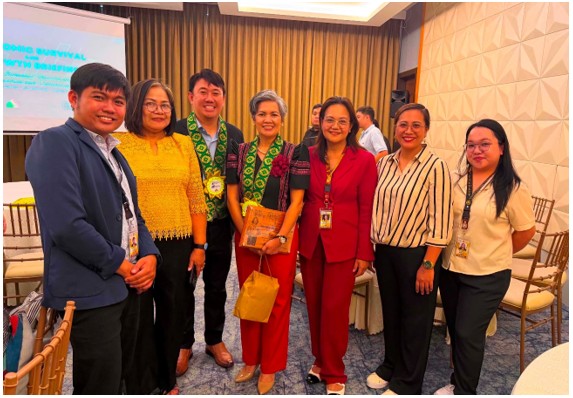
BCU delegates with Assistant Secretary Ma. Monica C. Costales.

Meanwhile, Assistant Secretary Ma. Monica C. Costales outlined the legal framework and strategic direction of MBLISTTDA. She emphasized its role in harmonizing development across the BLISTT area, which accounts for a significant share of the region’s economy. Her presentation detailed a long-term roadmap spanning from foundational planning to sustainability phases through 2040. Ms. Felicitas Bandonill, Provincial Director of DTI Baguio-Benguet, complemented this by outlining current investment priority areas and trends in business registrations, identifying specific economic drivers for each LGU within the BLISTT area for public-private collaboration.

The forum also featured insights from Mr. Angelo Madrid, President of Maya Bank, who highlighted the importance of leveraging crises as opportunities for innovation. He discussed the evolution of digital banking, particularly how financial platforms like Maya have expanded to support individuals and small businesses with improved access to capital−an essential factor in building economic resilience.

The event aligns with several United Nations Sustainable Development Goals, particularly SDG 8 (Decent Work and Economic Growth) through its focus on economic resilience and job creation, SDG 9 (Industry, Innovation and Infrastructure) by promoting innovation and digital transformation, and SDG 17 (Partnerships for the Goals) by fostering collaboration among public and private sectors. Additionally, the emphasis on supporting MSMEs and inclusive economic participation reflects the principles of SDG 10 (Reduced Inequalities).

The briefing served as a vital platform for knowledge exchange, reinforcing the importance of collaboration and innovation as essential tools in navigating economic uncertainty and shaping a more resilient and inclusive future.