October 15, 2026
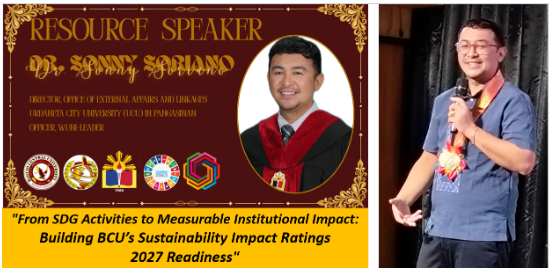
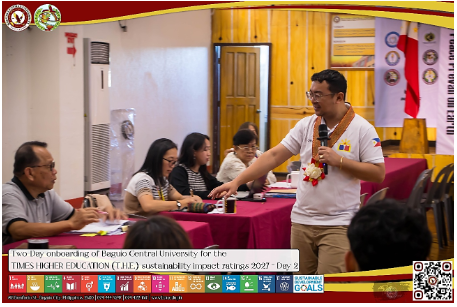
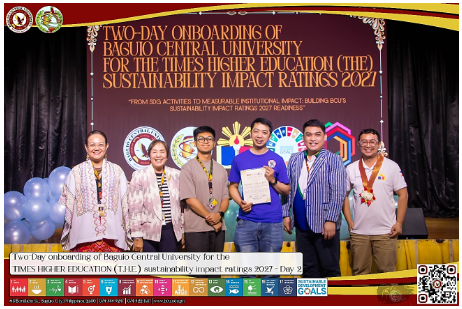
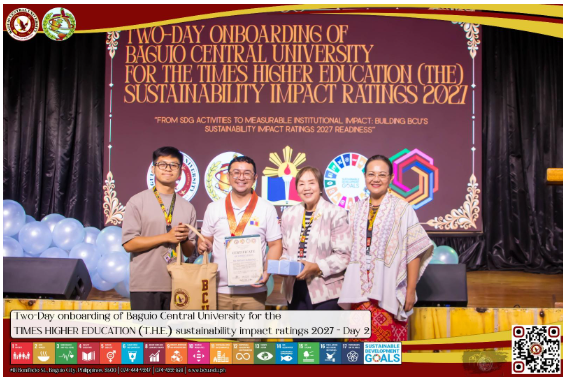
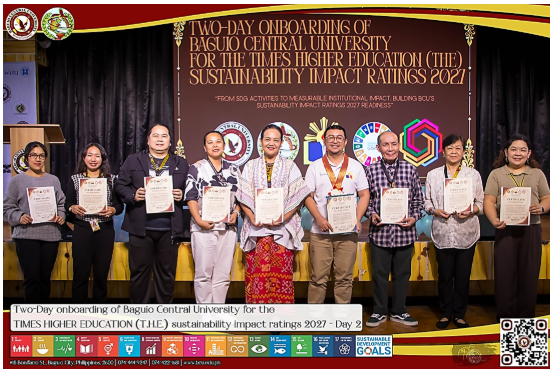
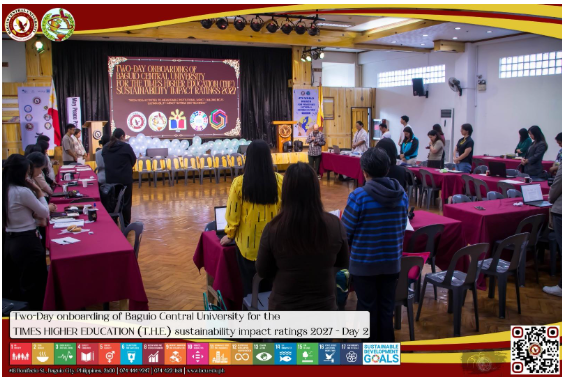
On October 15–16, 2026, the Baguio Central University International Relations Office (BCU IRO) hosted an intensive two-day sustainability development workshop led by expert Dr. Sonny Soriano. He is the Acting Director of the Center for Research and Development, Director for External Affairs and Linkages, and International Relations Officer of Urdaneta City University. Anchored on the theme “From SDG Activities to Measurable Institutional Impact: Building BCU’s Sustainability Impact Ratings 2027 Readiness,” the initiative brought together administrators, faculty, researchers, staff, and Sustainable Development Goal (SDG) focal persons across all colleges, offices, and departments to reinforce the university’s commitment to sustainable development and global academic excellence.
The initiative was designed to enhance BCU’s existing community extension, environmental stewardship, research programs, and institutional policies into standardized, verifiable evidence aligned with the Times Higher Education (THE) Sustainability Impact Ratings (SIR) framework.
Bridging Academic Vision and Global Sustainability Standards
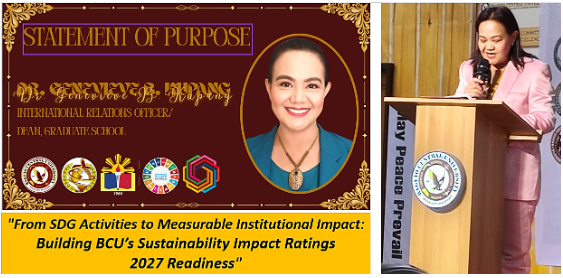
Opening the event, the BCU Vice President for Academic Affairs, Dr. Elma D. Donaal, and BCU International Relations Officer Dr. Genevieve B. Kupang emphasized the growing importance of embedding sustainable practices into higher education governance and internationalization strategies. Participating in international benchmarking like the THE Sustainability Impact Ratings allows BCU to gain global visibility and rigorously measure its contributions toward solving local and global challenges.
Dr. Sonny Soriano, serving as the lead trainer and resource person, delivered an insightful deep dive into the methodology behind THE Sustainability Impact Ratings. He stressed that institutional participation is a transformative exercise in institutional data governance, accountability, and real-world sustainability impact.
“The core of sustainability evaluation has shifted from mere intention to verifiable outcomes,” Dr. Soriano highlighted during his keynote session. “It is no longer enough for an institution to conduct activities; universities must demonstrate measurable impact, public transparency, robust policy frameworks, and sustained partnerships.”
Because THE’s methodology relies heavily on self-reported data supported by public evidence and bibliometric indicators, missing documentation or unverified claims can lead to zero scores in specific areas. Dr. Soriano’s training adopted a practical 30:70 learning-to-application ratio, ensuring participants spent 70% of their time engaged in hands-on mapping, evidence collection, and gap analysis.
Day 1: focused on the question “Where Are We Now?” Participants conducted a comprehensive mapping of the BCU Sustainability Landscape
The first day focused on establishing a clear baseline of BCU’s current sustainability footprint. Participants were guided through the complex scoring logic of the THE framework, learning how quantitative metrics, qualitative evidence, research publications, and public policy documents intersect across four core operational pillars: Teaching, Research, Stewardship, and Outreach.
During the interactive sessions, participants conducted a preliminary inventory of BCU’s current projects, mapping existing initiatives against the United Nations’ 17 SDGs. Working through the Evidence Mining and Documentation workshop, teams collected policy documents, course syllabi, research lists, public reports, and community outreach records.
A major milestone of Day 1 was the evaluation of data quality. Dr. Soriano introduced an Evidence Quality Checklist, pushing data owners to evaluate their documents for completeness, accuracy, accessibility, and public verifiability.
By the end of the first day, BCU successfully generated several foundational outputs:
- An initial BCU SDG Institutional Mapping Matrix
- A preliminary inventory of available campus policies and operational practices
- A mapping of research publications aligned with specific SDGs
- A preliminary matrix highlighting institutional strengths and immediate documentation gaps
Day 2: Strategic Alignment, Research Readiness, and Action Planning
Day 2 shifted the focus from diagnostic evaluation to forward-looking strategy under the theme “Where Do We Want to Go?” The morning commenced with a strategic exercise selecting BCU’s target SDGs. Under THE methodology, an institution’s overall rating is calculated using SDG 17 (Partnerships for the Goals)—which is mandatory for all participants—alongside its top three performing SDGs.
Dr. Soriano guided executive leaders and department heads through a prioritization process that aligned BCU’s academic strengths and regional focus in the Cordillera administrative region with specific SDGs.
To maximize collaboration, participants were divided into five specialized, functional teams:
- Research and Innovation: Focused on mapping bibliometric outputs, citations, patent transfers, and SDG-aligned research grants.
- Teaching and Curriculum: Examined the integration of sustainability topics within undergraduate and graduate course offerings, experiential learning, and student-led initiatives.
- Institutional Stewardship: Assessed internal campus operations, including energy efficiency, waste management, green procurement, and staff welfare policies.
- Community Engagement and Outreach: Documented extension programs, local community partnerships, social impact metrics, and beneficiaries.
- Partnerships and SDG 17: Examined formal MOUs, international collaborations, joint academic ventures, and multi-sectoral networks.
A special session was dedicated to Research and Bibliometric Readiness, recognizing that independent database tracking of academic publications plays a significant role in THE assessments. Faculty researchers were equipped with actionable techniques to improve publication tracking, research visibility, and institutional affiliations.
Building a Sustainable Data Ecosystem
A recurring message throughout the two-day event was the necessity of building a repeatable, permanent institutional system rather than treating submission preparation as a one-off task.
To address this, participants collaborated on designing the proposed BCU SDG Evidence Repository. This system establishes standardized folder structures, strict document naming conventions, clear ownership protocols, and multi-tier validation processes to ensure data integrity year after year.
Using a color-coded Evidence Gap Analysis framework (Green for verified evidence, Yellow for incomplete data, Orange for undocumented activities, and Red for unaddressed areas), university leaders systematically pinpointed operational areas requiring immediate intervention before the 2027 cycle.
Concrete Deliverables and Next Steps
The workshop concluded with group presentations and the adoption of key working documents that will guide BCU’s journey over the coming months:
- BCU SDG Master Matrix: Mapping all active programs to target SDGs and designated responsible offices.
- THE Evidence Register: Logged records detailing indicator metrics, file locations, and validation statuses.
- SDG Research Mapping Action List: A targeted plan to increase SDG-focused scholarly outputs.
- BCU Sustainability Impact Ratings 2027 Action Plan: A detailed roadmap outlining key performance indicators (KPIs), resource allocations, target deadlines, and institutional accountabilities.
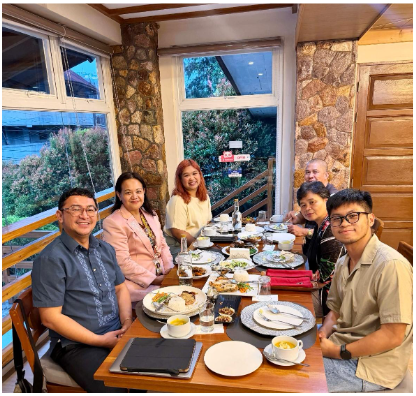
Closing the event, BCU administrators expressed their profound gratitude to Dr. Sonny Soriano for his invaluable guidance and commended the International Relations Office for organizing the transformative activity.
With a solidified roadmap, a dedicated governance structure, and an empowered network of SDG champions, Baguio Central University stands well-positioned to convert its rich history of community service and academic excellence into a globally recognized benchmark for institutional impact.
#BCUInternationalRelationsOfficeSoarsHigher
#SustainableDevelopment
#Internationalization
#SDGs
#BCUSoaringHigh
#THEImpactRankings