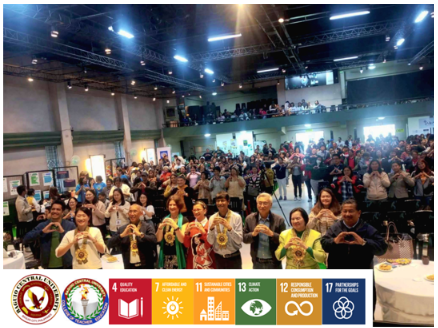
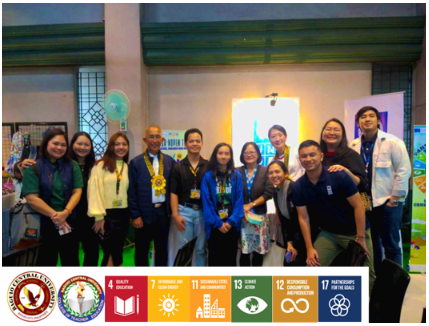
Students and members of the Baguio Central University CTELA – Scientia Technologia Sodalici (STS) Club attended the launch of the Circular Economy Program on January 31, 2025. Held at the University of the Cordilleras Theater, the event centered on the theme “Pansa-nopen Tayo: Let’s Gather, Conserve, and Renew.”
Baguio’s transition toward circularity is backed by the Green Local Government Units (LGUs) Project led by the Department of the Interior and Local Government (DILG) and UNDP Philippines; the initiative operates under the European Union-funded Green Economy Partnership with the Philippines (GEPP), which is spearheaded by the Department of Environment and Natural Resources (DENR). This strategic collaboration has been vital in empowering local stakeholders to effectively translate environmental policies into concrete action.
A blueprint for collective action, “Pansa-Nopen Tayo: Let’s Gather, Conserve, and Renew” urges communities to adopt circular practices that secure a sustainable future for both people and the environment. The theme embodies Baguio City’s strategic commitment to cultural preservation, sustainable development, and economic regeneration.
In a promising development for the city’s sustainability goals, Baguio’s daily trash output has seen a significant annual drop. This breakthrough is the direct result of coordinated waste diversion initiatives, heightened community awareness campaigns, and enhanced solid waste management systems.
The project aims to support LGUs across the Philippines in accelerating their transition toward inclusive, climate-smart circular economies. As part of the UNDP’s broader portfolio approach to local government empowerment, the Green LGUs Project rejects isolated interventions. Instead, it weaves multiple, interconnected multi-stakeholder initiatives—ranging from waste avoidance and diversion to sustainable livelihood creation—into a single, unified strategy for a circular economy transition.
Looking ahead, Baguio is cultivating a future where circular economy, collective action, and cultural roots intersect—proving that sustainability and solidarity are inseparable. Ultimately, the city aims to share its blueprint for circular transition, inspiring neighboring cities and municipalities to build a greener, interconnected region.