
Write-Up by: Michille F. Lleva and Jm Justin Ricky L. Aglusolos
On April 30, 2026, the College of Hospitality and Tourism Management (CHTM) took a significant step toward fostering local development through a collaborative community extension program held at Purok 27, Barangay Irisan, Quezon Hill, Baguio City. The event commenced at 9:00 A.M. and concluded at 2:00 P.M., dedicating the day to empowering residents through practical livelihood training and sustainable community initiatives.
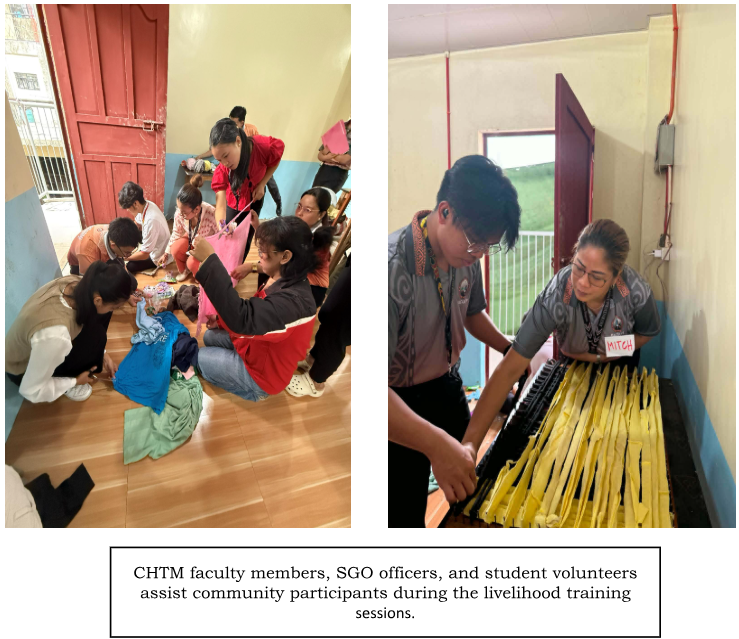
This initiative exemplified the college’s commitment to community engagement and sustainable development. Recognizing the importance of establishing sustainable income sources, the CHTM team focused on equipping participants with practical livelihood skills that could be applied at home or developed into small businesses. The initiative introduced the Barangay Irisan community to upcycling used clothing and fabrics into rugs, bags, wallets, and mats, which could be used personally or sold to generate additional income. This initiative supports SDG 1: No Poverty by promoting livelihood opportunities and SDG 8: Decent Work and Economic Growth by encouraging entrepreneurship and productive economic activities within the community.
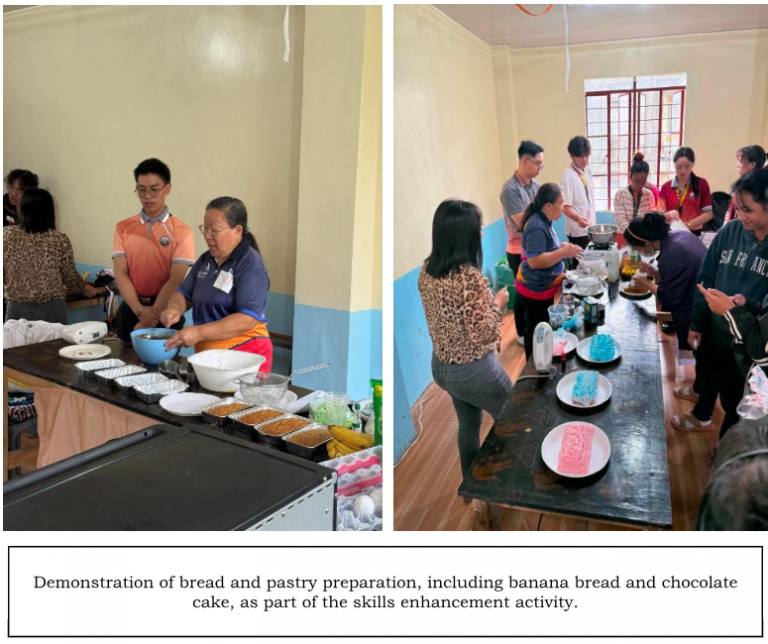
The program was spearheaded by the dedicated faculty of the College of Hospitality and Tourism Management (CHTM), led by Dean Jocelyn B. Ang and the Community Extension Coordinator, with the active participation of non-teaching staff, members of the Student Governance Organization (SGO), and volunteer students. Ms. Constance D. Florentin served as the resource person, sharing valuable knowledge and practical techniques on sustainability and livelihood development. Participants learned innovative ways to transform old fabrics and used clothing into functional products, including rugs, bags, wallets, and mats. They also gained hands-on experience in preparing basic baked products, including banana bread and chocolate cake. These activities provided participants with practical skills that could be applied in daily life and potentially developed into income-generating ventures. The program supports SDG 4: Quality Education by promoting inclusive, practical, and lifelong learning opportunities that extend beyond the classroom and reach members of the community.
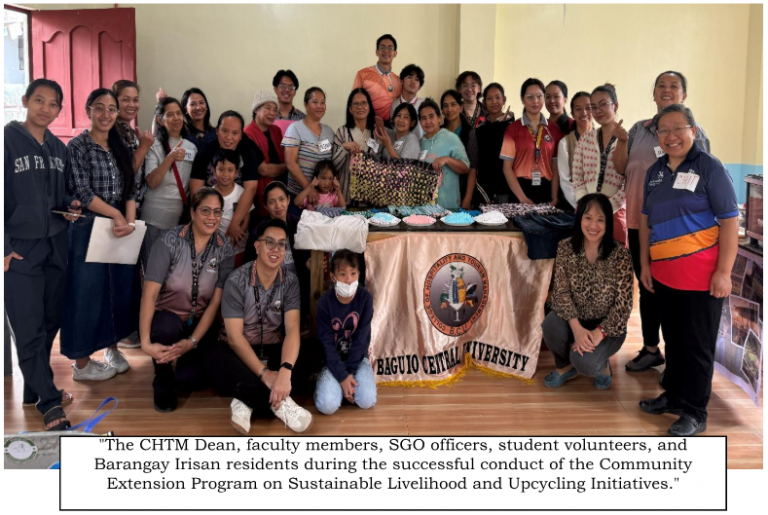
With sustainability becoming increasingly important in the hospitality and tourism industry, the program also emphasized environmental responsibility and the importance of reducing textile waste. By teaching participants to transform discarded fabrics and clothing into useful products, the initiative directly supports SDG 12: Responsible Consumption and Production, which promotes resource efficiency, waste reduction, and sustainable consumption practices. Furthermore, by encouraging the reuse of materials and helping reduce waste sent to disposal sites, the program contributes to SDG 13: Climate Action through community-level environmental awareness and responsible practices. The initiative also promotes resourcefulness and practical business knowledge, enabling residents to identify available materials, develop marketable products, and explore opportunities for sustainable livelihood development.
The community extension program serves as a platform for transferring knowledge and skills from CHTM faculty to students and, ultimately, to community residents. Through demonstrations, hands-on training, and practical application, faculty members guide students in translating academic knowledge into meaningful community service. Students, in turn, help share these skills with residents, strengthening their communication, leadership, teamwork, and social engagement. This collaborative learning process supports SDG 4: Quality Education by connecting academic learning with real-life applications and SDG 17: Partnerships for the Goals by fostering cooperation among the university, its faculty, students, and community stakeholders. Ultimately, the program demonstrates how shared knowledge and collaborative action can empower individuals, promote self-reliance, and contribute to sustainable community development.
Furthermore, CHTM conducts community extension programs as part of its broader mission to develop competent, socially responsible, and globally competitive students. By encouraging active citizenship, community participation, and a sense of responsibility toward others, the initiative reinforces the importance of patriotism and the role of students as nation-builders. Through meaningful engagement with community members, students gain a deeper appreciation of social responsibility and the importance of applying their professional knowledge and skills to address community needs.
In conclusion, the CHTM community extension program at Purok 27, Barangay Irisan, demonstrates the power of education, collaboration, and practical skills training in promoting sustainable livelihoods and environmental responsibility. By supporting SDG 1: No Poverty; SDG 4: Quality Education; SDG 8: Decent Work and Economic Growth; SDG 12: Responsible Consumption and Production; SDG 13: Climate Action; and SDG 17: Partnerships for the Goals, the initiative contributes to the United Nations Sustainable Development Agenda through community-based action. The program benefits both residents and the university by strengthening practical skills, encouraging entrepreneurship, promoting sustainable practices, and fostering meaningful partnerships for continued growth and development.
#SDG1NoPoverty#SDG4QualityEducation#SDG8DecentWorkAndEconomicGrowth#SDG12ResponsibleConsumptionAndProduction#SDG13ClimateAction#SDG17PartnershipsForTheGoals
SDGs aligned with the CHTM Community Extension Program
SDG 12: Responsible Consumption and Production
Primary SDG
This is the most directly aligned SDG because the program teaches residents to upcycle used clothing and fabric into rugs, bags, wallets, and mats. These practices encourage the reuse of materials, reduce textile waste, and promote responsible consumption and production.
SDG 8: Decent Work and Economic Growth
The livelihood training in upcycling and baking equips community members with practical skills that may be developed into small businesses, creating opportunities for additional family income, entrepreneurship, and local economic growth.
SDG 13: Climate Action
By promoting the reuse of old fabrics and reducing textile waste, the program encourages environmentally responsible practices that can contribute to reducing waste-related environmental impacts and raising awareness of climate action.
SDG 4: Quality Education
The program promotes practical, skills-based learning through the transfer of knowledge from CHTM faculty to students and from students and faculty to community residents. The hands-on training supports lifelong learning and the development of livelihood competencies.
SDG 17: Partnerships for the Goals
The collaboration among CHTM faculty, non-teaching personnel, student volunteers, and community residents demonstrates how partnerships can support knowledge sharing, sustainable livelihood development, and community empowerment.
SDG 1: No Poverty
By providing residents with skills that may create additional income opportunities, the program supports efforts to improve household livelihoods and economic self-reliance.