By: Hazel A. Castillo
Community Extension Coordinator, CTELA
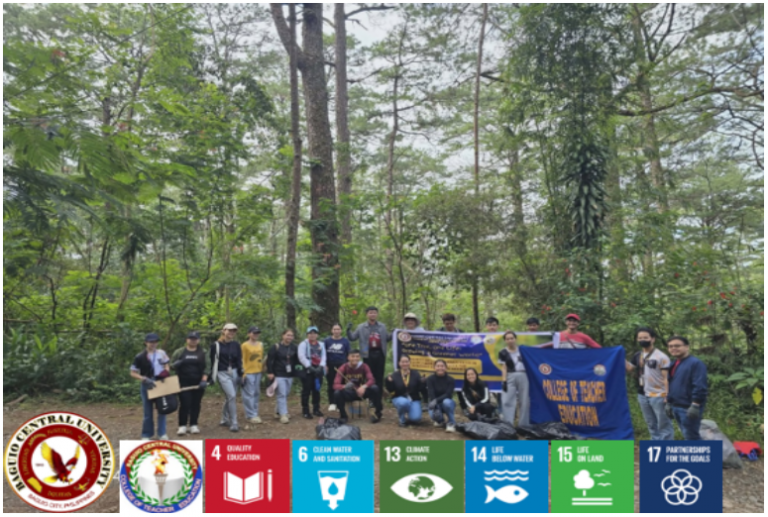
On November 24, 2025, the officers of Logichemia Club, the Bachelor of Elementary Education (BEED) Club, and the SGO Officers, led by their governor, Mr. Jordan Chalapas, conducted a Ring Weeding activity at Busol Watershed, Ambiong, Baguio City.
This extension activity was headed by the University Community Extension Coordinator, Ms. Arlene A. Mintas, and the College Community Extension Coordinator, Ms. Hazel A. Castillo, the Coordinator of BEED, Ms. Veronica B. Madagsen; the adviser of LogiChemia Club, Ms. Ruth Anne C. Bagayao; and the adviser of BEED Club, Dr. Jennifer T. Longchasen.
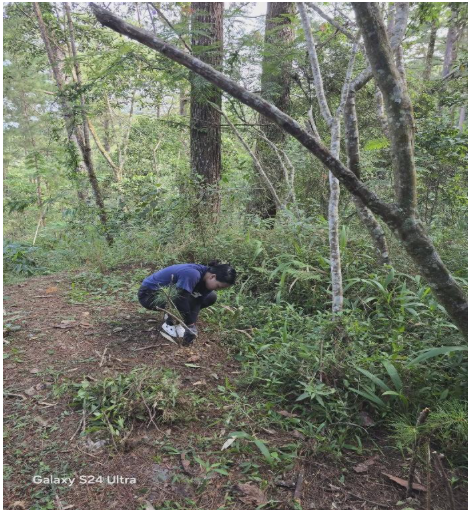
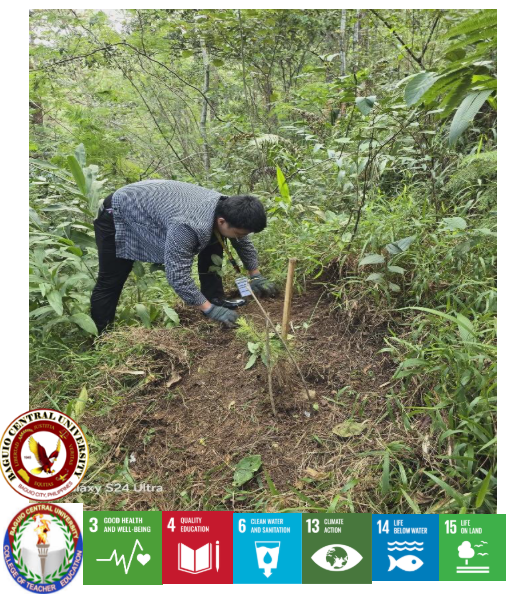
It aims to improve the growth and survival of young pine trees by removing weeds from a circular area around the base of the plant. The technique allows for higher efficiency, especially when using tools like a ring hoe, which is preferred for its ease of use in non-potted, high-pressure areas. The removed weeds are often used as mulch around the base of the plant to retain moisture and suppress further weed growth. The pine trees were planted on October 25, 2023.
It also aims to provide evidence of contribution, justify resource use, and show how efforts align with the University’s mission, vision, and objectives, improving transparency and enabling data-driven decisions for growth.
Most importantly, the objectives and the target outputs of the activity were successfully met, which was an encouragement to the students to be part of the solution to the global challenges of the Environment. Small actions can lead to impacts that benefit future generations.
Overall, this community activity is basically aligns with the United Nations Sustainable Development Goals, specifically focusing on SDG 4 (Quality Education), by serving as a hands-on, practical tool for environmental literacy, technical vocational training, and community-based sustainable development, SDG 6 (Clean Water and Sanitation), by protecting and restoring forest watersheds that naturally filter, regulate, and secure freshwater resources, SDG 13 (Climate Action), by directly maximizing a forest’s capacity to capture and store carbon dioxide (CO₂), SDG 14 (Life below Water) primarily by preventing land-based soil erosion and hazardous nutrient runoff from reaching marine ecosystems., and SDG 15 (Life on Land) by drastically increasing sapling survival rates, restoring degraded forests, and halting biodiversity loss. It “ensures inclusive and equitable quality education and promotes lifelong learning opportunities for all” by 2030.