BAGUIO CENTRAL UNIVERSITY

(074) 444-9247 / (074) 424-8216 #18 Bonifacio Street, ABCR Barangay, Baguio City
Baguio Central UniversitySoaring High Towards Excellence

Sort it Out! Zero Waste Management Program

By: Hazel A. Castillo

 Community Extension Coordinator, CTELA

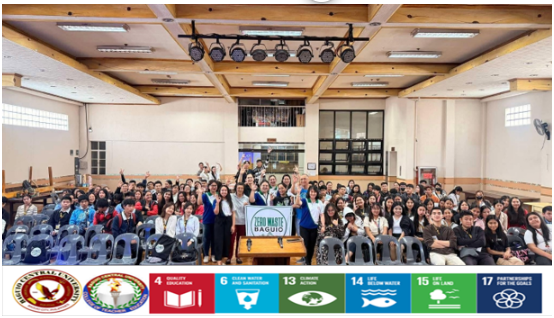
The CTELA faculty and students participated in the Zero Waste Management Seminar- Workshop Program held at the function hall, Baguio Central University, Bonifacio Campus, Baguio City on March 19, 2025.

On March 19, 2025, the CTELA faculty and students participated in the Zero Waste Management Seminar- Workshop Program held at the function hall, Baguio Central University, Bonifacio Campus, Baguio City. This activity was initiated by the LogiChemia Club through the leadership of Mr. Hamza Pimping and the officers. It was led by the College Dean, Dr. Samuel K. Neyney, the College Coordinators, Ms. Aiza Bheal Kitani and Ms. Veronica B. Madagsen, and the advisers of the club, Ms. Hazel A. Castillo and Ms. Jenema H. Wacangan. 

The Zero-Waste Management Seminar-Workshop was conducted with the Zero Waste Baguio Team, led by Professor Maria Victoria Bautista and Sir Francis Bernard Caguioa, with the theme: “Zero Waste, Zero Worries: Building a Sustainable Future Together.” It aims to maintain and apply the 5Rs: Maximize resource use through Rethink/Redesign, Reduce, Reuse, Recycle, and Recover (composting), to stop waste at its source by shifting from a linear “take-make-waste” model to a circular economy. It focuses on reducing plastic use at home, at school, and throughout the City of Baguio to mitigate the severe environmental and marine devastation caused by plastic waste to terrestrial and aquatic species.  

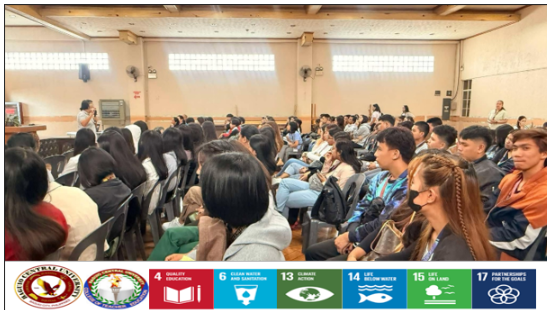
The team leader of Zero-waste Baguio, Prof. Maria Victoria Bautista, during her lecture with the CTELA students and faculty members.

Significantly, the activity met its objectives and target outputs, encouraging students to be part of the solution to the global challenges of the Environment. Small actions can lead to impacts that benefits the future generations. Thus, regular training and environmental education among employees and students are strongly encouraged in schools. 

Overall, this seminar-workshop activity was grounded with the United Nations Sustainable Development Goals, specifically focusing on SDG 4 (Quality Education), by serving as a hands-on, practical tool for environmental literacy, technical vocational training, and community-based sustainable development, SDG 6 (Clean Water and Sanitation), by protecting and restoring forest watersheds that naturally filter, regulate, and secure freshwater resources, SDG 13 (Climate Action), by directly maximizing a forest’s capacity to capture and store carbon dioxide (CO₂), SDG 14 (Life below Water) primarily by preventing land-based soil erosion and hazardous nutrient runoff from reaching marine ecosystems., and SDG 15 (Life on Land) by drastically increasing sapling survival rates, restoring degraded forests, and halting biodiversity loss.  It “ensures inclusive and equitable quality education and promotes lifelong learning opportunities for all” by 2030.