BAGUIO CENTRAL UNIVERSITY

WEAVING THREADS OF HOPE: HOW THE PHILIPPINES UNITES LOCAL COMMUNITIES AND GLOBAL VISIONS FOR PEACE AND INTEGRAL REGENERATION

By: Rubenson Bilag, Marina Bid-Ing, Peter Canggat Jr., Oliver Ngiwas, Cynthia Calavera, Faithfulyn Colian,Jocelyn Pilas, Cherrie Ann Pintado, and Meling Solis

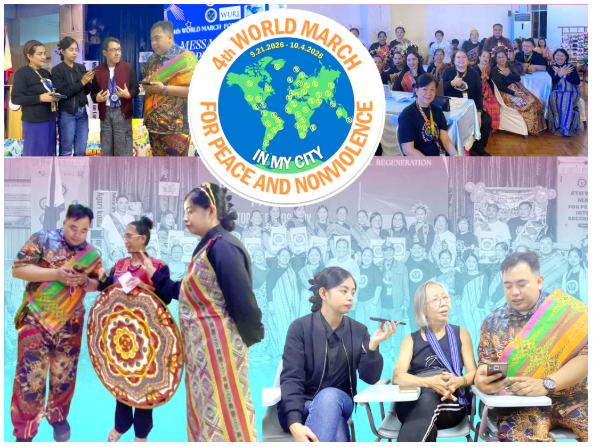
A comprehensive multi-panel photo documentary capturing key highlights from the 4th World March for Peace and Integral Regeneration held at Baguio Central University. Prominently featured in the center is the official event logo (9.21.2026–10.4.2026), surrounded by various scenes including academic and community leaders engaging in discussions, cultural presentations showcasing indigenous textiles and crafts, and attendees gathered inside the DJMF Function Hall. Photo by: Rubenson B. Bilag.

In an era defined by rapid geopolitical fragmentation, digital isolation, and mounting environmental distress, the pursuit of peace can often feel like an isolated cry into a vast, indifferent void. Yet, on a vibrant afternoon inside the DMJF Function Hall for the 4th World March for Peace and Integral Regeneration hosted by Baguio Central University, this fragmentation completely dissolved. Educators, psychologists, local government leaders, artists, and indigenous community advocates converged to prove a simple, powerful truth: peace is not merely the absence of war, but the active, synchronized weaving of shared human narratives across borders, cultures, and institutions. 

This international mobilization, deeply rooted in the academic and communal aspirations of the Baguio Central University Graduate School, offered a living laboratory for qualitative research and authentic human connection. True to the institutional core values of Equitas (equity), Justitia (justice), Libertas (freedom), and Veritas (truth), the event challenged scholars and leaders to examine why we must collaborate across boundaries through living testimonies, emotional resonances, and actionable legacies. 

The qualitative pulse of the march was immediately palpable in the collective emotional resonance of its participants. For Dr. Marc Eric S. Reyes, a prominent psychologist, faculty member of the Department of Psychology at the College of Science in the University of Santo Tomas, and past president of the Psychological Association of the Philippines, the energy of the event was firmly rooted in a profound realization of shared humanity. Dr. Reyes noted that the very essence of international collaboration is learning from one another and realizing that personal and national concerns are shared by people across the globe. Working within a global psychology alliance allows professionals to experience the realities of others and listen to diverse narratives, transforming local voices into a unified Filipino perspective. Emphasizing this, Dr. Reyes stated, “The important thing for international collaboration is that we learn from each other and realize that our concern is shared also by other people. We are learning from different narratives. We are making our voice as Filipinos. And we are happy it is hosted here in Baguio. Like commonly in the National Capital Region, it is also good that we are having a voice from other regions.” 

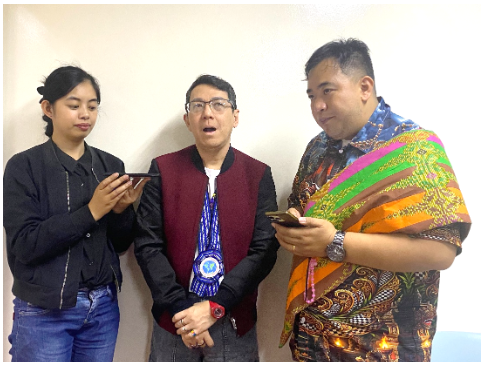
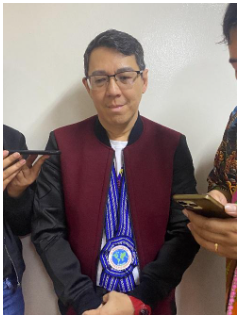
Dr. Marc Eric S. Reyes, Faculty Member, Department of Psychology, College of Science, University of Santo Tomas (and Past President, Psychological Association of the Philippines), sharing insights on the psychological dimensions of international collaboration and shared human narratives during the 4th World March for Peace and Integral Regeneration at Baguio Central University on October 3. Photo: Rubenson B. Bilag
Researchers engaging in dynamic qualitative dialogue, capturing field responses and building rapport with Dr. Marc Eric S. Reyes in a collaborative setting narratives during the 4th World March for Peace and Integral Regeneration at Baguio Central University on October 3. Photo by: Rubenson B. Bilag

Furthermore, Dr. Reyes expressed deep appreciation for hosting the event in Baguio City, noting that while national discourses frequently concentrate in the National Capital Region, amplifying voices from other regions is essential for true national representation and justice (Justitia) across all communities.

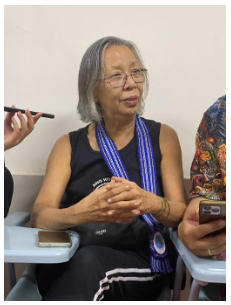
This sentiment of joyful, communal convergence echoed vividly throughout the entire crowd. Ms. Adelaida Guia, a renowned Guinness World Record holder for crafting the world’s largest crochet mandala, described the emotional atmosphere with refreshing simplicity and profound warmth. She shared how joyful the gathering was, noting the multitude of people who chose to assemble despite the chaos and trials happening across the world. Reflecting on her experience, Ms. Guia noted, “It is joyful, and there are many people. Despite all that is happening in the world, we are here to gather today, and someone is advocating for peace, and I am glad.”

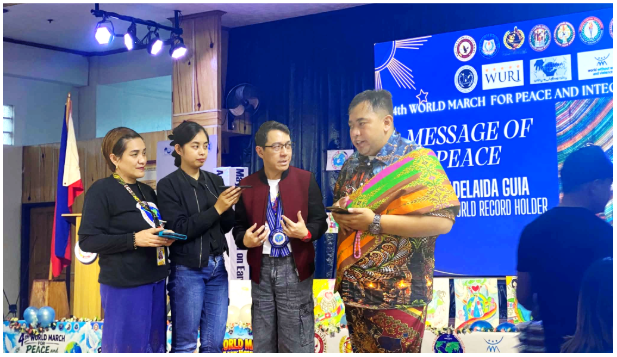
Ms. Adelaida Guia, Guinness World Record Holder (World’s Largest Crochet Mandala), reflecting on the emotional resonance of community gatherings and peace advocacy during an interview during the 4th World March for Peace and Integral Regeneration at Baguio Central University on October 3. Photo by: Rubenson B. Bilag
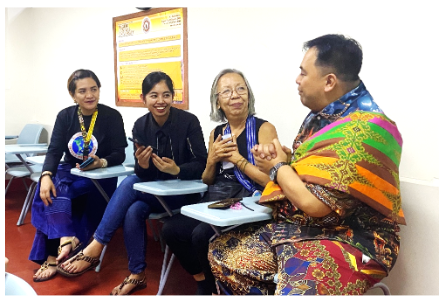
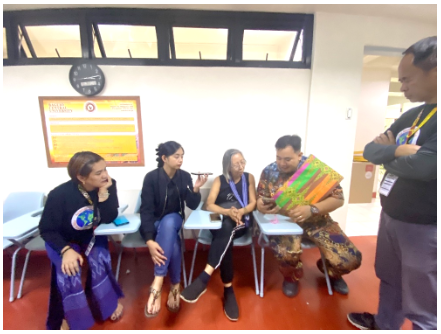
Interviewers actively recording narratives and qualitative data with Ms. Adelaida Guia, highlighting interactive communication during the field research process during the 4th World March for Peace and Integral Regeneration at Baguio Central University on October 3. Photo by: Rubenson B. Bilag

For Ms. Guia, witnessing individuals actively advocate for peace brought profound gladness, turning abstract concepts of global harmony into a tangible, heartwarming celebration of human togetherness. Meanwhile, Ms. Willa Isabella Bulos Tecson, representing Ang Komunidad Para sa Ikaunlad ng Tao, offered a profound reflection on how digital connectivity bridges geographic isolation. Addressing how international messages from places as far as Germany or the United States resonate deeply locally, Ms. Tecson remarked on the emotional bridge built across distances: “Maybe, but when you hear the words and you try to find their line, it’s not that distant even if it comes from Germany or from somewhere in the States. I mean, there’s a resonance.”

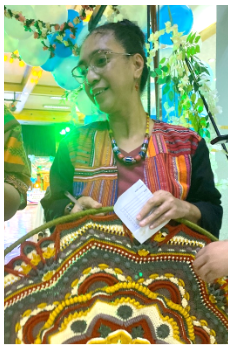
Ms. Willa Isabella Bulos Tecson, Representative, Ang Komunidad Para sa Ikaunlad ng Tao, discussing the vital role of cultural spaces, digital resonance, and non-violence in fostering regional connections. Photo by: Rubenson B. Bilag
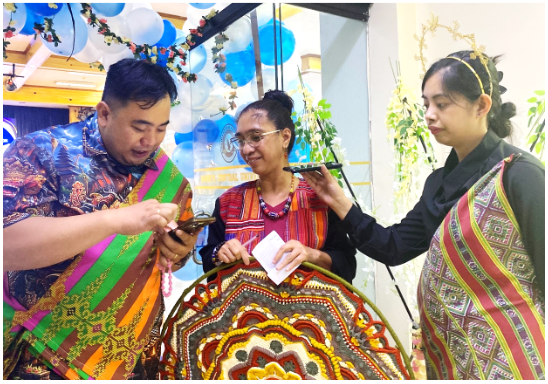
Group dynamics and conversational exchanges unfolding as participants share their perspectives on regional synergies for peace and development with Ms. Willa Isabella Bulos Tecson. Photo by: Rubenson B. Bilag

Contrasting urban life with the highlands, Ms. Tecson pointed out how cultural spaces shape human interaction, noting that while her birthplace of Manila is often fast-paced and insular with busy groups, the welcoming and relaxed culture of Baguio fosters an open environment where educators, students, and communities can share something much bigger.

Why must Manila, Baguio, Sagada, Quezon Province, and international alliances such as Nepal, Singapore, Germany, Italy, Spain, Iran, among others lock arms in an era of rapid technological connection? The interviews reveal that while technology like the internet and virtual communication platforms has shrunk the globe, true synergy requires intentional, active participation rather than passive observation. Dr. Reyes emphasized that breaking geographical silos requires relentless personal engagement despite daunting physical barriers such as time zones. He noted that we genuinely gain a national and international voice when we actively participate in global events, especially given the modern prevalence of virtual meetings. Highlighting this dedication, Dr. Reyes advised, “Let us be involved in international events. It is good that we have representation; we gain a voice if we actively participate in international events, especially now that there are many virtual meetings. The world has been made smaller, and because of that, we can communicate with other countries and other people. Let us be part of the conversation. Our challenge is dealing with time zones, which is why I often have meetings at 9:00 PM to 10:00 PM or sometimes 4:00 AM. Let us actively engage. That is the only way to be heard and to be seen.” 

Because technology has successfully made the world smaller, we possess the unprecedented capability to communicate across countries, reminding everyone to remain active parts of the global conversation despite the personal sacrifices required, such as attending high-level international meetings during unconventional hours like late nights or early mornings. Active engagement is the definitive price of being heard and seen on the world stage.

Adding a rigorous institutional and administrative lens to the discussion, Mr. Peter A. Canggat Jr., a veterinarian and dedicated public servant serving with Benguet’s Provincial Local Government Unit who is also advancing his studies in Administration and Supervision, emphasized that peace is the fundamental bedrock of good governance and learning. Speaking from the perspective of an educational administrator, Mr. Canggat explained that leadership must transcend the physical walls of any classroom. He articulated this principle clearly: “As scholars and administrators of educational institutions at the Doctor of Philosophy level, we understand that leadership extends far beyond the walls of the classroom. Local and international collaboration is vitally important because peace is the foundation of effective governance and learning. If our society is fractured, it is difficult for us to achieve quality education and development. Initiatives like the World March enable leader-educators to unify our goals, ensuring that leadership is rooted in non-violence, mutual understanding, and collective action within our communities.” 

Mr. Canggat further elaborated on the mechanics of collaborative governance, noting that effective institutional management demands strong multi-sectoral partnerships. Connecting diverse cultures and institutions across regional lines, from Manila and Baguio to Sagada, creates a resilient, interconnected network of educators and leaders. By sharing local insights, indigenous practices, and contextualized methodologies, institutions successfully integrate diverse perspectives into their governance systems, strengthening the collective voice of schools against violence, inequality, and systemic injustice. This multi-sectoral synergy bridges grassroots indigenous wisdom with institutional policy, aligning seamlessly with the university’s enduring pursuit of Veritas (truth) and Libertas (freedom) to dismantle oppressive structures. 

The ultimate measure of the 4th World March lies not just in the ephemeral inspiration of a single afternoon, but in the sustainable, actionable legacies left in its wake across schools, agencies, and communities. Transformative leadership requires concrete steps translated into daily practice. Dr. Reyes actively encourages scholars and professionals to write and publish research papers so that international audiences can read, learn from, and engage with authentic Filipino psychosocial narratives. By contributing empirical research to global literature, local academics actively shape international understandings of peace and mental health.

Meanwhile, expanding on the deeper philosophical underpinnings of integral regeneration, Ms. Tecson reflected on how local Filipino experiences connect to global peace movements through shared empathy and personal accountability. Comparing societal reconstruction to universal human empathy, she noted that true peace begins by recognizing others as extensions of oneself, stating: “If you’re going to see someone or speak to someone, imagine you’re speaking to yourself. So what would you do to that person? Imagine that person as yourself. You’re a concept couple. You see the self. I think that’s not only Philippine. I think that’s human for all humans… That’s the basic human.”

In the realm of institutional administration, Mr. Canggat commits to translating these noble ideals into concrete school programs, ensuring that every student and teacher becomes an active partner in healing both local communities and the natural environment. Integral regeneration, in this administrative context, begins directly within schools by shaping policies and campus cultures that practice ecological and social stewardship, noting that as leader-administrators, it is our duty to translate these objectives into school programs where everyone works together to heal our nature and society. 

Demonstrating that peacebuilding is never restricted to bureaucrats or academics, Ms. Guia offers a deeply poetic and tangible commitment through her lifelong craft. When asked about her tangible step toward peace, she stated simply, “If you want peace, connect with our crafts; adding another thread and connecting with another person will create peace.”

She reminds us that peace can be built through simple human connections, noting that just as individual threads bind together to form a magnificent crochet mandala, connecting with one another through our creative works helps weave peace one thread and one person at a time.

Ultimately, the 4th World March for Peace and Integral Regeneration held in Baguio City demonstrated that borders, whether regional boundaries separating Manila, Sagada, and Baguio, or vast international divides, dissolve the moment communities choose to collaborate with genuine empathy, sharp intellect, and shared purpose. By uniting psychology, local governance, indigenous wisdom, and creative arts under the banner of Equitas, Justitia, Libertas, and Veritas, the participants established a living, breathing blueprint for integral regeneration. Their collective reflections prove that working across cultures for peace does not merely transform isolated institutions; it heals our shared world, one voice, one policy, and one thread at a time.
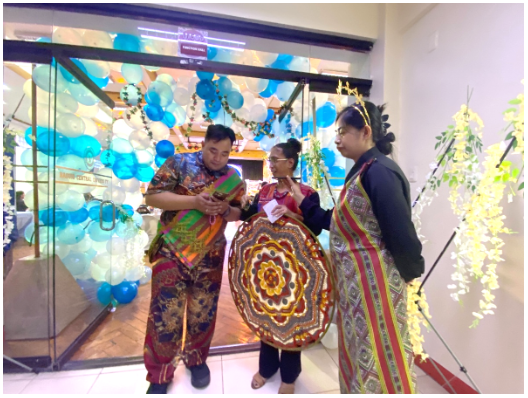
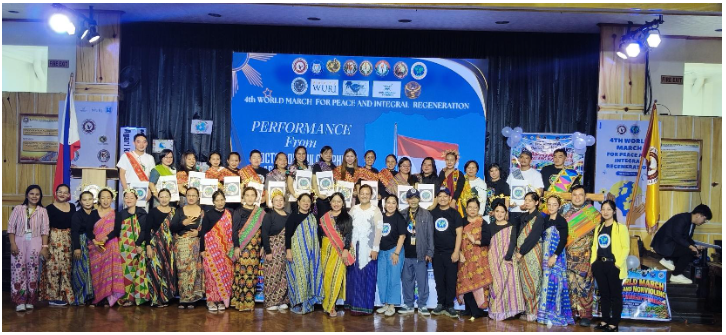
Doctor of Philosophy students in ASEAN attire after performing an Indonesian dance, with graduate school faculty members Dr. Shamany Lokines, Dr. Jose R. Balcanao, Dr. Loida Mangangey, Dr. Leon Avilardo, Dr. Altea Ramos, and Graduate School Dean/International Relations Officer Dr. Genevieve B. Kupang.

Research Team & Authors: Rubenson Bilag, Marina Bid-Ing, Peter Canggat Jr., Oliver Ngiwas, Cynthia Calavera, Faithfulyn Colian, Jocelyn Pilas, Cherrie Ann Pintado, and Meling Solis

Under the Tutelage and Supervision of: Dr. Genevieve B. Kupang, Professor, Qualitative Methods of Research, Doctor of Philosophy in Administration and Supervision. She spearheaded the 4th World March for Peace and Integral Regeneration (WMPIR) in conjunction with the ASEAN Festival

#WorldMarchForPeace #IntegralRegeneration #ASEANFestival #BaguioCentralUniversity #WURI #WUNI #PeaceBuilding #HigherEducationforpeaceandintegralregeneration

#PeaceEducation #ASEAN #GlobalGoals #SDG16#SDG17