BAGUIO CENTRAL UNIVERSITY

(074) 444-9247 / (074) 424-8216 #18 Bonifacio Street, ABCR Barangay, Baguio City
Baguio Central UniversitySoaring High Towards Excellence

Bridging Theory and Practice: CBA Students Explore Central Banking at BSP Baguio

By Wennie D. Joy Lida & Alexander Emanuel L. Punzalan; Editor: Marga L. Taganas, CPA

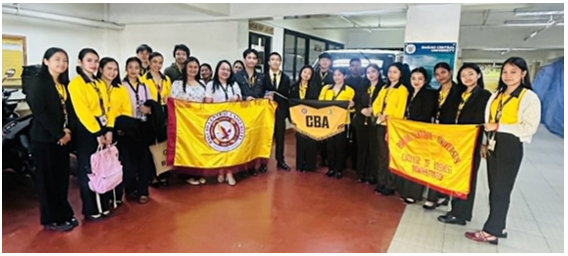
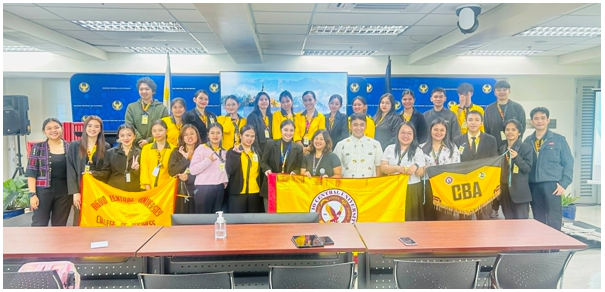
BCU-CBA students and faculty members with representatives from BSP-Northern Luzon Regional Office.

Students and faculty members from the College of Business Administration (CBA) of Baguio Central University (BCU) gained firsthand insights into central banking and financial management during a study visit to the Bangko Sentral ng Pilipinas (BSP) Northern Luzon Regional Office in Loakan, Baguio City, on April 27, 2026.

CBA students and faculty members before departure from the campus.

Held from 9:00 a.m. to 11:00 a.m., the academic activity brought together students taking Banking and Financial Institutions, Monetary Policy and Central Banking, and Operations Management–Total Quality Management, along with their faculty members. The study visit provided students with an opportunity to connect classroom theories with actual practices in the banking and financial sector.

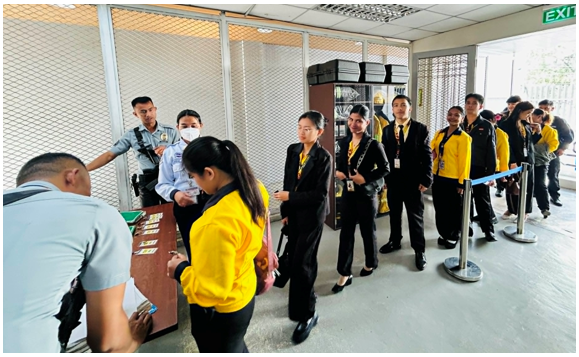
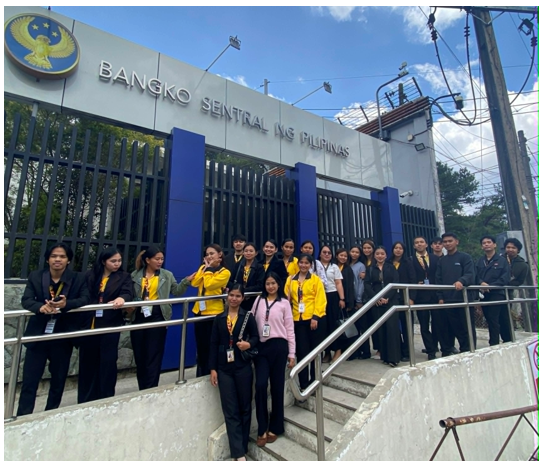
Students line up as they undergo the BSP safety and security protocols before entering the premises.

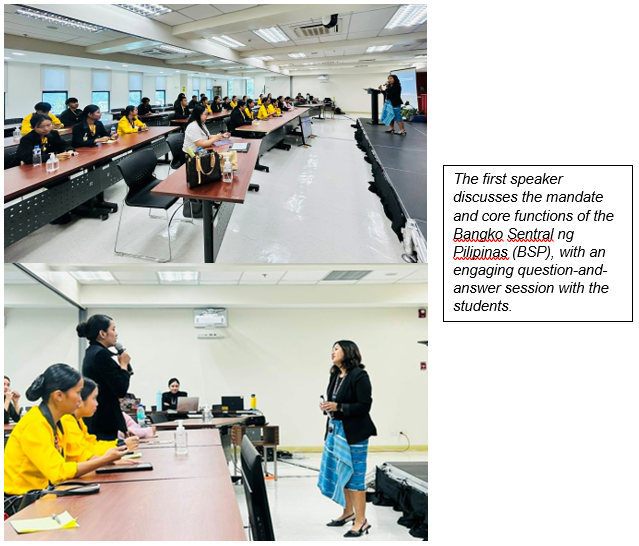
During the seminar, BSP representatives discussed the central bank’s key functions, including maintaining price stability, promoting financial system stability, and ensuring efficient payment and settlement systems. Students also learned about inflation targeting and how expansionary and contractionary monetary policies help address changing economic conditions. The discussion further emphasized the BSP’s role in promoting financial inclusion and access to reliable financial services, highlighting its contribution to a stable, resilient, and inclusive Philippine economy.

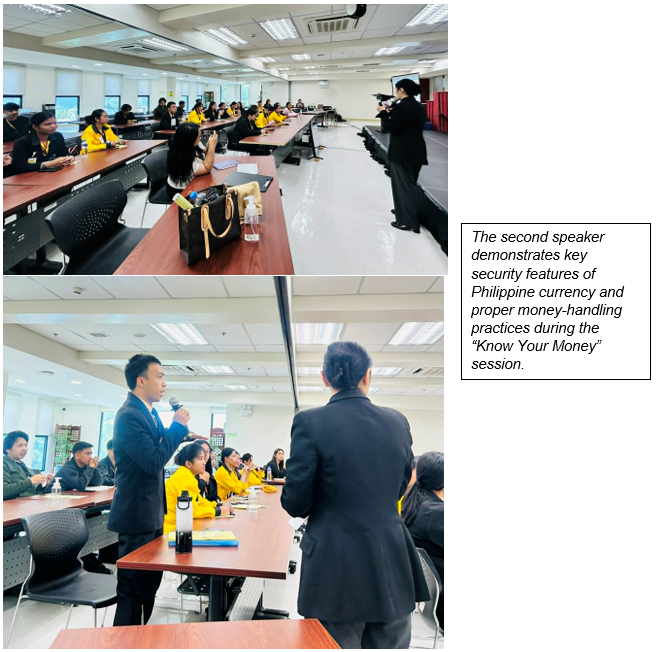
A major portion of the visit was devoted to the BSP’s “Know Your Money” campaign, which focused on improving students’ financial literacy. BSP representatives introduced the currency series currently in circulation, including the New Generation Currency Series, Enhanced New Generation Currency Series, and First Philippine Polymer Banknote Series. Students also learned about the security features of Philippine banknotes and coins, proper currency handling, and policies governing the use and care of money. These included the Clean Note and Coin Policy and Presidential Decree No. 247, or the Anti-Mutilation Law.

The participants were further given practical demonstrations on how to identify genuine banknotes and coins and determine the redeemability of damaged currency. The hands-on activities reinforced the importance of responsible money handling and awareness of measures designed to protect the integrity of Philippine currency.

The study visit also highlighted the connection between central banking and the United Nations Sustainable Development Goals (SDGs). The experiential learning component supported SDG 4: Quality Education by providing students with practical exposure beyond the classroom. Discussions on strong institutions, financial inclusion, and sustainable economic practices also reflected SDGs 16, 10, and 12, respectively, while the development of financial knowledge and skills contributed to SDG 8: Decent Work and Economic Growth.

For the CBA students, the activity served as more than an academic requirement. It provided a closer look at how financial institutions operate and how monetary and financial policies influence the broader economy. The BSP study visit ultimately underscored the value of linking academic learning with institutional practice. By exposing future business professionals to real-world financial systems and policies, the activity helped equip students with knowledge and skills that can contribute to a more informed, stable, and inclusive economic future.

Students and faculty members gather outside BSP as they prepare to depart after a productive and meaningful study visit.