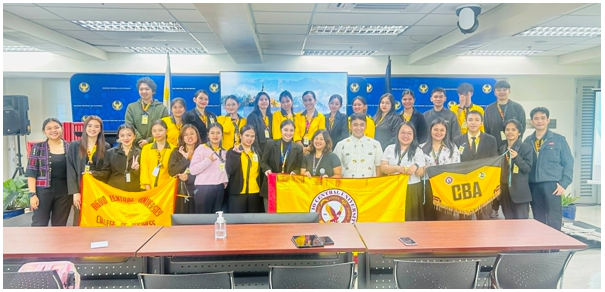
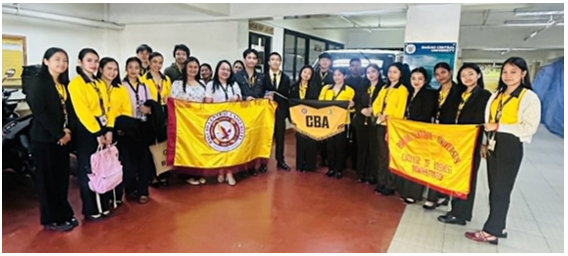
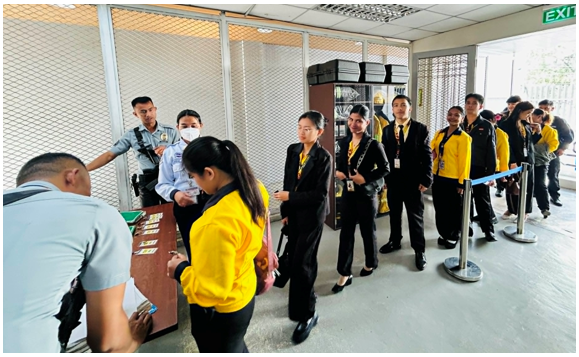
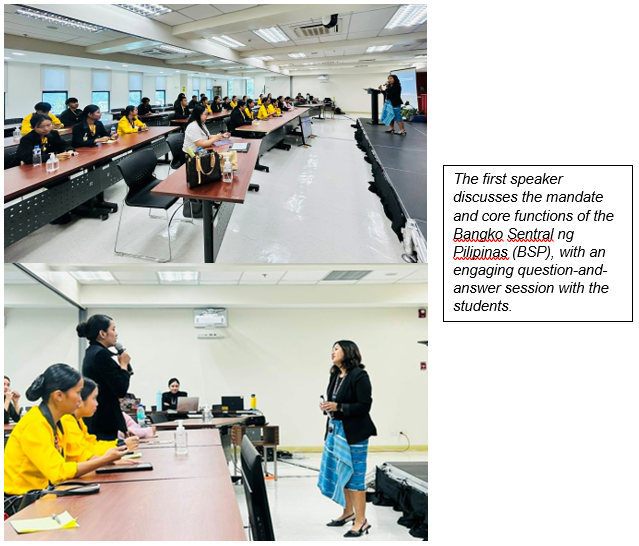
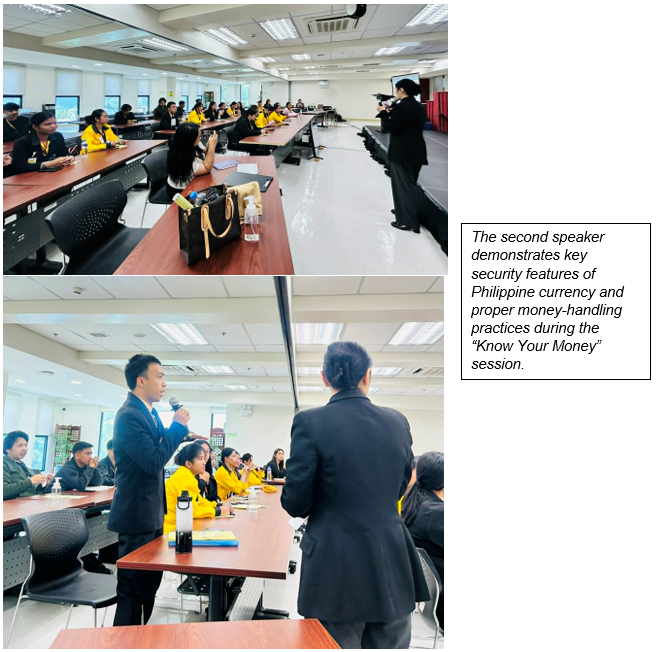
The participants were further given practical demonstrations on how to identify genuine banknotes and coins and determine the redeemability of damaged currency. The hands-on activities reinforced the importance of responsible money handling and awareness of measures designed to protect the integrity of Philippine currency.
The study visit also highlighted the connection between central banking and the United Nations Sustainable Development Goals (SDGs). The experiential learning component supported SDG 4: Quality Education by providing students with practical exposure beyond the classroom. Discussions on strong institutions, financial inclusion, and sustainable economic practices also reflected SDGs 16, 10, and 12, respectively, while the development of financial knowledge and skills contributed to SDG 8: Decent Work and Economic Growth.
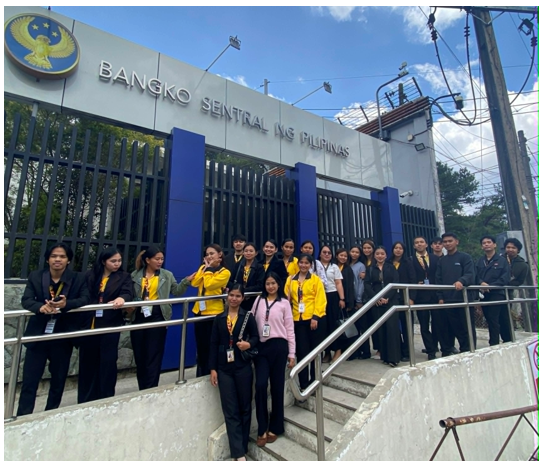
For the CBA students, the activity served as more than an academic requirement. It provided a closer look at how financial institutions operate and how monetary and financial policies influence the broader economy. The BSP study visit ultimately underscored the value of linking academic learning with institutional practice. By exposing future business professionals to real-world financial systems and policies, the activity helped equip students with knowledge and skills that can contribute to a more informed, stable, and inclusive economic future.